Search This Blog

Showing posts with label Marlow. Show all posts

Wednesday, August 31, 2022

More Where in Marlow was..Part 5

If you can't find the place you are looking for here, take a look at our other "Where in Marlow was..?" posts - part one here, part two here, no 3 here and part 4 here.

Abercynon - house, Little Marlow Road.

Aberystwyth - house, Claremont Road.

Alfred House now Cromwell House, High Street. Historic occupiers here

Andover - house, Oak Tree Road.

Applegarth - house, Dedmere Rise.

Arthur Villa - Claremont Road.

Ashcroft- Address given also as "Claremont Lodge", Claremont Road area. 

Ash, The - house, Little Marlow Road.

Ashtead - Claremont Road. 

Beechwood - house, off Henley Road. Demolished. Built circa 1883 in grounds of Beech Lodge.  Had been rebuilt 1925. 

Beech Lodge - Wadham Wyndham's residence from at least 1819. Aka Red Pits/Red Pits Lodge. About the Wyndhams here.

Bob Moore's Lane= now Bobmore Lane 

Bohemia- house, adjacent Marlow Bridge. On Berks side of river. 

Bokpara - house, Little Marlow Road.

Brewery Cottages - Wethered built row of cottages mainly for Brewery employees, Oxford Rd just past Queen's Rd turning if coming from town. Aka Chalk Pit Cottages although these can refer to those by water works, Chalk Pit Lane. 

Broomhurst - house, Cromwell Gardens.

Burnham Villa - Glade Road. 

Caldwell Lodge - Station Road, still carries this name.

Church Road - Now known as Wethered Rd. If you are puzzled by the high house numbers in this very short road, it can be explained by the fact that when the adjacent Dean Street was first  numbered, they looped down Church Rd with the numbers before continuing on up Dean Street. So in the Edwardian era, you won't find low numbered properties in Church Rd. All early houses in this road have been demolished. 

Claremont House - Claremont Road. 

Cleeveville - house, New Town Road. 

Clynview- (also Clyn View-) House, Glade Road.

Coop, The - house, Little Marlow Road.

Crendon Cottages - Crown Road. Presumably still there but not obviously marked.

Croft Cottage - Pound Lane. Not The Croft, which is now Gyldernscroft .

Daintree aka Daintree Cottage - house, "Claremont Estate" now Claremont Gardens. 

Darfield - Glade Road.

Dedmere House - see Field House below.

East View Villas - Glade Road.

Effra - house, Beaumont Rise. 

Ellerslie - house, used as "apartments" for a good while, Institute Road.

Elmcroft  -  house, Little Marlow Road.

Ennismore - house, Little Marlow Road.

Euonymus - Little Marlow Road.

Evergreen - house, Glade Road. 

Fairlawn / Fair Lawn - house, Riverwoods Estate as it was referred to in the early days (Edwardian) but address given as Westhorpe Rd later

Field House-  off modern Field House Lane / Dedmere Road. Address historically given as Dedmere, Marlow, Marlow Fields or sometimes New Town. Also called Dedmere House. Field House Farm off New Town Road had 30 acres in 1916, 20 acres in 1881. History post here.

Forthar - house, Little Marlow Road.

Frankfield (Sometimes Frank Field) - house, Spinfield Lane.

Gables, The - Institute Road. Built for Dr Dunbar Dickson. 

Glade, The - now The Cedars, Glade Historic resident Charlotte Cocks here

Glade Nook  - 1.) house, Glade Road. 2. house Claremont Estate (Claremont Road area). Could be same house in fact due to consistent confused use of addresses in this part of Marlow in the early days of development.

Glenesk - Cromwell Gardens. 

Glenfield - house, Little Marlow Road

Glenlyn - house, Station Road .

Glenside - house, Claremont Road.

Godyers / Goodyers / Goodyears /Goodiers - the name Thames Bank House bore early in its life. Probably an earlier building too. 

Gos(s)emore House - the name adopted by Artist Percy Wild for The Eyrie in 1899. Often rendered as Gossmore House. Off Gossmore/Lock Road, with grounds that originally ran to towpath. Address may be given as "Marlow Fields" (1897, 1899) For history of The Eyrie when it was a menagerie see here

Hartfield - house, Little Marlow Road

Haven, The - house, Claremont Road. 

Highfield(s) - off Henley Road. Demolished. 

Highwell Cottage - Station Road. Probably misspelling on Highwall Cottage there. Adjacent to Marlow Place - with a very high wall surrounding it! 

Holmelea - Henley Rd, Edwardian. 

HolmesleyHomesley house, Station Road.

Ingledean  / Ingledene - house, Claremont Road. 

Ingleneux /Ingleneuk - house, Claremont Road.

Kendal Cottage - Glade Road.

Kiama - house, Little Marlow Road.

Kia-Ora - house, Claremont Road.

Kinclaven - house, Little Marlow Road.

Lammas Lane - lane (often a footpath at best) bordering Rookery Park and leading from Chapel End to what is now the cemetery area. Aka Arzees Lane, Hawes Lane and Rookery Lane. 

Laurels, The - Beaumont Rise.

Lymbrook - (occasionally Lynbrook but see below) - name used for Thames Bank house (now known as Thames Lawn) from at least 1869-1939, however many people continued to use old name of Thames Bank during  this time, as they also continued to use it when the name changed again to Thames Lawn. Note also that Thames Lawn existed as separate house nearer lock prior to Thames Bank using the name. And a separate house in St Peters Street was known as Limbrook(e) in the 1820s, while Limbrook Wharf there existed 1850's and was sometimes used as a trading address. There is also a modern house called Lymbrook at Marlow Common. Confused yet? 

Lynton - Glade Road. 

Lynwood - house, Cromwell Gardens. Extant. The property Alfred Davis (who gave his name to the Marlow FC ground) was living in at his death in 1927.   They also owned the neighbouring house Ashleigh. Also a property at Marlow Common.

Maida Vale - house, Claremont Estate,  later described as located in Claremont Gardens. 

Maisonette - a house in fact. In  "New Town" - modern New Town Road area

Maldah - house, Institute Road. Exists with name intact. Post about early residents here.

Manse, The - Chapel Street. No 64 historic numbering. 

Marlow Villas - Claremont Road 1909. Pair of houses. Still named. 

Marlow Lodge - Station Road.  Formerly Suffolk Lodge. 

Merolla - house, Station Road. 

Mitching Dean - house, Glade Road.

Myrtle House - Claremont Road. 

Naseby - house. Maybe described as either Cromwell Gardens or the adjacent Claremont Road. Extant and still named. 

Nesscliffe - house, Glade Road. 

Orchard Cottage - Mill Road.

Ready Money Row - colloquial name for Dean Street, as was "The City" and "Packmans Puzzle"

Pendennis - house, Glade Road.

Pleasaunce, The aka The Plesance - House, Beaumont Rise (no.1, still so named) to

Rest, The - house, Glade Road. 

Rosecroft - Glade Road. 

Rosenan - house, Beaumont Rise. Poss misspelling of Rosenau Beaumont Rise, a twin of Castlenau. 

Rose Villa - "Institute Road", but probably actually the same one as in Beaumont Rise. Also earlier Rose Villas (plural), in uncertain location.

Roy Glen - house, Claremont Road. Also a house was called Royston in "New Town", specifically in Holland Rd. 

Ruby Villa - Berwick Road, no longer named. Probably named by early residents after their daughter Ruby. 

Seaton - house, Beaumont Rise, exists still with this name. 

Shamrock Cottage - Glade Road. Early residents of the property ( number 7) here. No longer bears the name.

Spinneys, The - house, West Street. 

St. Clare - let as apartments, Station Road. 

St. Georges Cottage - Beaumont Rise. 

St. Margarets - house, Wycombe Road

St. Marys - house, Claremont Road. 

St. Mawes - house, "Newtown". New Town Road area.

St. Ronans - house, Cromwell Gardens .

Suffolk Lodge - off what is now Station Road & Lock Road. Gardens bordered South Place and Station Road. Later Marlow Lodge (there was also a Marlow Lodge in Little Marlow village, and at Fingest)

Surmoor - property Queens Road. 

Swallows, The  - Little Marlow Road (Previously known as Prospect House, possibly one of two properties to be called that) Demolished. 

Swilley Cottage - Little Marlow Road. Swilley Villa, which appears to be in the same area, may be the same place or in the adjacent Wycombe Rd. 

Thistle Cottage - Glade Road. 

Thornwood - house, Cromwell Gardens.

Valley View- house, Little Marlow Road. Used for many purposes over the years. 

Victoria Cottages - pair, 1872, Victoria Road. Extant.

Wellingrove - house, Station Road. (Occasionally Welling Grove). 

Western House - house, West Street (Henley Road end). Still extant. 

West View - 1.) Cromwell Gardens 2. "New Town" (Newtown Road area).

Westwood  house, Institute Road

Wiggintons Row- Dean Street, cottages. Colloquial name.

Woodland Cottage - Gossmore Road, ( now Lane).

Woodlands- a house,  Claremont Gardens.

Woodside -1.)  Riverwoods Estate 2.) Little Marlow Road.


Remember that homes listed as located within "Glade Road" in the past may actually be in the streets nearby. Glade Road was developed first and for a lack of specific address for themselves some new homes in the nearby area built in what was fields or down as yet unamed roads used "Glade Road" as a postal address as it was their nearest named location. Similarly homes given historically as in "New Town" will be in the general area of but not necessarily actually in what is now New Town Road. The same applies to homes formerly described as being in "The Claremont Estate" or "Claremont Garden Estate" - they may have been in what is now Claremont Road or Claremont Gardens or in nearby streets.

 Compiled by Charlotte Day and Kathryn Day.

Friday, April 22, 2022

Leighton House, Glade Road, Marlow


The former Leighton House school, Great Marlow.  

In 1891 this is described as a boarding school for boys aged 10-16 years. It had 9 boarding pupils, though the school took day pupils too. On census night, mathematics teacher Mr M Jefferies was present along with a housekeeper and servant. The school was run by the Misses Curtis, sisters Martha and Alice, whose school started in a Marlow Bottom farmhouse before moving to Cambridge House, Cambridge Road and finally to Leighton House late in 1883 following the death of the elderly previous occupier Ellen Bennett. Alice Curtis died at Leighton House in 1893 but Maria  remained running the school until at least 1898. The Curtises offered a classical education but cricket and (unusually) football were available too. The older boys played in local amateur cups alongside adults and older youth teams. Their home ground was the meadow by the Railway Station, now built over, which was just a stone's throw from the school and used by many sporting teams. It was presumably the case that male teachers were also part of the team outside of junior competition as the school had a total of 15 pupils only in 1897 and some of these would have been too young to play against teens and adults.

 The school advertised in press** aimed at British subjects living overseas locations such as South Africa.  It was suggested that those who wished to provide an English education for their offspring would find that special care and attention was given to them at Marlow. 

The school was a successful one both academically and financially for the sisters. Maria Curtis often donated money from her profits to the local cottage hospital and to Holy Trinity Church in Marlow.

The goal of the boy pupils' academic studies was to prepare them for entry into the public schools and thus to university and the professions. In 1897 the South Bucks Standard reported that the local vicar had organised an essay writing competition for the boys on the subject of the "life of Queen Victoria"* The winner was Charles Smith of Rose Villa, Great Marlow. Charles was the son of Lawrence Smith and grandson of Reuben and Mary Smith all of whom there is a full post about here

In 1889 two less fortunate boys from the town, 11 year old Joseph James and 12 year old Henry Wheeler, were accused of stealing two pairs of boots from the school premises (Bucks Herald 23rd February 1889, British Library Archives). Henry Wheeler had the charges against him dismissed for want of evidence. But Joseph was given 4 lashes from a birch rod and labelled in court a "bad, artful boy". He was the son of James and Charlotte James. He appears with them on the 1881 census in Queens Road.
Sometimes during the Summer holidays the house was let to tourists. Many other Glade Road homes were put to the same use at that time.

By 1900 Leighton House was a fully residential property occupied by George Tweedie. In 1904 it was Marlow bank manager Percy Quayles in residence, though he left that year to manage a Hampshire branch.
In 1910 Ernest and Mrs Williams lived it seems not altogether happily in the house. He was arrested for being roaring drunk in Beaumont Rise after his wife refused him entry into their home. A few weeks later the contents of the house were forcibly put up for sale in distress of rent - polished brass bedsteads and fine carpets included -  which doesn't seem to bode well for the continued state of their marriage either. It took multiple sales to clear things.  
Between at least 1915 and 1938 Leighton House was home, let's hope more happily, to solicitor Leonard Nash, his wife Julia and their family who had moved there from "Westwood" in Institute Road. Leonard and Julia (nee Syrett) had married Loudwater, Bucks in 1905.
Being close to the railway station made Glade Road good for holiday rentals as said above but it also made the residents the first victims of travelling salesman who arrived in town that way. Leonard Nash sued a travelling china repairer in 1915 for doing more harm than good to a vase Leonard entrusted to him!
In 1925 Leonard bought for £1300 some 29 acres of land off Newtown Road, a canny piece of work as this was an area of Marlow where houses were being rapidly thrown up. He also is likely the L.R Nash who bought the house Effra in Beaumont Rise in the 1920s.

Related posts:

To find out more about the historic residents of other Glade Road properties in Marlow see this index.

Listing of 72 plus Marlow schools of yesteryear here

Education related posts and everyday life in old Great Marlow here

To find every mention of an individual here use the A-Z Person Index in the top drop down. 
 
Photo by Kathryn Day. Post researched and written by Charlotte Day.

©Marlow Ancestors. You are very welcome to use this content for family or local history purposes with credit to this blog.

*edition 24th December. Copy at the British Library. Accessed via the British Newspaper Archive.

**For examples of the schools advertising at expatriates see for example The African Critic 30th November 1895. 


.


Sunday, April 17, 2022

Sunday, February 27, 2022

Marlow Place History


 Marlow Place is often said to have been built 1720 or 1721 for the future George 2nd when he was still the Prince of Wales. It was said to used by his son Frederick as a residence as well.  However Country Life Magazine in 1921 reported a date of 1727 visible on the roof and it is said that a brick contains a scratched on 1731 date. These may be dates of modifications to the property though they seem to be occuring rather soon after the initial build.  These later dates though do tie in better with architectural analysis by various historic visitors to the house who said 1720 is too early stylistically to be a probable date for the house and something in the later 1720s -1730 is instead indicated. 
A different edition of Country Life from 1913 mentions only a date of 1731 scratched in an apparently contemporary hand into the brickwork of the outer wall. 
A description of a brick built mansion "on the right before you turn into the High Street" [as Marlow Place would have been when you entered Marlow by crossing the river at the old St Peter Street bridge point] by someone recalling their time at the juvenile branch of the Royal Military Academy tells us it was once owned by the mistress of Charles II, Louise De Kerouaille Duchess of Portsmouth. However it calls the house Alfred House, a smaller property which is within the High Street rather than located before you reach it. Alfred House in the High Street was also used by the Academy. So which property did the writer really mean? The source he had for his information is not stated. 
I can find no evidence beyond local tradition that the house was definitely built for, rather than simply used by, the then Prince of Wales. All evidence seems to point to the house being built either for John Wallop Esq or most likely his mother Alicia. Certainly it was Alicia Wallop who lived in Marlow Place by 1739 to at least 1742. Her garden adjoined the back of High Street businesses including a soap boiler which from its use of animal carcasses would be a smelly (and fire hazardous) neighbour to have, plus at least two blacksmith premises which would have been noisy. A good reminder that even the most privileged in society in the 1700s struggled to escape the noise and mess inherent to everyday life.

Alicia is likely the Mrs Wallop who donated to the church bells in Marlow church in 1720.

Edwardian occupier of the house the keen amateur historian William Niven noted that some of the oak panelling of the house was certainly older than the house. It is possible that this came from an earlier house on the land which was owned by Alicia's ancestors.

Admiral John Forbes had recently left the property in 1772. He was "removing to Essex" (apparently  to Old Mill Green House Ingatestone) The Marlow Place household goods were therefore auctioned off and the "large and exceedingly good house" is to let. It was available with or without accompanying pasture and meadow land. The garden itself was well stocked with the choicest fruit trees, so they said. There were apparently no immediate takers and the house seems to have been empty of tenants for at least a year. In 1773 adverts offering the property decide to include more elaborate descriptions of the house to drum up interest. Amongst other benefits, we are told the town has 3 stagecoaches to London a week in the summer and two in the winter. And water carriage could be had "almost to the door". Marlow Place is not of course an immediately riverside property but is within a couple of minutes walk of the Thames. 

The resident in 1780 looks to have been Edward Valentine Stead Esq. He left the house circa 1789 and died aged just 35 in 1790. Owen Williams M P succeeded him in residence. 

The Royal Military College used the premises to provide extra accommodation in the early 1800s. Out the back the cadets had a rifle practice range. The construction of this apparently ruined the original landscaping of the gardens.

In 1833 the occupier had recently been "Edmund Flemming" (correctly Edmond Fleming). The property was then valued as being worth £110 per year. It was the most valuable house in town by some way. Edmond had  lived in the house since at very least early 1829 as a David Alexander Fleming, a silversmith, aged 44 and late of Whitechapel died at "his father's house" Marlow Place that year. His will shows that he was the son of Edmund and had no children so that his brothers, sisters, parents and employees benefitted from his will.  You couldn't get a more Scottish name than David Alexander Fleming so there's a possible clue to Edmond's furthest ancestral origins there! Edmond was already in his early 80s when his son died, and his definitely Scottish born wife Isabella was a similar age. It is likely that they wanted to downsize a bit! Or not spread themselves so thinly as Marlow Place was only their country home. Edmond was still working in Newgate Street in when he wrote his will.  His son David's will written in 1823 was witnessed by a Henry Hammond of Great Marlow which tells us that the Flemings were already connected to Marlow back then.
Nevertheless by 1836 Edmund and Isabella had moved to live with their son at Cookham Grove, Cookham as Edmond died there then and Isabella continued to live there until her own death a decade later. 
Edmond Fleming was a jeweller, silversmith and pawnbroker who operated from Newgate Street London. Cookham Grove was the country seat of his London pawnbroker son William. The son had owned that property by 1834 but seems to have let it out to others until 1836. Not only his parents but various other unmarried adult siblings made it their home or country retreat as they saw fit.
In Newgate Street Edmund occupied two premises next door to each other, a jewellers and silversmiths at 89 and a pawnbrokers at 90. Recent (September 2025) research into Edmund, Isabella, William and the rest of the Flemings has brought up so much material that we think they will be best served with their own separate post which is available now on the blog here.

In 1834 Marlow Place was advertised to let once again in the local press. [Berkshire Chronicle 26th July 1834, accessed by me online March 2021 via the BNA]. The house was then described as consisting of ten bedrooms, a library, entrance hall, dining room, breakfast room, drawing room with detached offices [they meant rooms for domestic management like laundry rooms and stores not somewhere to do your paperwork], a double coach house and stabling for ten horses. There were also lawns, greenhouses and gardens listed as part of the property in the 1833 assessment. Later reports mention meadows and those fruit trees again.


These premises made an impressive boy's boarding school between 1857 and 1877. Thomas Mathews was the first master to run the school there, alongside his wife. He found the building in a most dilapidated state at the start of his tenancy and spent considerable time and effort in restoring the house. He was very keen on cricket and the school had a cricket ground in a meadow by what later became the railway station. Boys needed to bring with them to school 3 suits of clothes, 6 shirts, 3 nightshirts, 6 pairs of stockings, 3 pairs shoes, a pair of slippers, 6 towels and a bible.

Music and book keeping lessons were included within the standard school curriculum as was, unusually, Hebrew if desired. For an extra fee French or swimming lessons could be obtained or the boys prepped for the Civil Service entrance exam.

When Reverend Thomas Gwynne used the premises as a school in the 1870s he could take 26 pupils. Their minimum age was 8. Gwynne had previously ran a private school from Candover Park in Hampshire. He was known as "Old Tom" to his young charges, although not to his face of course! He was a much liked man by the adults in Marlow - but not by the pupils whom he taught. More on him in a separate post in the future.

The Mathews had taken children from age 6, with the younger boys under Mrs Mathew's care. 

These various school proprietors all rented the property rather than owned it.

Marlow Place was owned by the Williams family from at least 1795 - Colonel Thomas Peers Williams was born at the house then. Owen Williams is listed in parliamentary papers as resident there 1809 to 1817. The Williams family eventually sold it to long term tenant and architect William Niven, who wrote a couple of articles about the house for magazines such as Country Life. His grave is on the blog here.


In 1877 the last incarnation of the school closed and the house was due to be refurbished and converted back into a family home. During this work, labourer Timothy Young was killed in the grounds when engaged in demolishing a 10 ft high garden wall made partly of brick and partly of flint. Timothy was buried alive when the wall suddenly collapsed before the workers were ready for it. Some of the others engaged in the task were also injured by falling bricks but Timothy was worst affected as he was hemmed in by nearby shrubs and could not make any escape. He was dug out by his colleagues but died from multiple severe injuries a little over an hour later.

Lady Marie Alice Rushout - tenant there -died in 1882. She was the widow of baronet Sir Charles Rushout and had moved to Marlow from Gloucestershire. The following year the house contents were up for sale by a Lady Northwick perhaps a relative as the contents included little miniatures of "the Misses Rushout" by Andrew Plimer. Known as "The Three Graces" they were the daughters of Sir Thomas Rushout. These miniatures were regarded as particularly fine and beautiful works of art. 


In 1885 the new occupant of Marlow Place was widow Jane Haig who moved there from Bray Court, Maidenhead. A few days after she moved in, Jane's upper housemaid Alice Anthony AKA Kate or Katie Anthony was caught with a large amount of stolen goods hidden in her bedroom. Sacked, Alice was supposed to be escorted to the 4.10 train out of town by the butler but for unspecified reasons she ended up sleeping the night at Marlow Place instead. At six the next morning she did a flit with her mistress's portmanteau and another stolen bag stuffed with an astonishing amount of loot.

Unfortunately her knowledge of Marlow train times was sketchy and she ended up waiting longer than she had expected for her getaway train. Jane's coachman John Gale* was on her trail. Confronted by him, she ran off without the portmanteau but John and a summoned constable cornered her near Little Marlow. She still had other stolen articles on her person. In court they struggled to find room to display everything she had carried off.

I won't list it all but to give you a flavour of the items here's some of them:
A gold ring
A pair of lady's drawers
2 corsets
Some sheets of papers
3 pairs of scissors
A music book
3 table cloths
12 handkerchiefs
Curling tongs for the hair
Buttons
2 tooth brushes
2 gold pins
5 pairs of shoes
Measuring tape
An umbrella
Envelopes
12 photographs (no mention of their frames)
Opera glasses
2 pairs spectacles
Elastic
Button hook.

Left behind in her room were articles stolen from Jane's housekeeping stores such as soap, furniture polish, candles and matches. I suppose Alice ran out of room in her two bags to take it all with her!

Unsurprisingly she was jailed. The maximum sentence possible -six months - with solitary confinement an added punishment. Alice screamed and collapsed in the dock upon hearing the sentence.

A crowd of around 100, all from the poorest parts of town, gathered at Marlow station to see Alice and accompanying officers of the law leave by train for the jail in Aylesbury after her conviction. It is hard to judge whether this was in support or disapproval of Alice or just from curiosity. Alice was said to have previously lived in Marlow and may have had family here.

Jane Haig continued to live at the house until at least 1888 when her married daughter Helen Frances Warner drowned while swimming with family at Temple.


William Powley once Vice Principal of Durham University lived at Marlow Place until his premature death aged 56 in 1895.
Next came Colonel Clarence Granville Sinclair a young widower who himself died aged just 37 in 1897.
He was followed in residence at Marlow Place by William Niven. Mr Niven was able to buy the house from the Williams family rather than just rent it in 1921. See a photo of his grave here. We will have more on him in the future.

* John Gale retired to Victoria Road Marlow.

Main post researched and written by Charlotte Day. Photos and information about Thomas Young and Admiral Forbes provided by Kathryn. 

Related Posts:
Biography of Alicia Wallop here

Biography of three Victorian Trinidadian pupils at Marlow Place School: here


Additional sources I found useful:
Reading Mercury 29th March 1773 & 12th October 1792, Windsor and Eton Express 31st January 1829, South Bucks Standard 27th November 1896 , Maidenhead Advertiser 14 April 1877, Oxford Journal 11 July 1772, held at the British Library Archive and accessed via the BNA.

Parochial assessment notebooks 1830s, owned by my family. These are being transcribed gradually onto this blog.

1871 census. Transcribed by me. Census information always remains Crown Copyright. 

GRO death index.

Armorial Families. A Directory of Coat Armour, by Arthur Charles Fox Davies published 1910 by T.C and E.C Jack.

Saturday Review of Politics, Literature Science and Art volumes 28-29 published by John W Parker 1870. Accessed via Google Books March 2021.

History of Newbury and Its Environs by Edward William Gray, published by Hall and Marsh 1839.

Country Life volume 49 page 353. And Volume 33 issue 836. 

Dutton and Allen Commercial Directory 1867.

Bentley's Miscellany, Volume 20 : "Shots from an Old Six Pounder". [Richard Bentley 1846]

English Country Houses: Baroque - James Lee-Milnes (Country Life Books, 1960)

 Andrew and Nathaniel Plimer - George Charles Williamson, (G Bells & Son 1903.)

https://discovery.nationalarchives.gov.uk/details/r/029d5a54-d882-43b0-ae1d-9399f135df68


©Marlow Ancestors. You are welcome to reuse this research for family and local history purposes with credit to this blog.


Sunday, December 26, 2021

Clifton Villa, Glade Road and the Wells Family


The Wells family were one of the first to settle in Glade Road Marlow, arriving in Clifton Villa by 1881.
Mark the father was a corn merchant and baker, retiring shortly after the family went into residence there. He seems to have maintained ownership of his old premises and the house that went with them though he did not run the business there. He would not have had a lot of rest in retirement. Mark was one of the Overseers of the poor and a director of both the Marlow Gas Company and the Buckinghamshire Chair Company. He was also a shareholder in the Great Marlow Railway Company and an active fundraiser for Marlow Hospital. Mark died in 1909 in his 79th year.
The mother in the family Sarah Elizabeth also raised money for the hospital and gifted the patients books in 1911 (Bucks Herald 29th April 1911, British Library Archive accessed November 2020). As a widow she attended meetings of the National Service League in Marlow an organization campaigning for the introduction for men of compulsory National Service in the army so Britain would not be left vulnerable to attack. This organisation was more than usually popular in Marlow (See for instance South Bucks Standard 15th April 1911, British Library Archives). The Wikipedia article on it says that it was largely supported by right wingers. This is interesting as Mark Wells was a Liberal. Perhaps there were a few heated conversations over the breakfast table while Mark was still alive! Sarah died in 1918.

The couples three daughters Marion and Emily, who did not marry, and Harriet (who married James Luck of Leighton Buzzard) all lived at Clifton Villa as adults with their parents for at least a while.
Marion died in 1924.

More families of Glade Road can be found under the "Specific Shops, Streets ...etc" option on the menu. All mentions of someone on the blog can be found on the Person Index.

In my research I also used census data transcribed by me from microfilm. Also of use to me was the GRO death registration index on the GRO website, accessed November 2020.

©Marlow Ancestors. You are very welcome to reuse this post for family and local history purposes if you credit this blog and link here. 

Tuesday, December 14, 2021

Platts Row / Cannon's Row Marlow


Buildings dated 1846.

Known as Cannon's Row as it was built for and owned by chemist and bookseller George Cannon. (To go virtual shopping in his Victorian premises see this post here)  His initials appear along with the 1846 date on the decorative plaque under the eaves. The properties were sold after his death and then became known as Platts Row, sometimes Platts Road. (Referencing the now gone Platts Farm)  This is within Mill Road Marlow.


Above, part of a fragile plan of Platt's Farm estate when up for sale in 1839. Lot 34 adjacent to "Duck Lane" (St Peter's Street) would soon become St Peter's Catholic Church. NB the St. Peters street on this map is what we would now call Station Rd. 

Open ground opposite the cottages and next to the Prince Of Wales pub in South Place was used by a travelling theatre in 1883, Belmores. One of the actresses performing there, Ada Hall, died of fits considered to have been brought on by a mammoth drinking session in the Prince of Wales. Ada had been in acute distress after hearing that her son was lost at sea. She was also suffering from money troubles and in mourning for the recent death of her aunt. At the inquest Platts Row resident Harriet Warren gave evidence. She had shown kindness to Ada, putting a blanket under her head when she found her sleeping in the taproom and visiting the theatre tent the next day to check on her wellbeing. Harriet was née Smith and married her husband Joseph at the Wesleyan Chapel in 1877.

Resident William Augustus Gill died in Platts Row in 1894 aged 61, having lived there with his wife Elizabeth for some years. His obituary in the South Bucks Standard [3rd August 1894, Via the BNA / British Library Archives] tells us that though a tailor by trade William was mainly interested in being out playing sports. He was a fast long distance runner who challenged others in matches, a cricket player for Marlow and an umpire until his sight failed.
I found evidence of him running a race for money 130 yards down Oxford Road Marlow against Maidenhead man Edward Shalor. William won by 4 yards. As a runner he went by the name of The Shrimp. Not sure why!

The obituary says William had a sharp but witty tongue. It glossed over evidence that he may have been a little short tempered having multiple court summonses for assault. Those who summoned him included hairdresser George Hitchcock and two local constables. William was twice fined for being in a pub drinking during prohibited hours. One of these offences was in the Prince of Wales.

Elizabeth survived William and died in Platts Row in 1900. She was née White and married her husband in 1852.

Another one time resident of Platts Row was Uriah Piggot who for 30 years worked as a gardener at New Court off the High Street.


Photo by Kathryn Day. Researched and written by Charlotte Day.
For other posts about specific roads in Marlow see under "Specific Shops, Streets...etc" on the menu. All mentions of an individual on the blog can be found on the A-Z Person Index in the top drop down menu - now containing 2,900 names. 

Related posts: 
Travelling theatres such as Ada's were a big part of Marlow Fair - read about this event in the Victorian era here and Edwardian times here
The death of a showman in Riley recreation ground in its previous life as Crown Meadow is covered here

©Marlow Ancestors. You are welcome to use my research for family or local history purposes if you credit this blog and link here.


George Cannon's initials and 1846 date. 

Friday, November 26, 2021

Unpleasant Odours And Unseemly Sights - Ebenezer and Baptist Chapels, Marlow


The Baptist Church in Glade Road is not the first baptist place of worship to have existed in Marlow. The move to Glade Road was not without controversy as you will see below! 

It is hard to pinpoint the exact first places of Baptist worship within the town. We know they were active here for at least 20 years before they erected their first little chapel in Dean Street. They held their "anniversary" meetings outside, in the "Crown Close" in the 1830's - this is referring to the field later usually called Crown Meadow, now Riley Recreation Ground. Open air preaching wasn't unusual at the time but no doubt they would try and hire some indoor accomodation if funds and numbers allowed. We do know that the chapel erected in Dean Street in 1855, was consistently called their first "proper" place of worship in Marlow. 

Dean Street was a populous and working class area of town. The Baptist chapel, or Ebenezer Chapel as it was often known, was small with 150 sittings. Work began on it in 1855 and it was opened in the late summer of the following year. It was later said the congregation quickly realised the limitations of the site they had chosen, as the chapel was set back from the road in a location known as Providence Place, where an infant school could also be found. It was, so the complaints went, quite out of sight. But no doubt at the time the small congregation chose the best site they could afford. Above the door was the stern words to "Stand by the right with all thy might". 

The man who was regarded as largely responsible for bringing the Baptist mission to Marlow was builder, insurance agent and tax assessor/collector William Crake* of Chapel Street. It was he who actually built the Dean Street chapel. 

They then began their work amongst the poorer citizens of Marlow. In 1859 they began offering lectures for "the working classes" on various subjects. Naturally most of these had a religious or moral theme but this was not exclusively so. Another focus of their work was to encourage abstinence from alcohol. Dean Street was an area full of public houses and beer shops so this was not the easiest of tasks. Many of the Baptists such as William Crake mentioned above were life long abstainers. The first anniversary of the Sunday School or Sabbath School as it was usually known, saw special services in the chapel. It was so crowded that a platform was erected "on top of the pews" to accommodate more worshippers. At this event, a brick and stone model of the Ebenezer Chapel was exhibited. It had been created by one of the talented teachers there. The success of the school had "exceeded the most sanguine expectations". 


In 1865 the chapel was closed for several months so that a new Sunday school room could be built and other repairs and improvements could be completed. It was repainted too. Clearly the congregation invested in the site because they expected to stay there for the foreseeable future. 


 In the 1880's the church began to consider a new home. They felt they needed more space and there was no further room to expand where they were. Glade Road was an area undergoing a lot of development at the time and there was a number of empty plots to choose from. They secured the current site for £195 in 1884 and Marlow builder Arthur Corby won the tender to erect the new chapel at a cost of £950. The building committee consisted of Rev John Bray who came to Marlow from Fyfield in 1883, D Clarke of High Wycombe, and Marlow men John Birdseye, William Crake, W Piercy, and J Chilton. The architect was Maidenhead's C A Wardy. 

Work progressed quickly. The foundation stone was laid in March 1884, and the building was officially opened in July of the same year. But the eager worshippers began to use the site when the building was not even complete. The first services were held there in April 1884. This keenness to leave Dean Street was interpreted in various ways. Some saw it as eagerness and pride in what their fundraising had achieved in a short time. Others thought the haste indecent, and that the chapel was abandoning it's poor neighbourhood for a more salubrious one. The reporter in the Maidenhead Advertiser said he was himself not at all surprised in their hurry to "be quit of the unpleasant odours and unseemly sights of Dean Street" in favour of a well to do location that would allow worshippers to approach "their tabernacle through a more genial and healthy atmosphere." Unfortunately for the residents of Dean Street, moving to less crowded and healthier parts of town was a distant dream. Was this criticism fair? The Baptists did not give up working with the poor in Marlow. The move allowed them to have more room for the Sunday school amongst other things. But to some, the move was still an admission of failure. The same local reporter mentioned above said that the Baptists had failed to attract many worshippers from the Dean Street area despite being based in its midst so they might as well make room for another group like the Salvation Army more "fitted" for the work. The Salvation Army did indeed become active in Marlow shortly afterwards, and they did host many open air meetings in Dean Street and nearby. 

Despite the controversy, most believed the new building was at least an attractive addition to the town. A special service to open it was conducted by the Rev W Lewis of St Albans. It looks different now to then as the fascia was rebuilt in 1932. The new Sunday school did well, with the youngsters enjoying of course an annual outing. Burnham Beeches was a perennially favourite destination. In 1889 the children had a merry time playing sports and games at Bencombe Farm in Marlow Bottom. The winners of several races came away with "useful" prizes. This was followed by a grand tea at the farm. 

The old chapel in Providence Place, Dean Street is long demolished but it was used by the Parish Church as a Mission Room after the Baptists left. They previously had used a converted cottage. You can read more about the mission rooms here

The Glade Road chapel is still in use by the Baptist congregation.  

Related Posts:

*Biography of William Crake here

For more on Dean Street or Glade Road see the menu here.

Similar posts to this can also be found under Church Related menu here

All mentions of a person on this blog are listed on the Person Index on the top drop down menu. There are 6,000 people listed there as of March 2023. 

Written and researched by Kathryn Day. 

Sources:

The Church: Volume 1-8, 1883. 

Reading Mercury 6 July 1839, 23 August 1856, 9 February 1859, 3 November 1883,12 July 1884, all at British Library Archive and accessed via the BNA. 

1883 and 1939 Kelly's Directory (Kelly's Directories Ltd)


©Marlow Ancestors 


Sunday, October 10, 2021

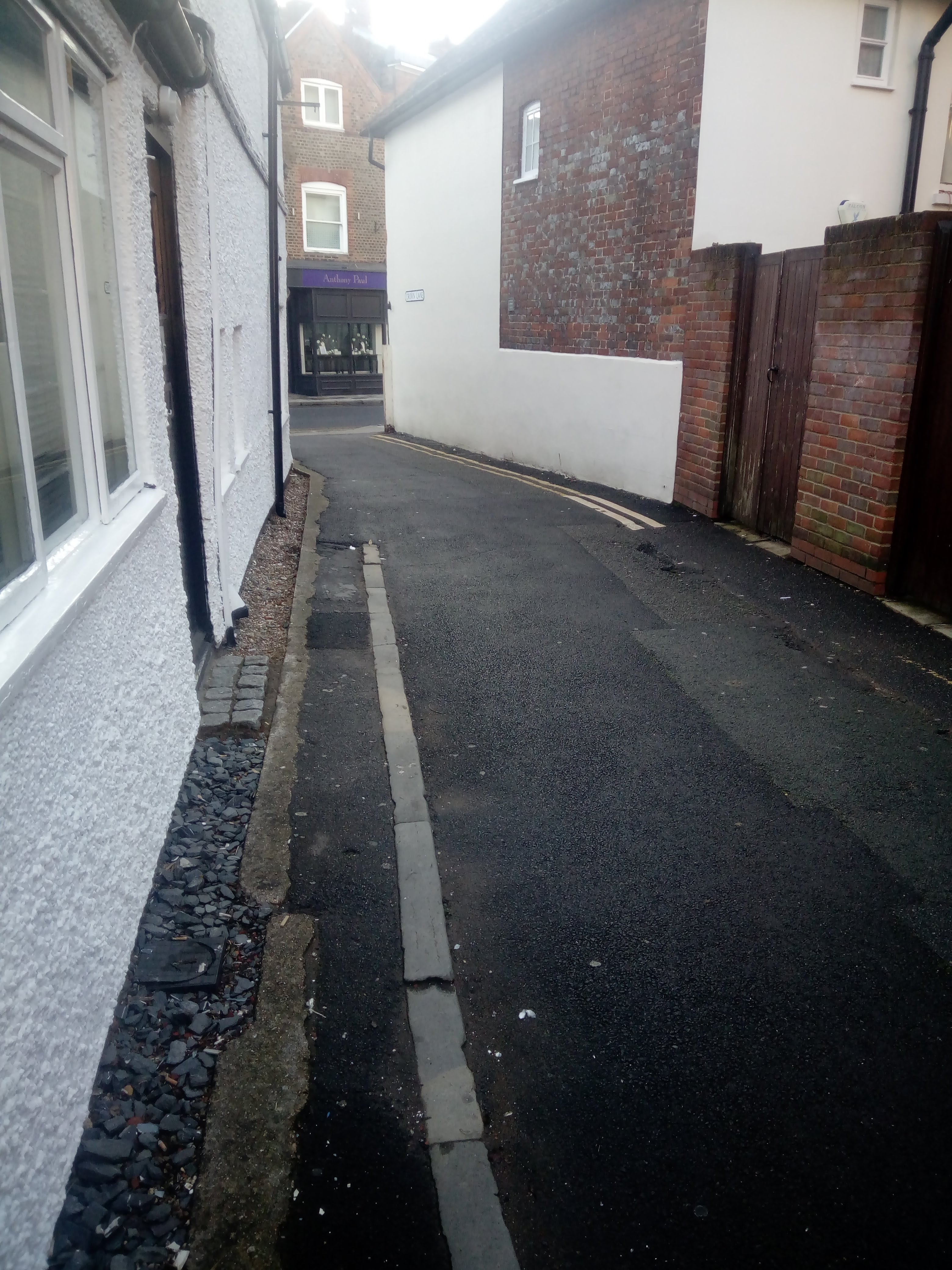
Miss Perfect and Some Tragedy In Crown Lane


Most people who have lived in this lane in Marlow have done so from the early 1890s onwards. Before that the lane existed as a way around to a few buildings but was only ever home to a couple of families at a time. It was sometimes early on called Spittal Lane as it comes off Spittal Street. (For a potential candidate date for the origin of Crown Lane, see the Crown timeline post here - under date 1650. )

On the 1861 census the White and Davis families had homes there. Anthony Davis was a labourer at the paper mills near the river while his wife Elizabeth was a housewife. Thomas White was a sawyer and his wife Mary Ann was a laundress.
Sadly two different residents of Crown Lane were found drowned in the Thames at Marlow- Thomas Holford in 1902 and Arthur Bristow in 1916. In neither case were there any witnesses so the respective juries at the resulting inquests returned verdicts simply of "Found Drowned".
Arthur Bristow aged 43 suffered from "locomotor ataxy". He believed his condition to be worsening and expected to soon lose the use of his legs. As a result he was very depressed and the implication from the evidence of those who knew him at the inquest was that suicide was a probability.  But no one saw him go into the water hence the "Found Drowned" verdict. The jury in his case donated their fees to the Red Cross. Such donations of fees tended to occur when the case heard had been particularly tragic, typically a suicide of an adult or the death of a small child. Both inquests took place at the Two Brewer's pub in St Peter's Street near the river. Local man Albert Truss helped to recover the body.

On the theme of losing the use of legs in 1900 resident "Frank" Tapping took out an ad in the South Bucks Standard thanking all those in the town who had donated money to him after he had to had his right leg amputated. This was in fact Harry Frank Tapping who would have been only 17 at the time. He was the son of Police Constable George Tapping and Mary. Frank appears on the 1901 census as a hairdresser and barber living with his parents and siblings in Crown Lane so the amputation didn't hold him back from starting a career. 
The family had moved there at some point in the 1890s. George was the constable for Lane End from at least 1889 to at least 1892. Prior to that he was stationed at Amersham.
He and Mary married in 1876. Her maiden name was Perfect hence this blog post title. I hadn't heard of this last name before and I had to check it twice to be sure!

The year of Frank's amputation 1900 was also a tragic year for another Crown Lane family when Elizabeth Tubb aged just 40 and a mother with half a dozen children still at home, died. Her husband William, then a labourer, had already had a very troubled life. His father had died at Medmenham when he was only a few months old. His mother brought him back to live with her parents in Dean Street Marlow. He became a shoemaker but found it hard to stay out of trouble. In 1868 he was prosecuted for stealing oats, in 1875 for not paying his lighting rates, in 1880 for rioting when the local Liberal candidate lost the election [more on this in future. Many local working people felt cheated and dispirited by this loss], in 1889 for stealing a piece of leather from Mrs Dewey's Chapel Street shop, and numerous times for failing to pay other local taxes. Poverty looks to be the main factor in these cases. When he stole the leather he said he was a father of ten who had no work for a week after his job with "Messrs Burrows" finished and he was now desperate. The case is a stark reminder of the fact that many families then could afford to make no savings and a single week without pay pushed them to the brink. William received 14 days in jail for that theft. This the court said was a mercy because of his hard pleading of his dire circumstances. The Messrs Burrows had a boot and shoe manufacturing workshop in Marefield, Marlow. 

He still lived in Crown Lane in 1910 when he was summoned for the last time I could find - this time for using bad language.

There was a laundry in Crown Lane in 1929 and an ice cream supplies business at the "Farm House" in the 1950s. When (or if) that house was a farm house I am unsure, it is on my very long "to do" list of further research! It was apparently a school in the early 1830s.

Sculptors Doreen and George Dereford had a studio in Crown Lane in the 1960s.
 
For histories of other Marlow streets or buildings see the "Specific Shops, Streets etc" option on the menu. All mentions of an individual on the blog can be found on the Person Index on the top drop down menu. 

Photographed Summer 2020.
Post written and researched by Charlotte Day. Photos by Kathryn Day.

Sources:
South Bucks Standard 16th November 1900 and 9th December 1910, Reading Mercury 1st February 1902, Bucks Herald 25th July 1868, 14th September 1889 and 19th August 1916. Newspaper copies all from the British Library Archives and accessed via the BNA March 2021.

GRO Marriage Index and Death Index online from their website.

1891 and 1901 census transcribed from microfilm by Jane Pullinger. Thanks Jane.

1881 census from Familysearch website, ran by the LDS [Intellectual Reserve Inc]. Accessed March 2021.

©Marlow Ancestors. You are very welcome to use these images or research for family history purposes if you credit this blog and link here so that our sources remain credited for the information they provided. Thanks!

Thursday, September 16, 2021

Prince of Wales Pub, Mill Road (sometimes address given as South Place) - List of landlords


Updated by Charlotte March 2026
Address can be given as Mill Road / Lane or South Place - it's on the corner of the two. Occasionally it's given as Platts Row / Road which was a group of houses on the other side of Mill Road. Early records also refer to it as being in Strong Beer Acre / Lane (roughly the area on the right hand side of the upper part of Station Road when coming from the town).

1861 - James Twitchen (wife Alice). Note there was a different publican with this name at Little Marlow.

1864 - James Twi(t)chen "Strong Beer Lane" 

1866 - James Twitchen. Premises became fully licensed in September this year, having initially been refused this the year before. E.g gets spirit licence. 

1869 - James Twichen/ Twitchen. James moved to the Royal Oak Bovingdon Green. 

1871- John Miller. Many barge hands lodged there at this period.

1872- John Miller "Prince of Wales Inn".

1873 - John Miller had died so Cassandra Miller (nee Creswell) John's widow took over the licence.

1875 Licence transferred from Cassandra to Felix Atkins, who had married her.

1880 - had windows broken in the 1880 election riot. See here for more information. 

1886 - Cassandra died. See Cassandra's grave here

1887 - Felix Atkins "Platts Row" In this year Felix launched an action for slander against two individuals who accused him before many others of killing his wife. A juror was withdrawn for reasons I could not see and the case collapsed. It does not seem to ever have been revived. 

1891 - James Rose (also carpenter). 

1892 - J.C Read (see below too) 2. Robert Hawkins "Mill Lane".

1897 - James Rose. His wife Eliza Hannah died this year aged just 33. In the same year the couple lost an infant daughter. Eliza was said to have an obliging and courteous manner, and to be a devoted mother and wife. She died after a long illness, leaving 6 young children. James is a member of the Marlow Volunteer fire brigade.  Hold-over  given to George Brown. 
 
1898 - George Brown transferred premises to J C Read (hold-over again). Later this year Johnathan Read went to the Red Lion (q.v)

1900 - John Cook Read again (hold-over) to Robert Hawkins again. 

1901 - 1. Robert Hawkins. Around this time the Prince of Wales had one of the largest Slate Clubs in Marlow, an essential life support for many of Marlow's working class residents. To read more about them see the post here. It had 75-100 members on average. 

1902 - upon Robert's death Mrs Alice Hawkins 2.) Edward Baldwin. 

1903   Edward Baldwin. An Ex Sargent Major.

1907 - Norman George Clark who soon transferred the pub to Benjamin John Cheese.

1909 - Benjamin John Cheese transferred to John Colbourn. John came from Acton, and got the licence by the skin of his teeth as he'd had a conviction for allowing gaming at a previous premises. He managed to produce a letter from the Acton magistrates stating that his character was otherwise good, which saves the day. 

1910 - John Colbourn passed premises on to William Albert Robinson

1911 - Robert Mortis.

1915 - Robert H Chambers.

1920, 21 - Henry Baker.

1924 - Horace Gardner has licence but leaves for Red Lion, Penn. A hold over is granted to Arthur Baynes / Banes. 

1936 - from July - George Turnham who was previously a motor driver for 9 years. 

1939 - Arthur Banes.

1946 - A D Hadlow. In 1947 moves to the George & Dragon in Marlow. 

1960 - E Hale is moving to the Queen of England, Slough. Charles Gibbons will take over at Prince. He came from The Wheatsheaf which is due to close on July 3rd. 


For other related posts see the Pub related menu here

 For every mention of your ancestor here, see the A-Z person index in the top drop down menu.     

© Marlow Ancestors. 


SOURCES

Kelly's Post Office Directory 1863,1883, 1903, 1907, 1911,1915

Census - 1871, 1881, 1891. Transcription from microfilm by Charlotte.

 Historic newspaper articles from the South Bucks Standard and Bucks Herald, held at British Library Archive and accessed via the BNA. -
South Bucks Standard - 20 May 1892, 22 Aug 1902, Reading Mercury 8 September 1866.
Numerous ads, licence hearing reports, property transactions, wills, court cases etc.    

Tuesday, September 7, 2021

Red Lion, West Street


A short intro into the pub's history.
The will of Thomas Bowen senior one of the publicans of these premises, who died in the 1840s can be read here. He was running the pub by 1824.

Thomas junior his son ran the pub after Thomas Senior retired. Thomas Junior married Priscilla Dorrel of Kingston Oxfordshire in 1832.
The next year the pub building with the yard, garden and stables that went with it were valued at £12 a year for rental purposes.
Either Thomas senior or junior was one of the executors of the will of Thomas Plumridge of nearby Quoiting Square in 1816.

The pub was a stopping off point for some early coaching services and also offered accommodation to travellers. Until the 1840s it hired out horses and wheeled vehicles.
In 1868 a man staying in the pub for a night made off with 3 of the property's sheets and sold them in High Wycombe. He was finally caught and apprehended in Cambridge! A sentence of 3 months hard labour was handed down to him.


The grave of Priscilla Bowen nee Dorrel, wife of Thomas Bowen junior. 

Full historic landlords listing for this pub here.

Other pub, ale house, inn etc posts for Great Marlow and environs see here.

More posts about the historic people and businesses of West Street indexed here.

Post by Charlotte. 

Use the A-Z  person index in the top drop down menu to find every mention of an individual on the blog, however minor. 

Sources:
Will Thomas Bowen at the National Archives, transcribed by me.
Windsor and Eton Express Jan 25 1868. Copy held at the British Library. Accessed via the BNA March 2021.
Property records held by my family and transcribed by me.


©Marlow Ancestors. You are welcome to use my research for family or local history purposes if you credit this blog and link here.

Saturday, September 4, 2021

Marlow Cemetery Pictures And Information

Stone laid by William James Morgan JP (Cemetery Chapel, 4th July 1910) 


A portion of the cemetery was dedicated by the Free Church Council on 8th November 1910, following a service at the Wesleyan Church. The rest was consecrated by the Church of England. In reality burials were not segregated. 


The Chapel building tender was won by Mr Harris. It was designed by C S Vardy of Maidenhead. 


The land for the cemetery came from Mr Henry Layton of the Rookery and had been farmed before so it needed to have crops cleared, and the earth ploughed before use.  


Fencing by Messrs Batting of Marlow. Benches arrived 1913.  (Current benches are replacements of the originals)

Originally the cemetery had small areas of formal planting and flower beds, with plants in the first few years provided by Danesfield head gardener Thomas Blackmore. 


To find images of individual grave markers here, see our index here

To find all mentions of your ancestor here use the A-Z person index in the top drop down menu. As of Feb 1 2022 there are 3,025 people listed there. New posts added daily! 

Wednesday, September 1, 2021

Will Summary John Shaw of Great Marlow 1823

 John Shaw, surgeon. Will proved 1823.

All just debts, funeral expenses to be paid.

All personal estate and effects whatsoever to beloved wife Georgina who is sole executor.

Witnessed by Margaret Waldrop, Nathaniel Grant M.D and Charles Bradley, clerk.

That didn't take long did it?


John's grave in All Saints Parish Church, Great Marlow. d Oct 9th 1823 Age 31 

Will transcribed and summarized by me, Charlotte Day, from a will at the National Archives, Kew and then summarized.


Related Posts:

Call the Apothecary here

To find all mentions of an individual here use the A-Z person index in the top drop down menu. 

©Marlow Ancestors. Use this summary for family or local history purposes if you like with credit to this blog.

Tuesday, July 27, 2021

The Old Police Station and Police Court, Trinity Rd, Marlow (Formerly Gun Lane)


 Police Court is top pic, police station below. Sorry about all the shadows! 


The 1869 date on this building refers only to the police court which was added to the existing police station when the latter was around 10 years old. This first part may have been converted into police use from a near derelict domestic building called The Garrison, sources conflict* Plans to add a room to the station for the purpose of holding petty sessions was mooted in 1865, but progress was very slow. The extension was opened in October 1869. It provided direct access from the police station so prisoners could proceed straight into the court. Normally referred to as the Petty Session Room in the first few years, there was also a retiring room for the magistrates. Sir William Robert Clayton donated a bust of the Queen and the Prince and Princess of Wales to stare down at offenders. In 1876, he donated an 8 day clock too. 

Previously the petty sessions were held in a small room of the Crown, which they had utilised for that purpose for many years. An agreement was made that the authorities could pay a pepper corn rent for it. (The Crown landlord collected one guinea from each magistrate per year in theory but not all actually made the payment.) The magistrates however frequently complained about the unsuitability of this accommodation. In particular they feared trying a poaching case because they said the court was overwhelmed with curious spectators (usually vocally supporting the poachers). It was hard to control the numbers coming into the tiny room, often resulting in everyone packed so close that you "could scarcely stick a pin in between them", as one person charmingly put it in 1865. This mixing of closely pressed men and women was "very disgraceful and often indecent" they said. Disruption of proceeding was not uncommon. Some questioned why the town hall could not be used instead, but this was let to the neighbouring Crown and the proprietors of that would not agree for a larger room to be used there. They said the court proceedings attracted a large enough mob of ne'er do wells already - aside from those answering a summons! A new room would allow the sessions to continue in "peace and quietness." Records suggest that some sessions were held at the police station even before the room was finished, although that can't have been easy space wise. 

The petty sessions room extension was completed quickly once permission was finally granted for it to go ahead. Once finished the "commodius" extension was praised as "well arranged with every accommodation." Such satisfaction was short-lived. The police station was made for a sergeant and 2-3 constables. Sometimes an
extra constable was bought in at weekends during Marlow's busy summer river season. Marlow was granted a forth constable in 1900. Complaints were made about insufficient lighting at the station, cramped conditions and dodgy heating. (Actually the first complaint about police station heating came as early as 1859!) Although improvements were made in fits and starts, Marlow did not get a new police station until the 1960's. 

The senior police staff were usually resident at the police station itself in Victorian times as you can see from census returns. (The unmarried junior policeman often lodged elsewhere, although at Marlow at least one is usually to be found lodging at the station.)  I believe the first police Inspector resident was Thomas Knott Clark who may well have arrived in 1858. He was certainly there by the time of the 1861 census - address "Police Station Gun Lane". Born in Hillingdon, Thomas was living in the station with wife Emma nee Cheese and their two eldest children Thomas age 3 and Emma age 1. Inspector Thomas would later return to the trade of his youth in Uxbridge - he became a coach painter in High Wycombe. The other 1861 resident in the Police Station was Constable William Nash age 21. In 1863 Inspector John Pearman took over and described the station as a "nice home with a good garden". 

The property included an airing yard for prisoners and later, stabling for horses. The stables were extended in 1910. 

The Petty Sessions were originally held twice a month, although hearings for indictable offences could be held at other times. The days of the week it operated on and the overall frequency varied over the years. The courtroom saw occasional other uses such as coroner's inquests and parish council meetings. A plea from the Marlow Rifle club in its 1859 incarnation to store their weapons at the Police Station was refused. The police felt they could only be conveniently stored in the corridor leading to the cells. This spot was considered a little too close to the prisoners for their liking, especially in the event of a riot. (A not infrequent occurrence in Great Marlow!)

Did the Marlow police patrol Dean Street and Marefield in pairs? This is a common Marlow story and the answer to that question is both yes, and no. 

In the earlier 19th century the area was both poor and home to many hardened poachers. Some arrests were certainly drawn out and bloody affairs - see the post here for details of one especially serious incident! It's unsurprising that the parish constables tended to take a couple of tithing man along to assist when attempting an arrest on one of these individuals but these were extraordinary, planned operations not part of patrol duties. 

But this must be tempered by the many narratives of crimes and arrests where the residents of Dean Street show no hesitation at going to the police for help themselves. It was not always "us and them".
In mid and later Victorian court cases when two constables give evidence about assisting in the same arrest,  or if both have witnessed the same crime, these things have nearly always occurred because the second man has been summoned by the first, not because they were patrolling together in the first place. And the delay recorded in help arriving means assistance was not just a few feet away. Marlow didn't have enough constables on duty at once to go about routinely paired up at that time. Remember they had to have men patrolling outlying places like Bovingdon Green and Handy Cross not just central Marlow. (Little Marlow got a constable in 1866) Also the narrative of events, particularly around domestic abuse cases, are full of single constables entering homes when they are aware of incidents occurring inside. They did not wait for back up. These were often brave men.

But if we move on to the 20th century there are numerous accounts in the 1920's and 30's of pairs of constables on patrol (although not exclusively in the Dean Street area by any means). So while the evidence definitely doesn't support a long tradition of paired policing in Dean Street, there was certainly a time when at least sometimes it was needed.

Sometimes those passing the police station and court in a less than sober manner caught the attention of those inside. At least one man who sang a bit loudly outside was arrested and bought straight before the magistrates for a telling off. Labourers William Laurie and Albert Wingrave probably felt a little less merry after their arrest for drunken behaviour outside the Police Station in 1907. They were fined 10s each plus costs. They received a night in the cells too. And in 1912, Florence Collier of Trinity Court had the misfortune of being overhead using bad language at her children, by the police within the station. She was summoned but it was decided to be lenient to her and dismiss her with a caution. She probably swore that little bit more quietly in future! 

In 1883 suspected sheep rustler James Howard mounted a daring escape from custody in the police station. This deserves a post of its own, which will follow in future.

*Did you know?
Marlow man Charles Carter acted as architect for Beaconsfield police station (opened 1870) through his position as the county surveyor. Charles was also responsible as architect for what is now the Masonic Centre, the new Blacksmiths Arms at Handy Cross, and the Primitive Methodist Chapel (now Liston Hall) amongst many more projects. 


Above, the Police Court sign. The brickwork visible around it is in the English Bond pattern, not particularly fashionable at the time though it came back into fashion in later Victorian times. It was likely chosen for its strength.

*We are working to confirm the exact date the building came into use as a police station. The police were established in Trinity Lane by 1861, but they may well have been there from 1859 based on descriptions of the interior of the building then in use. The former parish lock up in the base of the Town Hall was convenient for the old petty sessions held adjacent. A man to look after that lock up was sought in 1856 - wage of 15 shillings a week with a uniform of hat and coat provided. An earlier "cage house" was also located near the Crown. In 1852 the old lock up was described as a "filthy hole" with no convenience or adequate means of ventilation. It was however not impossible to escape from, as happened on several occasions. Jesse May, arrested for robbery with 3 others,  found his way out in 1853 through a gap in the "railings" said to measure just over 25cm by 21cm which does not seem entirely credible. But whatever the hole size, he did escape and was not apprehended again for 5 months. 


Related posts:

Victorian Sergeant John James Maneely biography here

History of Gun Lane here

Parish Beadle Pocock here

Crime and disorder in old Marlow here

A full list of Marlow crime related posts can be found under the General History option on the top drop down menu. 

Use the A-Z person index to find every mention of your ancestor - there is over 6,000 former Marlow residents currently listed as of July 2022.  

This post researched and written by Kathryn Day. Further research by Charlotte Day.


References

County Compendium, Diary, Statistical Chronicle and Magisterial and Official Directory 1879. Ed - Sir John Richard Somers Vine. 

Accounts and papers volume 25, Great Britain Houses of Parliament, 1849. 

The Builder, December 10th 1870, digitised by Google. 

Berkshire Chronicle 22 October 1859. 
Bucks Herald 22 October 1859 - thanks to Mathew Peterson.

Dickens Dictionary of The Thames 1856 edition. 

Bucks Chronicle and Bucks Gazette 1 July 1865
South Bucks Free Press 30 June 1865, South Bucks Standard 18 May 1900 & 25 January 1912. Windsor and Eton Express 9 October 1869, Bucks Herald 09 June 1866 & 5 July 1884, Windsor, Maidenhead and Eton Journal 15 May 1876, Bucks Advertiser and Aylesbury News 31 Jan 1852 : all at the British Library Archive. 

Kelly's Directory 1883, 1903, Kelly's Directories Ltd. 

Dozens of petty session case narratives, too many to list individually! 


©Marlow Ancestors. .

PHOTO ID ANYONE?

 Can anyone help a fellow family history researcher Linda identify where this staff photo may have been taken in Marlow? Underneath are some...