Search This Blog

Showing posts with label Red Lion. Show all posts

Sunday, April 10, 2022

People of Potlands (Portlands) Great Marlow

This post tells something of the people who lived in Potlands (morphed to Portlands in about the 1870s), a higgledy piggledy collection of about 7 cottages and outbuildings plus some small market garden plots that sat behind West Street, next to what we now call Portlands Alley. All are long gone. The name was present in the 1600s, and buildings erected there by the mid 1700s but this post focuses on the people of 1800s Potlands. Portland Villas, on the opposite side of the alley, will be a separate post of their own in the future.

A large number of the male residents of the Potlands cottages were gardeners, both domestic and market. The Bradshaw family rented market garden grounds off both sides of West Street from at least the late 1700s, including in Potlands. Members of the family were still there at the time of the Victorian censuses. William Bradshaw, a gardener, and his wife Catherine, a lacemaker, lived in Potlands for decades of the 1800s. Their son William and his wife Sarah also made their home there. William senior won multiple local prizes for the fruit and vegetables he grew in his gardens- plums, pears, beans, peas. 

John Neighbour (born July 1804, according to his census entries in Monks Risborough, Buckinghamshire) was the gardener to the Wethereds at the large house Remnantz in West Street, and another prize winning vegetable grower. He too was a long standing Victorian resident at Potlands. His son William born 1834 grew up to be the much lauded gardener of Court Garden house near the other end of Potlands Alley. He lived with his wife Emma in the Lodge in Pound Lane in 1861 before bagging the even more prestigious job as Head Gardener to Sir William Clayton at Harleyford in 1866. Once again here he was a prize winning gardener though his speciality was flowers such as freesias and petunias rather than fruit and veg. 

Samuel Quelch the coachman who lived at Potlands with his wife in 1861 probably worked either at Rennantz or Court Garden. The Wethered family of Remnantz definitely owned 2 cottages in Potlands.

Adding to the country feel of this address was the piggery at least one cottage had next to it in the 1830s. Going to a pump or well to fetch water helped reinforce the rustic experience. Potlands got no mains water supply until 1903.

On a more industrial note on one side of Potlands Alley beyond the cottages lay Wethered's Brewery which was a major employer in the town and which against all odds managed to persuade several Potlands men to work there rather than in a garden. Examples include Charles Bateman a brewery labourer resident there in 1881 and Henry Smith a maltster in the same year. And 27 year old 1901 resident Francis Faulkner was an assistant mineral water manufacturer. Charles Bateman was summoned to the local court for driving his cart without a rein in 1870. To be honest the brewery horses were generally so well trained and rehearsed in their routines that they needed very little guidance on the road, but Victorian law was inflexible on that point. 

When the residents weren't hard at work they had a wide choice of public houses within a stones throw from their homes. The absolute nearest one was the Red Lion which was perched on the corner of Potlands Alley and West Street. Potlands resident John Loosley, a labourer, stopped off for a drink there on his way home from a trip to Henley in 1832 and had his cotton umbrella stolen from the premises. 

Alfred Neighbour (born 1840, son of William above) who grew up in Potlands became the landlord of the Red Lion. Like most Great Marlow historic landlords he managed more than one premises in his time so our Marlovian ancestors would also have seen him and his wife Emma behind the bar of the Dog and Badger in nearby Medmenham. In 1867 as landlord of the Red Lion Alfred was summoned for allowing gambling at cards on his premises. However the Red Lion wasn't a very troublesome pub overall and the cottages of Potlands were generally a quiet place to live. (Read a biography of Alfred Neighbour here) Robert and Mary Loosley had a pair of sheets stolen from their garden in 1858 during a mini crime spree in the town and there was the occasional drunk arrested in the nearby alley or a robbery there during the Fair, a tragically destitute and starving man stole a half sovereign that Mrs Jane Bradshaw had just put on her mantlepiece in 1879 but that's about the extent of crime in the immediate vicinity. Robert Loosley, born circa 1805 was, by the way, another of Potlands's gardeners. He was the brother of the John Loosley who had his umbrella stolen in the Red Lion. 

What of the occupation of the ladies of Potlands? Eliza May born when her parents (Joseph - a gardener!- and Hannah Jane nee Brown) lived in a Potlands cottage in 1833, grew up to run a boarding house by the sea in Hastings Sussex with her siblings George and Jane. Given that Hastings was popular for seaside holidays / recuperation and that the Mays had a plum spot on Carlton Parade near the beach they may well have found themselves lodging other Marlovians down for a rest cure, or bumped into them on the seafront.

Like so many widows in Victorian Marlow 47 year old Elizabeth Faulkner resident in 1901 earned a living as a seamstress. Living with her was her widowed father Jonathan Brown who was ...yes you guessed it - a gardener! Elizabeth was the mother of Francis Faulkner mentioned above. 

Martha Neighbour, wife of John the gardener above, worked as a seamstress both before and after her widowhood.

Many widow seamstresses would have been returning to the trade they had pursued as young unmarried women. Ellen Smith living in Potlands with her family in 1901 was a 17 year old trainee dressmaker. 

A linked trade was that of lace-making as followed by amongst others 13 year old Ellen Chown and 15 year old Eleanor Merchant.  Ellen Chown was living with her mother and stepfather James Hopkins, who from other sources is known to be a labourer at the brewery. The family later moved out onto West Street. In 1862 Ellen found James dead in bed at the age of around 58. The inquest demonstrated just how worn out James was- here was a man who for years had struggled for breath and coughed of a morning, whose legs were 'bad' and who was starting to suffer from palpitations too. The shocking thing for us today looking back is that despite all these symptoms Ellen testified that she considered this but middle aged man to be in good health! Low was the general standard of wellbeing for manual labourers in those days. James had the day before his death returned home from work at 6pm, had only a cup of coffee and a slice of bread and butter to eat, before retiring to bed at seven. He was up again at 10.30 because he had as a matter of routine to put in another hours work overnight filling barrels. He returned just past midnight and should have been up again ready for work between 5 and 6 am the next day. Worried that he wasn't, Ellen went to check on him and found him dead. The inquest was held in the Red Lion. By sad coincidence Ellen was herself found dead in her bed in West Street in 1891 resulting in another inquest. She too was someone who was someone usually short of breath. She was formally identified by her half brother George Hopkins who had moved to Cookham and, true child of Potlands that he was, became a gardener. The last person to see Ellen alive was her friend and previous Potlands resident Sarah Smith to whom Ellen spoke her final words of "Good night, God Bless".

The deaths of both James and Ellen were deemed to be due to natural causes.

Researched and written by Charlotte Day.


Related posts:

To find more posts about Potlands or nearby addresses like West Street and Hayes Place see this index.

Every mention of a person on this blog can be found on the A-Z person index (over 4,000 people at last count).

More posts relevant to the Red Lion can be found on the Pub Related index.

Where your gardener ancestor worked: here


Some sources:

1841, 1851, 1861,1871 and 1881 census Great Marlow my transcription from microfilm. Census information remains Crown Copyright.

Hastings census 1871,81,91 and 1901 Great Marlow census transcribed from microfilm by Jane Pullinger.

Bucks Gazette 20th October 1832.

Reading Mercury 20th Feb 1858. South Bucks Standard 16th Jan 1891. Copies held at the British Library Archives, via the BNA.

1833 parochial assessment original working notebooks, held by me and transcribed by me. 

Parish registers.

Additional research notes by Aiden O'Brien. 

Saturday, February 26, 2022

Bowen, Dorell and Dorell Bowen graves, Great Marlow


Mary Dorell who departed this life November 3rd 1848 age 70 years. (Read her will, proved 1849 here )

ALSO OF

John Dorell Bowen died Aug 22 1850 aged 16 years.


The footer of the above grave. 


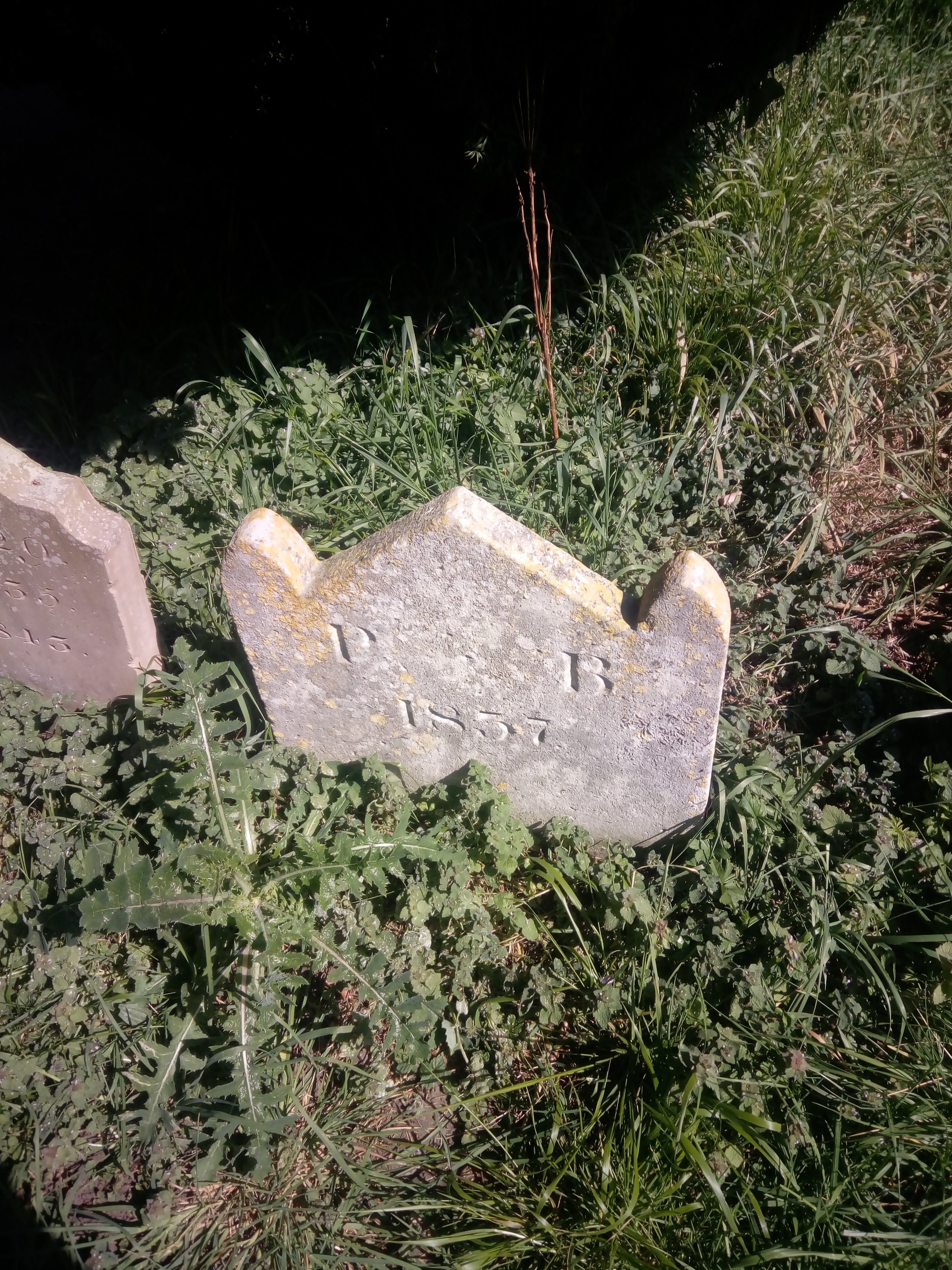
Above, Priscilla, wife of Thomas Bowen Junior of the Red Lion of this town. D.1837 (She was nee Dorell.) They married 1832, at Aston Rowant where Priscilla was from (Kingston Blount). Mother was Mary Dor(r)ell. 


The footer for Priscilla's grave giving her initials and death date, above.


 Above is the footer for a grave that is no longer visible as a yew tree trunk is within mm of it's surface. It contains the initials :

M.B 1829

T.B 1835

T.B 1843  [This is likely Thomas Bowen senior as he was known, father to Thomas and father in law to Priscilla, who died this year]


These grave stones are in All Saints Churchyard, Marlow. 


List of Red Lion landlords here

Grave marker image index here


© MarlowAncestors

Tuesday, November 16, 2021

Great Marlow Stagecoach Services

  This is a follow up post to our entry on the Wyatt family who did so much to make coach travel faster for late 18th and early 19thc Marlow residents.  Their service to London, run with a series of partners and finally alone, was known as The Original and then The Wyatts coach. You can read more here.

But there were others services and this is an overview of the main other ones. 

The coaching trade boosted income for the innkeepers who provided a starting or finishing point for a journey. Coach building and maintenance for those owning their own private coach or carriage also provided work. We will mention Marlow resident Mr Lovegrove who advertised his coach painting services in 1770.  He had he said, been "regularly bred to the profession in London" and would do the job in the best and most professional manner. 


At first Marlow did not have a daily stagecoach service. In 1773 there were journeys made three times a week to London in the summer and twice weekly in winter. 

In May 1788 a new daily post coach run by Saunders, Smith and Co started running from Mr Dixon's the Lower Crown. Sundays were of course excepted. It left at 7am and returned to Marlow on the same day at 2pm. It arrived at the bustling coach interchange known as  The New White Horse Cellar Piccadilly. It's route went via Little Marlow, Wooburn and Taplow. The newspapers at this time carried advertisements for a coachman to serve this new route.  So what qualities would a coach driver need? Mr Dixon was mindful of the reputation some drivers had for being drunk in charge and reckless with both coach and horses. So his ideal candidate should be steady and sober, and must have held a similar role for some time. Experience with driving in both London and country areas was essential as was a good temper. What especially dates the ad is a requirement for the successful candidate to be free of smallpox.  


In 1790, the Lower Crown's London coach was leaving an hour earlier. It took an hour to get to Maidenhead, and 4 hours to reach London itself. Three years later, a "neat, new, elegant" London coach was run from the same Lower Crown by Minchener's [also occurs as Miltchener, this was Elizabeth of Colnbrook], later a partner of Wyatts. The first service set forth on the 8th April 1793, promising lower fares. The charge for travelling in the more expensive interior seats was 8s from Marlow to London in 1797, one shilling less if travelling from Maidenhead. There was also a special rate for small parcels at 4d. This coach went via Maidenhead (Swan Inn) to Piccadilly as before, but it also now advertised that it stopped at the New Inn, Old Bailey. It took longer to arrive in London than the previous coach, at 5 hours. But it was "safe, easy, and expeditious", at least if no highwayman were about. Sadly Minchener went bankrupt in 1806. A daily service departing from the King's Head, Old Change at 10am is also mentioned in 1793. 


Moving on to 1798 a new Marlow coach to the capital was started from Mrs Chapman's Upper Crown. This went through Maidenhead and arrived at the Bolt and Ton, Fleet Street via the inevitable New White Horse Cellar, Piccadilly. If the thought of getting up early to catch this coach was off putting and you wanted the luxury of selecting your own departure time, then the proprietors would allow you to hire out the entire coach and it would then set out when you chose. That however was an expensive option.  Around this time or a little later William Williams was running a post coach from the Lower Crown. William moved his post business to the Corporation Arms in High Wycombe in 1808, still promising to make travel as comfortable as possible for all those "pleased to honour him with their favours". 


It was not just the two Crown Inns that were coach stops. In 1819 Robert Mossington (Mossenton) had recently taken over the Greyhound Inn in Spittal Street. He was keen for everyone to know he had spent a great deal of time and effort on fitting up the premises in the most modern manner. He would also be running a new service to London, known as The Accomodation coach -  "All possible attention will be paid to safety, convenience and comfort of passengers". This took 5 hours so no real improvement had been made on earlier running times. Robert seems to have done very well at the parcel carrying part of his business, and so he also recruited the Two Brewers in St Peters Street to act as a parcel booking office. He offered a slightly later start from Marlow than his rivals at first - 8am with a return from the city at noon (later 2.30 pm) the following day. He did eventually bring his start time from Marlow back more in line with that of his rivals. The route was via Little Marlow, Maidenhead (the White Hart), Burnham and Slough to the Bull Inn, Holborn, the Belle Savage, Ludgate Hill and The Gloucester Coffee House.  Fares were 12s for a hopefully more comfortable interior seat, and 7s for an outside one, to London. He obviously was doing something right as a little over a month after starting his coach, he decided to make it a daily rather than thrice weekly service. (Sundays excepted)


WS Williams and Co obviously thought there was demand for another London service and so they launched a new post coach from The Greyhound in 1820. I believe they may have already run to London via Little Marlow, Wooburn and Taplow as they tell us in the adverts launching the new service that the coach serving these places will run unchanged bar an earlier start time.  They followed this by The Favourite in 1823  - more or less following the route and timings of Wyatt's the Original which was still going.  The Favourite went via Bisham (the Bull), Pinkneys Green (the Golden Ball), Maidenhead (White Hart), and Taplow (The Dumb Bell Inn) to Gloucester Coffee House, Piccadilly, and the Belle Sauvage, Lydgate Hill  London, daily, except Sundays. And why should you use Mr Williams service? He carried only 4 inside passengers in The Favourite, so was offering more leg room! He said his service had been timed not to interfere with existing services but this was only true on the return leg, which also took in Aldgate. Both the Favourite and The Original left Marlow at 9am (The first Williams coach left much earlier). The Favourite departed from the Greyhound, and also used The Two Brewers and The Bull Bisham as booking offices. Relations between the old and new service were naturally strained. When the two coaches met at the famous coaching stop the White Horse Cellar in London in September 1823, (before the timings had been moved further apart)  Wyatt and his rival Marlow coachman, a Mr Bonus came to blows. Wyatt accused Bonus of assaulting him, by punching and kicking but Bonus said he was provoked and warned Wyatt he would do just so if he did not leave off annoying him. Witnesses agreed with Bonus who was therefore unpunished. The trigger for the squabble was the sight by Wyatt of a lady who had formerly been a regular passenger of his was now a customer of Bonus. Wyatt said he had merely approached her calmly and asked for her to consider using his coach again. At this, he claimed Bonus had approached him and attacked. Bonus said the lady was actually already inside his coach at the time and Wyatt had been standing on the coach step conversing with her and offering to undercut Bonus. A very competitive market! The Favourite deposited it's passengers, purloined or otherwise at Marlow at 7.30pm.


Then there's the services that ran from Wycombe to Henley or Reading via Marlow. The coach and especially the numerous carrier services changed over time so this is just a summary. The Industry also known as Hone's Coach after it's operator, is probably the best known post coach. It started in 1828 and initially ran every day except Sundays. But within a few months, the service was reduced to running 3 times a week. (Tuesday, Thursday, Saturday, with Wednesday replacing Tuesday by 1830, left Reading at 4.45pm, later 3pm) However some services tweaked their timetable to reduce services over the winter when travel was less appealing, so the service was naturally changeable. The Industry is interesting because operator Hones & Co was a big concern in Reading and they timed their departures for Marlow and Wycombe for after the coaches from other major destinations had arrived, such as Bath, Brighton, Portsmouth and Bristol. So if your ancestor came to Marlow from further afield, this may well have been the route they took to arrive in town. In 1830 the mile stones between Marlow, Henley, and Reading were "newly painted and fitted up" so a traveller "has now a chance of knowing how far he is progressing". Those showing Marlow 1 mile must have elicited a silent cheer for the weary passengers. On the return from Henley, the coach pulled up at The Upper Crown at 7pm, but in the reverse direction passengers boarded at the Red Lion in West Street. Another service running from The Falcon, Wycombe to the White Hart Henley via the Three Tuns, Marlow was The Sociable by Thomas Hall, later known as "The Van", on Tuesdays and Fridays. The Van was afterwards ran by Lofting then Farley, from The Greyhound and the Tuns with the Halls operating a service from the Clayton Arms. Other carriers in this pre Victorian period include Thomas Wyatt's "Wagon" which went daily to London from The Horns, Chapel Street via Maidenhead and Salt Hill, Slough, and James Druce who ran to Wycombe on Fridays.

The Wonder omnibus with its beloved charismatic driver Charlie Burns went from the Crown (upper) to Maidenhead to meet the trains before the line came to Marlow. He will be the subject of his own post in the future.


Notes : In 1670 the carriers to London from Marlow came there every Tuesday, stopping at the Swanne in the Strand.  

1842 - carriers to London - Johnson, goes to the Bell, Warwick Lane, returning to Marlow on Thursday at noon. Robinson, to the The Rose, Smithfield, returning from there Tues and Fri mornings, and Wyatt's to the King's Arms, Holborn and White Bear, Piccadilly, returning Tues and Sats. (In 1807 the stop is called the Black Bear)

 Other later Victorian carriers include:

James Johnson of The Plough (to London once a week returning two days later), Charles and Tracey Wyatt (a man, Tracey was a male name then!)  from the Horns Inn Yard to The New Inn, Old Bailey and Piccadilly twice weekly, returning the next day each time, Wyatts from the Horns to Maidenhead and Slough, Richard Robinson from the Greyhound to Wycombe twice weekly. And there was a coach service from The George and Dragon once a day each to Henley and Windsor in the 1880s. And an omnibus to Windsor from the Greyhound to meet the South Western trains once a day.


Related Posts


More transport related posts can be found in the listing here

 All posts relating to an individual can be found under the A-Z person index on the top drop down menu. 

Marlow highwayman Peter Rivers here

Marlow's toll gates here


For posts related to the inns mentioned, use the Pub Related option, yes also on the top drop down menu! 

Researched and written by Kathryn Day. 


SOURCES

Extract of the annual returns of the Great Marlow and Stokenchurch Turnpike Trust. Great Britain House of Commons. 1851, Vol 18

Kent's Directory for the year 1793 (Richard & Henry Causton, 1793)

Taylor, JohnThe Carriers’ Cosmography. The Map of Early Modern London, Edition 6.6, edited by Janelle Jenstad, U of Victoria, 30 Jun. 2021, mapoflondon.uvic.ca/edition/6.6/CARR1.htm.

Reading Mercury 19 March 1770, 9 March 1773,  17 May 1780, 17 & 24  April 1788, 1 August 1789, 4 March 1793, 27 June 1796, 17 April 1797, 14 May 1798, 16 September 1811, all copies from The British Library. 

Oxford Journal 28 July 1787, 4 August 1804, 30 April 1808. As above. 

Windsor and Eton Express 05 September 1819, August 6 1820, 9 August 1823. As above. 

Berks Chronicle 6 September & 15 November 1828, 21 August 1830. As above. 

Bucks Gazette 19 February 1831, 31 March 1832, 24 October 1835 As above. 

Pigots Directory 1830, 1831,1842, 1844

Bucks Herald 3rd October 1840, As above

Bucks Chronicle and Bucks Gazette  24 November 1849

Statesman, 4 Oct 1823. 

Enrolment books, deposited with Clerk of the Peace, ref Q/RX 1835, Bucks Archives. 

Robson's London Directory 1842. 

Slaters Commercial Directory 1851

High Wycombe Directory and Handbook 1885

Crosby's Complete Pocket Gazette (B Crosby & Co, 1807, 1815)

Dutton, Allen and Co Directory and Gazetteer 1869

Kent's Directory for the Year 1793 (Richard and Henry Causton 1793)

©Marlow Ancestors

Monday, November 1, 2021

Historic Landlords Red Lion West Street Marlow *Updated Feb 2026*

 This post is updated as new information emerges. All listings are as noted in original sources, including alternative spellings.  Note that some listings may in fact refer to father's and sons sharing the same given name so be sure to double check this. 


*Note "The Old Red Lion" was a separate premises at Little Marlow, not Marlow*

1816- Mr Bowen. Likely Thomas Bowen senior.

1823 - Thomas Bowen. There were two generations of Thomas Bowens. Thomas senior had retired by 1840 and went to live next door to The Red Lion. He died 1844. His will is summarised here

1844 -66 Thomas Bowen junior. Called the Red Lion Inn 1864. To see the grave of Priscilla Bowen his wife, and of John his son see here. Thomas was parish rate collector for many years, and people went to the Red Lion to pay up. He was assisted in this collection by Samuel Edmunds. In 1859 he was elected parish surveyor of the roads at a £20 annual salary. This was a difficult job and made Thomas numerous enemies!

1866 Robert Foottit- the Marlow High Street chemist took on the license temporarily as a legal formality as he was the executor of the will of Thomas Bowen junior who had died aged 66.

1869- 71 Alfred E Neighbour - moved to the Dog & Badger Medmenham after his second marriage to Emma Sawyer whose family had been running the inn for decades. Alfred first marriage was to Hannah Elizabeth Shaw in 1864, also a publicans daughter. In this case, Hannah's parents Charles and Charlotte were of the Three Horse Shoes, Gun Lane and after that The Bear, Chapel Street. For more see here

1871 -1872 - William Lockie

1872 - Philip Woodman

1874 - Philip Woodman "Red Lion Inn"

1875-98 William Harris. Mrs Caroline Harris was nee Plumridge, the daughter of former White Hart publican and builder William Plumridge who  built the Wheatsheaf. She is also sister to the builder of the Duke of Cambridge, another William Plumridge. Her nephew (William again) runs the Duke of Cambridge at this time. 

1898 J Reed. "Red Lion Inn" (came from Prince Of Wales)

1899 - Johnathan Read

1900 -1.) Johnathan Read  2. S A White

1901 - Jane Thornton. Age 51, widow.

1903 - Mrs J  Thornton 2. A J Thornton. 3. Angus Fletcher Gordon. 

1904 - A L Gordon qv 2. George Stevens who had previously been a colour sergeant in the Lincolnshire Regiment.

1906 - "Red Lion Hotel" Mr George Stevens. He moved to Windsor by March 1907. 2. George H Fox (Second source says Cox)

1908 - 1. George H Fox . George and his wife moved to the Bell Hotel Twyford 2. Ernest Richard Stemson

1909 E R Stemson to Frederick W Lester. NB when Frederick dies in 1920 his name is entered on Marlow's Roll of Honour which commerorates the war dead of the First World War. This is because it was considered that he had died as a result of injuries he had received while on active service. 

1911 - Mrs E C Lester [Elizabeth Caroline aka Eliza] See also The Clayton Arms here. Daughter Irene helps in pub. For the graves of the other Lester children, see here.

1915 - James Horton or George Horton depending on source. Most likely George. 

1920 - George Douglas Horton

1939 ; Stanley Todd

1958 - S G Todd

Additional research by Charlotte Day.


We mainly focus on pre WW1 listings but sometimes list later names if it ties in with research we are helping with or if we are particularly interested in a premises. *By request all listings will be updated to include landlords up to the 1950s shortly* 

Related Posts:

Some more history of the Red Lion in this previous post here

See Pub Related menu for related posts here

All mentions of someone on the blog can be found under the Person Index in the top drop down menu. 


SOURCES INCLUDED

1853 Mussons and Cravens Commercial Directory (Compiled 1852)

Kelly's Post Office Directory 1864,1883,1899,1903,1911, 1915

Pigots Directory 1823, 1830

Census 1851,1861,1871,1881,1891 transcribed by Charlotte from microfilm.

1833 Parish Assessment working notebooks transcribed by Charlotte.

Newspaper reports from the Reading Mercury, Bucks Herald and Oxford Journal, accessed via the BNA. 

© Great Marlow Ancestors

You are welcome to use this material for family and local history research providing you credit this blog and link back here

Tuesday, September 7, 2021

Red Lion, West Street


A short intro into the pub's history.
The will of Thomas Bowen senior one of the publicans of these premises, who died in the 1840s can be read here. He was running the pub by 1824.

Thomas junior his son ran the pub after Thomas Senior retired. Thomas Junior married Priscilla Dorrel of Kingston Oxfordshire in 1832.
The next year the pub building with the yard, garden and stables that went with it were valued at £12 a year for rental purposes.
Either Thomas senior or junior was one of the executors of the will of Thomas Plumridge of nearby Quoiting Square in 1816.

The pub was a stopping off point for some early coaching services and also offered accommodation to travellers. Until the 1840s it hired out horses and wheeled vehicles.
In 1868 a man staying in the pub for a night made off with 3 of the property's sheets and sold them in High Wycombe. He was finally caught and apprehended in Cambridge! A sentence of 3 months hard labour was handed down to him.


The grave of Priscilla Bowen nee Dorrel, wife of Thomas Bowen junior. 

Full historic landlords listing for this pub here.

Other pub, ale house, inn etc posts for Great Marlow and environs see here.

More posts about the historic people and businesses of West Street indexed here.

Post by Charlotte. 

Use the A-Z  person index in the top drop down menu to find every mention of an individual on the blog, however minor. 

Sources:
Will Thomas Bowen at the National Archives, transcribed by me.
Windsor and Eton Express Jan 25 1868. Copy held at the British Library. Accessed via the BNA March 2021.
Property records held by my family and transcribed by me.


©Marlow Ancestors. You are welcome to use my research for family or local history purposes if you credit this blog and link here.

Monday, May 24, 2021

Will Summary Thomas Bowen of Marlow 1844

Late Victualer [of the Red Lion, West Street. His son Thomas Junior took it over when Thomas retired. Thomas Senior lived next door in his retirement]

Will proved 1844. Written 1842. He died 1843. 

Says he of sound mind.

After all debts and funeral expenses paid, to my son Thomas and daughter Mary wife of George Dorell my house in Quoiting Place [now called Quoiting Square]. This property was in the occupation of a Mary Dorell [seems like a different Mary Dorell?? Note Thomas's son Thomas junior had married a Priscilla Dorrel of Kingston Oxfordshire in 1832. You can see her grave here ] 

Also to daughter Mary a four poster bed, the furniture that goes with it [the curtains and hangings], a feather bed and two blankets. She had these items at her home already.

Executors: Robert Clark builder and George Wyatt farmer, both of Great Marlow.

Witnesses:

Robert Crake, George Wyatt and William ....

I transcribed and summarized this will from a copy ordered from the National Archives.

above.


Thomas Bowen, at All Saints. See other Bowen gravestones here

Note: Robert Clark was probably the man of that name that lived in Quoiting Square.
Robert Crake was of Chapel Street in 1833.


©Marlow Ancestors. You are welcome to reuse this summary for family or local history purposes if you credit this blog.

To see a photograph of the house where Thomas lived in after he retired from the Red Lion watch out for a post scheduled April 2025.

Friday, April 23, 2021

The Grave Of The Lester Children, Holy Trinity Church, Great Marlow


 Sadly the angel above this grave toppled down about 6 years ago and some of the pieces have vanished including the angel's head.


"In Loving Memory of dear little Raymond. Younger son of F W & E C Lester who passed away 16 Sept 1903, age 6 Years

ALSO OF 

Stewart, the dearly loved eldest son of the above who passed away Apr 13 1907 age 12 years. "Oh rest in the Lord, Wait patiently for him."


Raymond's birth and death registrations give his full name as Herbert Charles Raymond, and in turn Stewart's given name in full was Frederick William Stewart Lester.

Frederick William U Lester and Eliza Caroline  Lester were proprietors of Clayton Arms at the time of Raymond's death, and had moved to the Red Lion by 1911. Frederick senior was born in Suffolk, and Eliza in Wembley. She was née Batterber. They married 1893, Chelsea Registration district. The children, which include a daughter Irene b.1893, were all born in London. Irene is then given the surname Batterber but later used Lester. She went on to assist her mum in running the Red Lion. Frederick senior died in 1920, completing what must have been an appalling decade for Eliza and Irene. NB when Frederick dies in 1920 his name is entered on Marlow's Roll of Honour which commerorates the war dead of the First World War. This is because it was considered that he had died as a result of injuries he had received while on active service. 


Source - GRO Birth, Marriage  and Death Registration index. 

Kathryn's landlord listings database and Charlotte's census transcriptions.

Bucks Free Press 27th August 1920

To find other graves on the blog see the Graves option on the menu. Also take a look at the Pub Related and Person Index options on the menu to help you find what you need.

© Marlow Ancestors. You are very welcome to use these images or research for family and local history purposes if you credit this blog and link back here. 

PHOTO ID ANYONE?

 Can anyone help a fellow family history researcher Linda identify where this staff photo may have been taken in Marlow? Underneath are some...