Search This Blog

Showing posts with label Shaw. Show all posts

Friday, May 13, 2022

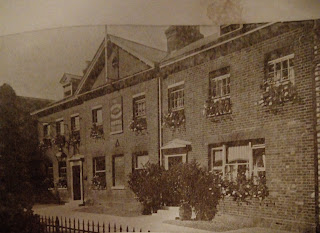
Kenton House Marlow

 Kenton House is given historically usually in Victoria Road but also sometimes in Glade Road suggesting it had entrances in both roads. It was close to Kenton Villas in Glade Road, two pairs of two houses built,nlike Kenton House, for Frederick Joseph Wright. It was a detached house with a garden, paddock (later an orchard), stable and stable yard. 

In 1883 Mrs Rolls was the resident. During the 1890s the house was often sub let for the summer season. This was a common thing to do for Glade Road area residents. IThe road was near the railway station and within walking distance of the Thames. Just the ticket for those who wanted to enjoy a fashionable riverside holiday!

Whoever had been the recent tenant in 1905 had perhaps just died as the house contents was put up for auction then.

By 1907 Major Francis Fowler, his mother Gertrude and siblings lived at Kenton House. Mrs Fowler was the widow of Major General Charles Fowler who had died the previous year. In 1908 her youngest daughter May who was known by her middle name Irene drowned while punting on the Thames at Bisham. Punting was a very popular Edwardian past time on the river. Irene was an acknowledged expert on the art of managing a punt but the river on that stretch claimed casualties every single year. Irene had hired her punt from Shaws boat house in Marlow in windy but not not inadvisable weather conditions. She overbalanced while trying to free her punting pole from a tangle of weeds. Two small boy raised the alarm that a woman was in the water and trying to swim but the men who rushed to her aid could not find Irene. Her body was later recovered.

She was a musical woman as well as an active one training the choir of St Peter's Catholic church in Marlow and participating in charity concerts.

The same year Irene died Kenton House was put up for sale following the death of Eleanor Wright, widow of Frederick. The property was then worth £60 a year rent. Whoever bought the house, Major Francis Fowler's tenancy was unaffected. He seems to have been away from home in 1911 as on the census that year the Eddowes family occupied Kenton House.

He was back in residence in 1913 however when the house was again put up for sale. By then his yearly rent had soared to £85 which was pretty pricey. According to The Peerage website Gertrude Fowler died in Florence Italy in 1913.

To find more content on the historic residents of Victoria Road or Glade Road see this index.

All mentions of someone on this blog can be found under the Person Index.

Sources Included:

Kellys Post Office Directory for Bucks 1908. Kelly's Directories Limited.

GRO death registrations.

South Bucks Standard 14th July 1905, 4th September 1908 and 9th October 1908. British Library Archives, via the BNA.

https://thepeerage.com/p38900.htm#i388995


Saturday, April 23, 2022

James Haynes - Boatbuilder & Thief Catcher


James Hayne(s) was born in Marlow in the first few years of the 1800s. Perhaps not as famous as the late Victorian boat builders of Marlow and Bisham, he deserves a post of his own because of the many roles he played here - from preserving law and order, to preserving Marlow Bridge. 


As a young man James followed in his father's footsteps and worked as a carpenter. His dwelling house and work premises were in the High Street and Causeway at this point. In 1828 the workshop is described as located 200 yards from his home and were also separate in 1833. In any event, in 1828 a thief broke through the shutters of the workshop and stole a saw and an axe from James. This kind of theft was taken very seriously at the time as depriving a workman of his tools of the trade could too easily lead to him loosing the means to provide for himself. James was lucky in that the tools were recovered and the thief caught. The young man responsible, John Green, was an apprentice to another carpenter. It was James himself that recovered the tools, after he received something of a tip off. They had been hidden under some wood shavings in a loft. The judge expressed a regret that John had begun "a career of crime at a very early period in life" which seems perhaps a little strong given it was a first offence and he had previously borne a good character. Luckily for John, his master was willing to keep him on and spoke of his general steadiness. The judge therefore decided to be merciful and sentenced him to 2 months in prison. 


James did well in his carpentry business and seems to have been well regarded by his fellow traders. By 1833 he was working from a workshop and yard "at the wharf" with a residence in the High Street, still officially a carpenter. There were many buildings at the wharf, some quite ramshackle, that this could have been, used for all kinds of purposes over the years. 


James worked on Marlow's new suspension bridge and like so many others involved had to put in a few requests to actually get paid. This would be the start of a long involvement with the bridge. He was regarded as someone who could get things done, so it is no surprise he also later fulfilled the then elected role of parish surveyor. But the biggest role for James was as one of the parish constable in the days before a regular paid police force. If a warrant was issued for someone's arrest, James and his colleagues were supposed to stop their day jobs and execute it without delay. If they failed to do so without sufficient energy, they could themselves end up in court for neglect of duty. They also had to fit in routine patrols. James fulfilled the role for at least 10 years in the 1830s and early 1840s. He was required to follow up leads as regards to suspects or locating stolen goods, such as the parasol he found hidden in a water storage tank in the yard of Bond the builders in 1843 (not stolen by a Bond!) His finest hour was probably policing Marlow Fair in the same year. His patrols with fellow constables Henry Stallwood and Steadman Camden (biographical post about Steadman here) were completed with such a sharp eye and energy that not a single robbery was reported, despite the massive influx of visitors. 


It was not all hard work for James at this time. He was a regular participants in the charming Sunny Side v Shady Side of the High Street cricket matches which ran for several annual contests in the 1840s and 50s. It was usually played at the Aldermary - that is the meadow more or less where Marlow Cricket Club is now to be found off Pound Lane. So which side was the sunny one? The West Street / Higginson Park side. The Shady, Liston Court / Station Road side had the best level of success and was the one that James played for. It attracted a good crowd, no doubt including wife Elizabeth (nee Osborn) and their several children. One of these, Caroline, would go on to marry Robert Shaw, son of "King of the River" Robert Shaw, of boatbuilding fame. 


A little after this time, James begins to be more consistently described as located at the Causeway or "Bridge House" (of which there have been more than one in Marlow) and eventually his former home was taken over by Sellmans plumbers and painters. James also begins to be described as a boat builder at this time. He chose this occupation when filling his census return in 1851. He may well have always had a side line in repairing or maintaining boats but the hiring of them for leisure purposes was exploding in popularity at this time. Marlow was becoming more and more of a fashionable destination for visiting anglers from London and elsewhere - it's easy to underestimate just what a role tourism played in Marlow's past even at this period. See below for some linked posts about this. At some point James began to use what was known as the old tithe barn by the suspension bridge* as part of his business, or at least he used part of the area. It seems he may have shared usage of the actual barn building itself, apparently with a wheelwright at some point. (In 1872 the barn was let by the new Buckinghamshire Chair Co as a temporary workshop, although they were still there several years later)  James sold second hand boats and fishing punts as well as making his own river craft to a customer's specifications. It seems he specialised in punts in fact. He would also hire you a boat, house yours out of season, or do routine maintenance such as varnishing the timbers. The Marlow Amateur Rowing Club which started in 1871, used Haynes as their boathouse too, before they had their own premises. 


Next to James at the riverside was of course the suspension bridge. The story of its construction was frankly a tale of misery, and you can read about it in the posts linked to below.  James must have been only too aware that before the bridge was very old, it needed quite a bit of maintenance. He was Clerk of the Works for the repairs done in 1860 - facing some difficulty due to the reluctance of some to stop attempting to use the bridge while it was worked on. The surveyor assessing this work asked James to provide a boat so he could take a good examination of its state from the water. Finding one suitable proved difficult it seems. When the surveyor was taken ill, James was asked to make a report on the bridges condition himself. But the work was nevertheless completed on schedule. (The deal platform was replaced at "considerable expense" but by 1869 dry rot had set in and more work was needed.) By 1863 James was Surveyor of Bridges for the district, and under his care the bridge was repainted and repaired further. He was responsible for gathering tenders for this work. 


In 1866 James was one of a number of local men that testified before a parliamentary committee on improving the condition of the Thames. He made it very clear that he regarded the existing Thames Navigation Commissioners should all be sacked for incompetence. He claimed they had neglected to do routine maintenance on the river for many years and so had made it less appealing for those who wanted to use the river for commercial transportation of goods. While the rival attractions of the railway he acknowledged, he considered that the Commissioners had done nothing to make the river stand up against the competition. Instead James said the Commissioners had bought shares in the Railway and effectively given up!  I find his information concerning the river at the time Marlow had a flash lock the most interesting. He said the flash (surge of water) was made twice a week in those days, and this required the "draining" of the river for 4 miles (not literally drained dry of course!) so in "short water time" there was "no water" for days together - that is the water level was comparatively very shallow. 


By 1865, the business was known as James Haynes and Son(s) and its location was "Marlow Bridge". The eldest son Joseph James, who initially worked as a carpenter, sadly died aged just 32. It was less than a year after his marriage to Mary Poulton of Ferry House, Cookham. James himself would not live much longer. In May 1879, he passed away at Marlow. Wife Elizabeth survived until 1883, living in her later years in the High Street with son George and unmarried daughter Ann. George defined himself as a boat builder on the 1881 census, but it seems the business under the name of Haynes was largely over. Robert Shaw, mentioned above, would take over the site.  Eventually he would build a fancier boathouse by the bridge, the "tithe barn" having been demolished "recently" in November 1877, to make way for a never built hotel that faced strong local opposition. James was to quote one contemporary guide to the Thames, "a grand character" and I'm sure he was sorely missed by the boat men of Marlow. 


*This building was where Tierney Court is now. It was known at that time as the tithe or conventual barn but this was not probably its actual purpose. It's the "curious old building" that James Joseph Sheahan described in his History and Topography of Buckinghamshire. He was correct to describe how it was generally referred to by the locals (as there are a number of sources using this title before he did) but I have a suspicion that he got his information about the Marlow building confused with the tithe barn at Bisham. He described the roof of the Marlow barn as Spanish chestnut, which it was not, but the Bisham one was according to several earlier sources.  Both were also used to house Napoleonic war prisoners. I wonder if Sheahan might not have poached his description of the Marlow barn from the 1860 John Murray Handbook for Travellers in Berks, Bucks, and Oxfordshire. (John Murray, 1860) in which the description "curious old building"  is also used. That book goes on to describe the "monastic barn of Bisham abbey in which French prisoners were kept during the war" and also mentions that the "conventual barn" at Bisham has a roof of Spanish chestnut. So possibly Sheahan confused the two if he helped himself to a little reused information!? 

 Owner of the "barn" at its demolition (autumn 1877) was Owen Williams who seemed confident his hotel plan would go forward. He had apparently got as far as inviting tenders for its erection. However, this was premature and in the end Mr Williams sold the site to "Mr Burt" for the creation of a 50 bed hotel with stabling for 20 horses, a  coffee room and 100ft long covered balcony. The authorities scuppered this plan by making it clear that they would refuse the alcohol licence on the grounds that there were too many others suppliers of liquor in the area. The real reason was probably the objection of existing traders to such competition, in particular that voiced by Charles Miller Foottit of the Compleat Angler who had recently invested in improving his own premises! At this point the barn had descended into a place that tramps and the destitute sort shelter. It was described as dilapidated but also a picturesque feature of the river side and there were clearly many who did not want it to disappear but to no avail. 


Written and researched by Kathryn Day. 


More related Posts:

To find all mention of an individual here, use the A-Z person index in the top drop down menu. 

James' daughter Eliza features in a post here

The amateur who built a barge in his back garden, 1860s here

Life for the parish constables of Great Marlow here

Robert Shaw - here

Marlow Fair here

The troubled building of the Suspension Bridge here

1820s recreated trade directory Great Marlow here

Bellows, bricks and brandy - reviving the drowned here

Picnics and Punts- Summer leisure in late Victorian and Edwardian Marlow here

Biography of Charles Miller Foottit of the Compleat Angler here

The Bucks Chair Co here


SOURCES INCLUDE:

1833 Parish Assessment, original copies held by us. 

Census 1841,51,61,71, 81 - transcribed from microfilm by Charlotte and Jane Pullinger. 

Harrods Directory 1847, J G Harrod & Co. 

Slater's Royal and Commercial Directory 1852

Thames Navigation Improvement Commission, (1866) Parliamentary Papers Vol 33, Great Britain Houses of Parliament. 

The Architect, April 17 1869, digitised by Google. 

Reading Mercury, 6 April 1839, 24 April 1858

Oxford Journal 26 April 1828. 

Bucks Herald 2 July 1836

Bucks Advertiser and Aylesbury News 8 Feb 1873

Berkshire Chronicle 4 November 1843

Bucks Chronicle and Bucks Gazette  4 July 1863

Bicester Herald, 6 June 1879.

GRO BMD index

Q/AB/43/515,Letter, Bucks Archives. 

Dickens, Charles - Dictionary of the Thames, 1880 edition. 

Pask, Arthur Thomas - From Lock to Lock, "Judy" 1882. 

Salter, John Henry. River Thames: a guide, 1881. 


© MarlowAncestors. 

Wednesday, April 20, 2022

The Street Family of Hurley Flour Mill

Hurley Flour Mill stood by Hurley Lock, next to the River Thames, and adjoining the grounds of Gen Owen Williams at Temple.  Thomas Street (born 1844 in Wargrave Berkshire to William and Miriam Street) ran the business for some years but he started out in a quite different occupation- that of a pub landlord. He and his wife Marie* first took over the Ferry Boat Hotel AKA the Ferry Hotel in Medmenham from Marie's parents Henry and Marie Bitmead, before moving on to the Black Boy in Hurley village in 1871. There they remained until William gave up the lease in 1883. Some time in the next 4 years, perhaps immediately, Thomas took over the flour mills.

Wooden mill buildings were always a fire risk and the Hurley mill burnt down on 5th November 1887 when a stray rocket firework landed on the roof of the main building during local Guy Fawkes night celebrations. Some reports suggest it was the Street families own fireworks that caused the blaze. The mill as well as the stables was reduced to ashes and Hurley lock gates badly damaged but thanks to the effort of Charles Miller Foottit's fire brigade from Marlow, the Temple fire brigade and residents of Hurley and Temple nearby houses were not harmed and the mill horses were rescued from the stable. The mill itself was owned - and insured by - Sir William Clayton of Harleyford. But the Streets lost the entirety of their machinery and equipment, 1,500 sacks of flour and vast quantities of grain etc, the cost of which their own insurance did not quite cover. 

The mill reopened in August 1888 with all new fittings for Thomas Street and his employees. The "best modern machinery" was provided by Mr H Simon of Manchester. A party of millers from London and elsewhere toured the mill shortly after it re opened to admire this up to the minute plant.  They were treated to lunch at Hurley, complete with bread baked from flour produced by the new machinery. They declared this bread "excellent". 

Marie Street died 3 years later so it was Thomas alone who had the pleasure of seeing their second daughter Edith marry in Hurley Church 1892 Alfred Pledge of Abingdon.

The next year would not be so happy for the family- Thomas's 22 year old business partner George Cullingworth killed himself by tying one of the mill weights around his neck and jumping into the Thames. The inquest into George's death was held at the Street family home. While this may seem odd there were few public spaces for such events and they usually took place in the nearest pub or sufficiently large house to the place of death. Thomas and Marie's son Thomas Junior, who had spent George's final day alive with him, gave evidence at the inquest. He and his father searched everywhere for the young man when they realised he was missing. They knew him to be depressed and had their worse fears confirmed when they found his jacket abandoned on the riverbank. With the help of the Hurley lock keeper his body was recovered. George apparently could not free himself from the distress he felt at his father writing to tell him to wait a year before marrying the sweetheart he had met in Hurley. It was not the first time that a close associate of the family was pulled from the Thames- in 1881 Marie's elderly mother was found drowned in the river at Medmenham. It could not be determined how she came to be in the water but foul play was not considered.

In 1896 the Streets suffered another terrible shock when their house guest Thomas Smith dropped dead at Shaw's boatyard in Marlow while waiting for a boat he wanted to hire to be got out. The Street's daughter Gertrude (b 1875) had gone with him and a friend into Marlow and was present at the time of his death. Thomas Smith told Robert Shaw that he was not likely to live long. Just minutes later he collapsed and died. Gertrude gave evidence at the inquest.

Gertrude was a go getting young lady who rowed and canoed as a competitive amateur in local competitions (see a biography of one of her rowing mates here), helped her mother Marie exhort charity donations for the local hospitals from boaters trapped in Hurley Lock and sang in local church concerts. It wasn't just Hurley Lock that had the Victorian equivalent of chuggers by the way. Between themselves the local ladies had most of the local locks covered on Summer weekends and were either very charming or very intimidating as they were a great success at collecting donations. When they had organised a fundraising drive, for a boater to travel between say Henley and Maidenhead was to basically except that they would be rendered penniless by journey's end.

The Street family's mill was completely destroyed in another fire in 1903. This time it did not reopen. Hurley rallied around Thomas, organising a fund raising testimonial for him though there is no reason to think the family were left destitute. I believe they moved to Furze Platt.

*The couple married in Medmenham in 1867. Marie's mother was German, née Rahn. 

Written and researched by Charlotte Day. Additional research by Kathryn Day. 


Related Posts:

To find all mentions of an individual here use the A-Z person index in the top drop down menu. 

For posts related to Marlow Mills, the River Thames and everyday life in old Great Marlow and nearby see the index here

Posts specific to Hurley,Temple and nearby: here

Land lord listings for Hurley, Medmenham etc licensed premises can be found here

Otters, lampreys, eels and other wildlife in the 18th&19thc Thames at Marlow & Hurley here

Robert Shaw, boatbuilder and fisherman here


©Marlow Ancestors. You are very welcome to use my research with credit to this blog for family or local history purposes.

See:

"England Births and Christenings, 1538-1975", database, FamilySearch (https://familysearch.org/ark:/61903/1:1:J94G-LV5 : 19 March 2020), Thomas Street, 1844.

Henley Advertiser 25th March 1893. Reading Mercury 19th March 1881, Maidenhead Advertiser November 1887.  British Library Archives.

Hurley Parish Registers. Medmenham ditto.

Slough, Eton and Windsor Observer 1st September 1888, Slough Library. 


Monday, March 21, 2022

Every Family Has A Black Sheep - William Humphrey Shaw


As our post title says, every family has a black sheep, and I would suggest William Humphrey Shaw as the Victorian candidate for his family! William's older brother Robert was the well known Robert Shaw of Robert Shaw and Sons boat builders. A fondly remembered and respectable man, his brother William was on the other hand something of a trouble maker. 

The father to both was another William Humphrey Shaw, (wife Susannah). He was an Oxfordshire butcher who moved to Marlow after Robert's birth and so William Humphrey junior was born in Great Marlow in 1841. (Later William senior is working as a watchmen) The family lived in Dean Street before settling at St Peters Street where they would remain for a long time.  This street finishes at a dead end formed by the River Thames. If the young William was to walk to the end of this street, he would look across at the Compleat Angler hotel where his brother Robert would eventually go to live and work as a "fisherman" or anglers guide. William also became a fisherman. He continued to work in this role for decades, so presumably he was good at it, mixing this work with the less seasonal work of a waterman. Robert became a famous river guide, one that people from London would ask for by name. It was suggested that in order to successfully secure his services, you would need to write several months in advance. William seems to have done fairly well in the same role initially but perhaps it was hard to follow in the steps of his successful brother. For soon the two brothers paths diverged. Robert would go on to run his boat hire and boat building business, and did very well for himself building an impressive riverside house to boot. William on the other hand seems to have developed a talent for getting himself into trouble. 


Many of Williams tussles with the law involved the "demon drink". For example in 1864 William was involved in a scuffle at the Red Lion in West Street. He accused a Mr Andrews of assaulting him there after the pair exchanged "words". However after hearing the evidence of witnesses, the magistrates decided that Andrews was direly provoked and Shaw thoroughly deserved the punishment inflicted on him! 


10 years later, William was convicted of a much more serious assault, or rather a string of brutal attacks on his wife Emma (nee Jones).  The pair had married in 1869.  William admitted suffering from attacks of jealousy and dared to justify his beatings on the fact he suspected her of adultery. In 1873 Emma went to the police and got a warrant issued for Williams arrest based on his attacks on her person, but in the end she got cold feet and refused to appear against him when the matter came to court. But according to Emma, the violence continued, usually precipitated by William's late night arrival home drunk. The neighbours continually complained at his shouting and the couple were asked to leave several homes they rented as a result. In 1878 a particularly bad spell for Emma resulted in William finally getting his turn in front of the magistrates. Emma had been told to leave a 4th house due to Williams outbursts. The events of the 5 or so days before William's arrest make extremely sad reading. He broke her nose, punched her throat, shoved her head against a bed post, kicked her in the face, dragged her from the bed by her hair and repeatedly locked her outside, including in her night dress. Twice she was taken in by her neighbours during the night. Sadly Williams unproven fears of Emma's unfaithfulness were able under the laws of the time to make sure his conviction was for "aggravated assault". His punishment? A fine of 40s and 12s costs. However crucially for Emma, the court was satisfied that "future safety of the wife was in peril" and made an separation order that meant she was free to live apart from him. Without such an order, William could have, in theory sued for Emma to return to their marital home had she left him. He was also ordered to give her a set weekly sum for her maintenance with the promise of time in gaol should he fall behind with this. Yes, William was more likely to go to prison for falling behind with his maintenance payments than assaulting his wife seriously for 5 consecutive days! 


Sadly the reality of being a seperated wife was difficult in its own way. Although the court could order that William would maintain her financially, the sum granted was relatively small because allowance was also made for the fact William needed to maintain his own seperate household out of his not too high earnings. She could not of course marry anyone else  This is a factor, as well as any psychological or emotional ones, that means we often see Victorian victims of domestic violence return to their partner. This is sadly what Emma eventually did, and we can only hope he treated her better. Unfortunately he certainly did not learn to control either his temper or his drinking. 


A further conviction for drunkenness in 1881 saw William plead guilty and receive a 5 shilling fine. The following year, William was back in court for refusing to leave a licenced premises when asked to do so. The rolling drunk William arrived outside the Greyhound Inn in Spittal Street late in the evening. Landlord Thomas Willis heard the swearing William outside but the latter pushed his way into the bar before he could be refused entry. Thomas then asked him to leave at which William let forth the "most foul, disgusting and blasphemous language". He was then ejected. William was not someone Thomas said he would ever serve, drink or sober, based on past behaviour. Another fine was added to the Shaw tally, then one for poaching a rabbit. At this point they were living in Station Rd. 


In December 1887 both William and Emma found themselves in trouble. William was convicted of stealing some fowls from James Field, of Wood End Farm near Medmenham. Emma was convicted in turn for recieving the stolen goods, as was Eliza Bowles who had sold them to various people in Marlow on behalf of the Shaws. (Eliza said the fowls had been raised either by her son who had gone into the army, or by a nephew who said she could sell them to pay for her Christmas dinner.)  I can't find consistent information as to their sentence. William certainly went to prison, for either 2 or 3 months, and Emma for 1 or 3 months and Eliza for one month. William was described then as a fisherman still, and Emma was working as a charwoman. Later she was a needlewoman. Two low paid occupations. 


The following year William was summoned for illegal fishing at Bisham. He was using eel baskets, against the Thames Conservancy's regulations. Another fine followed, but the conviction must have an impact on his ability to work successfully as a fisherman. 


Emma died in 1898. Later the same year William married widow, charwoman (and former furrier) Sarah Rose previously of Cambridge Rd. The pair lived in Dean Street. I do not know whether Sarah suffered at Williams hands. Unfortunately his step daughter Harriet did. He was accused of unlawfully wounding her in 1901 when she was 30.  She lived nearby in Dean Street with her husband Thomas Pearce. Her two youngest sisters Elizabeth "Lizzie" age 14 and Mary age 10 had the misfortune of still living with their step father.  He tried the old trick of "punishing" the girls by locking them out of the home for an unspecified reason. 

At 9pm they went for help to Harriet having been stuck outside for 4 hours.  She keep them with her for an hour then took them home, and found the front door still locked. The back door was however open, and she told the girls to go in and go quickly up the stairs to bed. But William was waiting inside and smashed a pottery jug into Harriet's face, before hitting her on the head with a poker. The terrified girls ran to get their brother in law Thomas Pearce, who arrived to find William  on top of Harriet who had a blood soaked dress. He pulled him off, giving William a minor head injury of his own. The police were called and William was found, drunk, in the High Street with a bandaged head.  He claimed it was blood loss that made him appear drunk to Sergeant Crook. His excuse this time? That Harriet and the girls were "jealous" and sulky about not being able to do as they pleased at home. He said he had been knocked about by them. Astonishingly, while the jury took only 10 minutes to find William guilty of common assault they also expressed they felt there had been much "provocation" and asked for leniency. While the bench said they thought the jury had taken a very lenient view, they would be lenient in sentencing and gave William a 7 day prison sentence with hard labour. 


By 1908 William had moved to Wooburn and was working as a common (that is general)  labourer.  At least one more conviction for drunk and disorderly behaviour is attached to his name. A few years later William is unemployed and Sarah was a peddlar, another low paid job. Things must have been financially very difficult. I have not traced Williams death. It was never going to be reported in the same way as brother Roberts, whose passing in 1908 bought Marlow to a standstill as the community queued to pay their respects. 


The end of St Peters Street, Marlow. Photo courtesy of R Martin. 

Written and researched by Kathryn Day. 


Related Posts:

Robert Shaw king of the river here

To find all mentions of a person or family here, use the A-Z person index in the top drop down menu. 


Sources include:

Ashby-Sterry Joseph, Tiny Travels (Tinsley Bros 1874)

Fennel, John Greville The Rail and The Road or Tourist Anglers  Guide to Waters and Quarters  (H Cox 1867)

Bucks Advertiser and Free Press 6 July 1901 - thanks to Michael Frew.

Bucks Herald 27 August 1881, 15 April 1882, 22 January 1887, 5 Jul 1901 - copies from British Library Archive and accessed via the BNA 2019

Northants Mercury 7 January 1888, as above

Reading Mercury 27 February 1864, Reading Library. 

Reading Observer 18 July 1888

South Bucks Standard 3 January 1908, 6 July 1901 BNA as above. 

"England and Wales Census, 1891," database with images, FamilySearch (https://familysearch.org/ark:/61903/1:1:4GPM-Z3Z : 22 February 2021), Emma Shaw in household of William H Shaw, Great Marlow, Buckinghamshire, England, United Kingdom;  citing PRO RG 12, Buckinghamshire county, subdistrict, The National Archives of the UK, Kew, Surrey.

"England and Wales Census, 1891," database with images, FamilySearch (https://familysearch.org/ark:/61903/1:1:4GG5-33Z : 22 February 2021), Sarah Rose, Great Marlow, Buckinghamshire, England, United Kingdom; from "1891 England, Scotland and Wales census," 

Judicial research of Jane Pullinger,  1970. With thanks. 

Census 1871, transcript from microfilm by Charlotte. 

"England and Wales Marriage Registration Index, 1837-2005," database, FamilySearch (https://familysearch.org/ark:/61903/1:1:2D2Z-6V9 : 13 December 2014), Emma Jones, 1869; from "England & Wales Marriages, 1837-2005," database, findmypast (http://www.findmypast.com : 2012); citing 1869, quarter 3, vol. 3A, p. 659, Wycombe, Buckinghamshire, England, General Register Office, Southport, England. 


Ginger Frost, « «He Could Not Hold His Passions»: Domestic Violence and Cohabitation in England (1850-1905) », Crime, Histoire & Sociétés / Crime, History & Societies [En ligne], Vol. 12, n°1 | 2008, mis en ligne le 04 avril 2011, Accessed Feb 2022. URL : http://journals.openedition.org/chs/64 ; DOI : https://doi.org/10.4000/chs.64


Sunday, March 13, 2022

Robert Shaw - King of the River

 It's sometimes hard for us to understand just how famous Marlow was as fishing resort, throughout all of the Victorian period. Many many people came here to enjoy the then abundant angling opportunities, and there is as a result numerous people who immortalised their experiences on the page. Throughout dozens of reminisces, one name is consistently recalled with affection above any other - Victorian "fisherman" Bob or Robert Shaw. 


Robert, later of Robert Shaw and Sons* boatbuilders, was born in 1831 in Watlington, Oxfordshire, to butcher William Humphrey Shaw, and mother Susannah. When Robert was a boy, the family moved to Marlow, first to Dean Street then to the riverside St Peters Street. 


Robert at The Angler

As a young man Robert came to work at the Compleat Angler at Bisham. This was directly opposite St Peters Street and an ideal place to employ a keen swimmer and angler. On the 1851 census, Robert is listed as a live in servant but it's likely he was already assisting with the lucrative side line of the Angler even then - catering to fishing parties. The visiting gentleman needed a guide to show them the best (and legal) places to fish, and also to handle the boat/punt and provide the live bait. A number of well known Marlow families were working as "fisherman" in this sense and while some were independent, others more or less attached themselves to serving the needs of a particular hotel or inn.  The Compleat Angler was premier of these (or The Angler inn as it was more usually known then). Robert would have been the junior of the fisherman at that point, but he must have already stood out for his talent at "reading" the river. Because in 1850, he was appointed the water bailiff for the local Anglers Preservation Society. This was a responsible position and a huge sign of respect to receive it at such a young age. It meant he policed the river to make sure no one was taking fish when and where they shouldn't. He held the position for 34 years.


 Although he later became famous as a boat builder and punt proprietor, Robert still was at pains to correct the 1881 Thames Preservation committee he gave evidence before, when they defined him only as a boat builder. He told them proudly he was also a fishermen. He was there to describe how fishing was protected on the Thames, among a wide ranging enquiry. It was the sort of job that could be difficult but a 1867 fishing guide described how his intelligence, love for the river and zeal had "earned him the respect and consideration of not only members of the club but that of the inhabitants of Marlow and it's vicinity who speak of him with praise." Others spoke of his handsome appearance, loud and cheerful voice, and polite and patient manner.  Another account joked that "Bob" could be summoned at the Angler if you made the sound of a cork coming out of a bottle! 


 A carp weighing 8lbs and caught by Robert, was stuffed and put on display for a number of years at the Angler for guests to marvel out. It was one of a number of trophies gracing the Angler's walls. 


At some point Robert seems to have began hiring out punts directly. It was a small start for what would become a big business very quickly. Robert did extremely well indeed financially. 


If It Floats, Bob's Got It

In 1872, Robert, now married with a number of children, moved from Bisham to a new built house on the other side of the river. (He married Elizabeth Jane White in 1854)  This was Ryepeck House, on the river front near the Bridge. (Later usually rendered as Rye Peck and converted into a private residential hotel in 1895). A ryepeck is the name of the poles that punts are moored against and which are used to mark the end of a punting race. A very appropriate choice. He had started his boat building on this side of the Thames, and a little later he took over the Haynes boat builders premises immediately next to Marlow Bridge. He expanded steadily, and employed a number of workers, many not originally from Marlow.  Not only would he hire you a selection of river craft by the day or hour (with or without a skilled person to pilot it for you) but he could build a pleasure boat or punt to your exact requirements, repair an existing boat, or house it outside of the river season. Are you a gentleman with a boat house at your residence that looks a little shabby? Robert could repair and varnish these too. Soon he could offer steam launches and house boats for hire, from Marlow or his Bourne End base also. And by 1904 you could charge your electric launch at Shaw's charging station. He could not build the larger vessels offered by his nearby rivals Meakes and Redknapp however, and workers from the two seemed to have had something of heated rivalry at times!**


A view towards the former location of Shaw's Boathouse, where Tierney Court is now. 


A series of tragedies


Robert was sadly the person directly responsible for recovering a large number of bodies of the drowned from the river. Some he saw himself, others he found after being approached for help locating a victim with his dredgers. This can't have been a pleasant task, but Robert never refused his help. Tragically, in 1898, Robert's own 23 year old son Reginald and Robert's son in law Hedley Foster* were drowned near Medmenham. A third person with them, Lewis Slade, a Maidenhead auctioneer, managed to swim the 10 yards to the bank. The men were bringing the small sailing yacht of Lewis back to Marlow from Reading. Conditions were described as "squally" but were not considered too difficult for the two experienced sailors Robert and Hedley.  Although reports initially said the boat capsized after it had been suddenly turned round, it seems that in fact it survived this initial accident. Some water was let in, and it appears that as the men attempted to deal with this, they were pitched over board. Reggie Shaw was a strong swimmer but Hedley could not swim at all. Reggie knew this and immediately went to his aid. Unfortunately Hedley panicked and grasped Reggie so strongly that both were dragged under and drowned. Their bodies were not recovered until the next day. 


The George & Dragon above, where the inquest into the death of Reginald Shaw and Hedley Foster was held..


Robert was away at Eastbourne at the time, watching two of his other sons play for Marlow FC. (Edward and Charles) A telegram describing the terrible accident was waiting for them there. Only a week later, another of Robert's sons, Albert recovered the body of a dead man from the river near Marlow bridge. Such events were sadly much more common in the old Marlow. 


The joint funeral at Marlow was a big event. The bridge was so thronged with bystanders that it was impassible to traffic. Reggie Shaw had been a member of the Bucks Rifle Volunteers and so the funeral procession was lead by their band, and nearly 130 officers and men.  Their members carried his coffin, and at the close of the funeral, fired a "salute" over the grave. 


In 1901, William Button of Reading, employed by Shaw as a waterman, drowned almost outside the Marlow boat house. He was bathing with two colleagues, when he suddenly disappeared beneath the water and never resurfaced. Robert recovered his body a little later. How painful the reminder of his sons death these incidents must have been. 


Not all bad news for Robert


Robert was sued for slander twice in 1900/1901, both times by London tobacconist Frank Bateman. Frank was a regular visitor to Marlow for a number of years in his house boat Kismet. He and Robert Shaw fell out over a disputed bill. Robert charged Frank for the repairs made to a skiff belonging to Frank but damaged in Robert's care (or not depending who you believe.) Robert put aside his legendary politeness to say Frank was trying to swindle him and not pay his debts. Frank sued and the first case was settled when Robert apologised and paid the court costs. But Frank said Robert continued to repeat the statements about swindling practices and so the matter went back to court. Robert denied saying anything of the kind. The court believed him and the case was dismissed. 


Above, advert dating from 1907. 


I'm pleased to say the last year's of Robert's live were not all doom and gloom. Now a widower, 70 year old Robert remarried 34 year old Christina Gibbons in 1902. Sadly Christina was widowed shortly afterwards but not before the couple had two children. For Robert died of bronchitis in 1908 aged 77. His funeral at All Saints was another that bought the town to a virtual standstill. It truly was the end of an era! 


We have not delved into Robert's many other roles in sporting and cultural matters or the post will be just too long! I will just add that he was an early member of the Bucks Rifle Volunteers and stayed a member until he reached the upper age limit. 


Written and researched by Kathryn Day. 


Notes

* Hedley Turner P Foster was a London solicitor. He had married Robert's third daughter Frances at Marlow in November 1889 and they had two children. Reggie Shaw was an articled clerk for him. The inquest into the drowning was held at the George and Dragon, the bodies laid at Ryepeck for inspection. Reginald was praised for his bravery at attempting to rescue Hedley. Hedley and Frances were living at Caldwell Lodge in Station Rd at the time of the tragedy.  Reggie was a member of Marlow Football club, the Rowing club and Institute cricket teams at various times.  


The "and sons" of Robert Shaw and Sons were William Thomas, Edward, Sydney Logan and Charles Arthur Shaw in 1912 when they dissolved their partnership. They continued without William Thomas, better known as former proprietor of the Chequers Hotel who had suffered bankruptcy. Eldest son Richard or Dick had died at home in Glade Rd in 1906, after a painful illness. Albert or Bert also worked as a boatbuilder for his father.  The Shaw's boathouse at Marlow was eventually taken over by Meakes and Redknapp boat builders of Bisham. Ryepeck house was sold in approx late 1891 to Mr Percival Harter who was responsible for building Stoneyware at Bisham. 


** Robert and his son Richard were summoned for assaulting George Meakes and William Redknapp in the summer of 1887. General Williams had formerly owned all the land along the towpath from the bridge to Court Garden but he had recently sold most of it to the Shaws including the camp-shedding. When Meakes and Redknapp arrived with a launch outside the Shaws boathouse, Robert refused to allow them to land passengers and some scuffles ensued. He said they had no right to use his land. The court agreed and said any minor violence was excused by the fact the Shaws were maintaining their legal rights! Case dismissed. (Meakes & Redknapp said they had landed and taken up passengers there many times before without seeking permission and did not know Robert Shaw now owned the land. The former is certainly true, although General Williams agent John Tudor said everyone had had to pay tolls to do so and they had apparently not done.)


Related Posts:

William Humphrey Shaw here

Bellows, bricks and brandy - reviving the drowned here

Little lives lost in the Thames here

Picnics and Punts- Summer leisure in late Victorian and Edwardian Marlow here

History of Compleat Angler in 1900's here 

Marlow hero Charles Bonny - the grandson of Robert Shaw who lived with him at Ryepeck.  (Son of his eldest daughter Elizabeth Jane) - here

This post on Hurley Flour Mill mentions another death that occured at Shaw's here

Fellow boatbuilder James Haynes - here and amateur barge builder Richard Harding here

To find all mentions of a family or individual here use the A-Z person index in the top drop down menu. 

Other posts about general Marlow history can be found here


Sources include:

Ashby-Sterry, Joseph. Tiny Travels (Tinsley Bros. 1875)

Carter, John Henry. Thames Guide 1881. 

Fennel, John Greville The Rail and The Road or Tourist Anglers  Guide to Waters and Quarters  (H Cox 1867)

Highly, Samuel Where to Fish Around London. (D Brogue, 1880)

Taunt, Henry A New Map of The Thames from Oxford to London Taunt, 1872)

Parliamentary Papers, Vol 16 (Great Britain House of Commons, 1881). Digitised by Google 2019. 

Fish, Fishing and the Aquarium,  October 1886. Digitised by Google.

 Fishing, Fish Culture and the Aquarium. May 1886, Harvard University library, digitising by Google. 

Berks County Paper 22 July 1865

Berks Chronicle 20 July 1891. 

Bucks Herald 26 October 1889

Henley and South Oxfordshire Advertiser 15 April 1898

Henley and Oxford Standard 17 May 1901

London Gazette 20 September 1912. 

Maidenhead Advertiser 19 April 1893

Reading Observer 16 April 1898

South Bucks Standard 17 May 1901

Census 1841, 1851, 1861,1871,1881 - transcript from microfilm by Jane Pullinger. 

The Sportsmen 3 December 1908. 

"England and Wales Death Registration Index 1837-2007," database, FamilySearch (https://familysearch.org/ark:/61903/1:1:2JBG-QKR : 31 December 2014), Elizabeth Jane Shaw, 1896


© MarlowAncestors. 


Wednesday, December 22, 2021

Hayes Place, Great Marlow


Earliest name "The Hayes". 
This is a very short street off West Street. None of the cottages wherein your Marlow Ancestors may have lived survive. Picture above shows the street in 2020, looking out towards West Street. Residents there would have had foot access round to Quoiting Square the other way and can also be given the address Quoiting Place as Quoiting Square was then known. Though in the heart of town in terms of being near to the river, High Street and main shopping areas Hayes Place was less than 10 minutes walk from open countryside going up Oxford Road or West Street. Though the homes there were crowded together there was just enough space for most to have small  gardens.

The first mention I have of homes on the site is 1832. In 1833 there were 15 households in "The Hayes". This was generally a poor address, though not grindingly poor or rough in the way areas like Dean Street were considered to be at the time.
Most of those who lived in the street had always been amongst the less well off but Hayes Place also provided refuge for some who had known better things- Robert Smith who had had a successful hairdressing business in Spittal Street became insolvent and went to live at number 13 for a few months in 1845 for instance.

On the 1833 assessment the properties in the street range from probably a one room very tiny cottage - that  occupied by "late Jane Moore" with an assessed annual value of only £1 10 shillings up to three houses valued at £6 10 shillings a year each, in the occupations of " late George Ward" [a butler whose wife Patience was a dressmaker. They left the town for Taplow in late 1832*], "Robert Reid" and "late Hunt". Note that these three houses appear to have been set off back from Hayes Place proper, and could be accessed just as easily from Quoiting Square. Jane Moore may have moved away from her tiny cottage recently at the time of the assessment but she was back later. She was a middle aged unmarried woman who worked as an laundress and a lace maker at different times.
Involvement in the lace making, satin stitch, laundry and paper making trades (as rag sorters in the latter case) plus domestic service were the most common traceable occupations for Victorian and Edwardian female residents of the street while involvement in agriculture, paper making, wood related crafts and brewing (most of the brewery workers will have worked at Wethered's brewery only about 5 minutes or so walk away) was common amongst male residents.
Someone not keen to gain employment or look after his responsibilities was 1833 resident Richard Lodge. Repeatedly in the 1840s he was fined or jailed for having abandoned his two sons John and William in Marlow.  There is no mention of their mother. John and William were together in the Marlow parish workhouse at the time of the 1841 census. They were both said to be 8. Could be twins but ages on censuses can be hazy and were rounded up and down. After the boys were beyond the age of being his legal responsibility Richard still found himself regularly before the courts for absconding from the Wycombe Union Workhouse. 

Talking of not taking responsibilities seriously - as the years went by properties in Hayes Place were not kept up to standard by their owner. In 1901 their sanitary condition was considered by Marlow Urban Council's medical officer as being likely to injure the health of the tenants with poor quality drains and cess pits too close to the homes.
Not enough had been done to remedy the situation by 1910 when drain water had seeped through the floor of the scullery of one cottage. Five other cottages [from other sources numbers 2, 3, 4, 5 and 6] shared two improperly built cess pits. The yard soil at the back of the cottages there was badly contaminated by waste water. It was decided that some of the outhouses had to be rebuilt and all the drains replaced plus the yard properly surfaced. It seems that this work took several years to actually happen.

In 1913 the council again inspected the area and found that five of the eight cottages were not in a fit state for human inhabitation.  At last action was properly taken. All 8 had their sculleries rebuilt on the order of the council because they were damp and unsanitary. The same year the residents had three wash houses built for them to share. This was for the common use of all 8 households. The yard was paved, cesspits removed, and new drains put in. 
It needs to be pointed out that the owner of these cottages was the very wealthy Sir William Clayton who had more than enough means to remedy the situation for his tenants but it took years of asking him and his agents for him to do so.

The road itself, originally a private road, was taken over by the council in 1906 / 07 and paved for the first time.

Given the conditions it is not surprising that some residents of the Place dreamed of moving far away. Robert and Edward White Shaw [Aka just Shaw or just White] who lived in Hayes Place with their widowed 45 year old mother Marion [AKA Mary Ann] in 1901 did just that, emigrating to Canada. Marion worked as a chair caner in 1901. She died at Hayes Place the next year. 

*In 1830 the their two year old daughter Patience junior died. The Reading Mercury of 26th July that year described how the child's father was away on an excursion in the country when little Patience became ill. She died swiftly leaving her mother "inconsolable with grief" and unable to tell her husband about their loss because she had no address for him. Married butler's usually lived in with their employers while their family lived in a nearby cottage. There is a reasonable probability given that George Ward worked for the Claytons in nearby Oxford Lane.

 
*****
*To read about Victorian Hayes Place residents Charles and Charlotte Flint (he an embroider) and Charles' family see this post here. I don't want to repeat myself by dealing with them here when I have already done a post featuring them.
To find posts about other historic Marlow addresses see the "Specific Shops, Streets...Etc" index here.

All mentions of a person on this blog can be found on the Person Index on the top drop down menu. 

Researched by both Charlotte Day and Kathryn Day. Pic by Kathryn, words by Charlotte.

©Marlow Ancestors. You are very welcome to use this research or image for family or local history purposes if you credit this blog and link here.

Sources: 
1833 parochial assessment working notebooks, in custody of our family, transcribed by Charlotte.

Census transcribed from microfilm by Charlotte. Census information always remains Crown copyright.

London Gazette, Volume 3, 1845. Published by T Neuman and digitized by Google.

Buckinghamshire Council Report for 1913. 

South Bucks Standard 7th June 1901, April 8th 1910 and 8th May 1913 British Library Archives via the BNA.

Death certifications, GRO.

Monday, November 22, 2021

Bellows, Bricks and Brandy - Reviving the drowned

 People have always bathed in the Thames at Marlow. But many have also lost their lives doing so. The Black Hole, with a reputed depth of 25ft, in the river past Quarry Wood, was an extreme example of a sudden drop in the river bed. But there were other spots where the gently shelving floor fell away, as well as currents, weeds and underwater obstructions.


The task of fetching a body from the river, or looking for a lost swimmer usually fell in practice to someone from one of the boat houses (or the lock keeper) - Shaw's by Marlow Bridge is the one mentioned most frequently. They had a dredger which enabled them to search where human eyes and probes could not. The bodies were usually taken to a nearby inn which would also hold the resulting inquest. The Compleat Angler, and Two Brewers saw a large number of such events. As time passed, the bodies were usually held elsewhere but the inquests were still often in the nearest pub to the place of recovery. (From 1907 the coroner's were requested not to use a public house for an inquest unless absolutely nowhere else suitable could be found.)


Mr Shaw had to use his dredger in 1901 to find the body of one of his own employees, 21 year old William Button of Reading.  William was employed as a waterman. He was bathing after work with two colleagues, from a raft under Marlow Bridge. He suddenly disappeared, presumably after suffering from cramp. A "very good" swimmer, he could not be found by his companions and the dredger was called for. 


Some of the dead were among Marlow's very many visitors who came to enjoy riverside camping or some gentle punting or fishing. Perhaps the saddest case was that in 1906 of Chiswick/Kew Schoolmaster John S Gilbert, and his two adult sons (Frederick 20, an electrical engineer, and Frank 22, a clerk in the Stock Exchange). They had come to the  Marlow area for a short holiday and spent the night camping on the riverbank near Medmenham Abbey. (One source says they were on a small island there.) Frank, a strong swimmer, decided to have a bathe while the others prepared breakfast. But he became tired fighting the current and sank. His dad leapt into the water to save him, but did not resurface. The second son then followed his father into the water - and also failed to come back up. Two  friends of the family who had joined them on the trip witnessed the scene, and one (G A Ackerman) entered the water to assist and briefly managed to get the fathers head above water but ultimately needed rescuing himself. The other, Harry Kentfield, on the riverbank could not swim and  shouted for help. It came too late however. A quantity of weeds in the water tangling limbs was regarded as a possible explanation for such a tragedy. The farm bailiff from Medmenham who recovered the bodies (Robert Keene) however said he could see no significant weeds and thought the men had panicked "and lost their heads". 


Stories of those entering the water and not regaining the surface alive are common. In many cases the reason why could only be guessed at. Some sort of heart attack was a possible cause of death for East Dulwich accountant George Frewin Pinnock who came to Marlow to do some business for grocer A E Howard. George was staying at the Compleat Angler and decided to enjoy a quick swim in the back waters there. He took a dip and almost immediately came up face down in the water. Sadly his wife had died of heart disease just a few weeks before. (1902)


The area to the front of "The Anglers" next to the old Marlow bridge also caught many victims. Another Compleat Angler guest that died there was minor poet and Pigots Directory representative William Rowlinson in 1829. William was from Manchester and was in the area gathering information in order to compile the next Pigots Directory, a listing of businesses etc. He was staying at the Compleat Angler and went swimming with one of the proprietor William Creswell's young sons. It seems Rowlinson got cramp because despite being a strong swimmer, he sank and Creswell could not find him in time. The dead man may not have lived in Marlow but the expression of grief at his accident suggests he had made a strong impression and many friends during his visit (s) here. The Quakers of Wycombe began to raise a subscription for his young widow (he was 24) and his small son and daughter. They also intended to pay for a stone to be erected over his grave at Bisham church. Forty years later it was said the grave was not marked. Perhaps not enough was raised or the money may have been used for a memorial closer to his home. (See note 1 below for more on Rowlinson)


Given the toll of victims, it's not surprising the Royal Life Saving Society visited Marlow Lock in 1910 to give demonstrations about how to save a person from drowning.


Once ashore the methods used to revive someone recovered from the water usually involved rubbing the person over to stimulate circulation and if they came round, issuing them with some alcohol such as brandy. In 1783 the Royal Humane Society issued instructions on how to deal with a person feared drowned. In the accompanying directory of surgeons listed residing within riverside areas, George Trash of Marlow is included. The recommended actions for George to follow include removing the victims clothes should they be wearing any (male river swimmers usually were nude) and then taking the victim to the nearest inn or failing that somewhere else that could offer a warm bed and a large fireplace. A sort of CPR was suggested with artificial respiration and a slight press to the chest when it could be seen the lungs had inflated. The use of small bellows up the nostril in preference to mouth to mouth respiration does date the advice a little! Attempts to stimulate the patient included giving them a vigorous shake of the limbs, applying hot bricks or tiles to the palms and soles of the feet and rubbing the skin with salt or flannels sprinkled with rum or other spirits. You could also try tickling the nose with a feather, rubbing a heated warming pan up the spine, and in the case of a child laying the little soul between two healthy adults in the hope of gently warming them back to life. Another reason to chose a pub to take the victim to was the strong chance they had a brew house (as it was still the era alcohol was made on the premises). This was needed as the last step if all the other methods to revive the swimmer had failed. The body should be surrounded by warm grains or placed in a deep warm bath in the sort of container a brew house might have. They would then wait several hours in the hope of what must really have been a miracle recovery. It's interesting that the Society in local branches raised funds to reward those who made the effort to search for the drowned or drowning and those who took the unfortunates in. The surgeons who were members of the society would attend those retrieved from the water free of charge. This encouraged those in charge of the victim not to delay in summoning medical assistance. 


Moving forward a century to 1880 - the Rev Charles Voysey  did a demo in Marlow of the New Patent Life Preserver. "For complete convenience in wearing and perfect efficiency in buoyancy power" it was said.  This was perhaps not the most quick to use life saver. It relied upon having the opportunity to "carefully" mix an acid and alkali powder which was then put into pockets held within 3 waterproof sacks. These were stitched inside someone's clothes or strapped on to a webbing belt, 2 on the front, the other to the rear of the wearer. When the mixed powders touched water, the reaction released a gas. This inflated the sacks and kept them up for some 50-60 hours or so it was claimed. The set of 3 pouches and powder cost 10s 6d. 


A Selected few other victims

NB This post does not include information on suicides in the river, or probable suicides. 


1836 - Frank Faulkner, eldest son of school master William Faulkner, age 21. Faulkner senior often took the boys of his school to bathe in the Thames. On this occasion, Frank was visiting Marlow having recently started a physicians practice in London. He went swimming with his brother and a friend. It seems his strength failed, and his two companions very nearly died too trying to save him. 


1861 - Ellen Leary, age 59, hawker of cotton, stay laces, needles etc, lodging at Marlow. Her basket was found floating between near Bisham. She is believed to have slipped off the tow path when "not quite sober."


1868 -  John Frederick Nolan of Ireland, house painter working for a London builder employed at Thames Villa. He could not swim and intended to bathe only but he did not realise that the gently sloping river bed gave way to a sharp drop and he tumbled out of his depth. 


1888 - Helen Frances Warner, married daughter of Mrs Haig of Marlow Place. Drowned near Temple while bathing with her two sisters. She got out of her depth. 


Researched and written by Kathryn Day. 


Related posts:

Little lives lost in the Thames - Child drowning victims here 

Bargemen of Marlow here

Biography of Robert Shaw who recovered a huge number of the drowned here

Floods in Marlow History, and plans to "embank and canalize" the river between Marlow & Henley here

History of Compleat Angler here

Avert your eyes, bathers about! Victorian nude bathing at Marlow and swimming races here here


To find all mentions of an individual here use the A-Z person index in the top drop down menu where you will find over 2,700 people currently listed. Other posts about everyday life in old Marlow can be found here


SOURCES

Harland, John (ed) - Lancashire Lyrics, (Whitaker, 1866)

Smith, James - The Mechanic Or Compendium of Practical Inventions vol 2 (Caxton press 1809.)

Royal Humane Society - The reviving of Persons apparently dead by drowning (- RHS London, 1783)

Medical Times Gazette, Vol 2, 1873. Digitised by Google. 

GRO Death registration index. 

Maidenhead Advertiser August  1 1906, British Library Archive. 

Windsor & Eton Express, 26 September 1829 as above

Reading Mercury - 9 November 1861. As above

Berks Chronicle - 27 Jun 1829 As above

Bucks Gazette 20 July 1901. As above

Bucks Herald 14 August 1880, As above


Slough, Windsor and Eton Express August 4 1906


Notes 

1. Rowlinson (Rawlinson) had contributed poems to the Literary Gazette and regional publications, including some written in what was described as East Lancashire dialect. One was called "Remember me". He had started work as the clerk in Messrs Cardwell & Co cotton warehouse in Manchester ("Newmarket buildings")


©Marlow Ancestors


Sunday, October 17, 2021

Marlow's 21 OTHER Football Teams *Updated April 2023*

Updated JULY 2024

Marlow Football Club has a long history but this post is about Marlow's more minor teams that your ancestor stands a better chance of having played for. It includes youth and junior sides as after all even Sporting Life would sometimes mention a fixture or match report for these. It doesn't include schools teams, the old Borlasian or Marlow Choir teams or those organised by employers on a more or less occasional basis eg the Brewery. 


A few things to bear in mind: a lot of surnames are shared across teams. You may find a family member spent time on more than one. Brothers and cousins often played on the same side. Most match reports (especially early ones) fail to name players at all or just give the surname. Most of these teams did not have a set place to play home matches. Almost all can be found using the Crown Ground (Crown Meadow, now Riley Recreation Ground) on occasion, if Marlow F.C or the Reserves did not need it. The other main sites used were Star Meadow (one end of which would later be partially used to form Marlow F.C's new home, the Alfred Davis Memorial Ground), the "recreation ground" (Gossmore) and less often "the Station Ground" aka Porter's Meadow. The Porters owned or occupied more than one meadow in this period but the one usually referred to was roughly where Riverpark Drive is now.  The Victoria's also used Colonels Meadow, behind Borlase school. 

Regular football came to a halt during the First World War, so naturally there will be gaps for these years. The Crown Ground saw plenty of activity during that time thanks to locally stationed soldiers playing in the military leagues or just casually. I have not included them here as they are not often made up of local men. This blog deals with the pre First World War period primarily, with occasionally forays into the 1920's and beyond. Some of these team names were recycled later but unless mentioned otherwise, the more modern incarnations are not a continuation of what went before. Dates are for the first and last dates I have found of a team definitely being active. I have not researched all of the leagues or competitions entered, sorry!  This page will be updated as new info emerges - and as we work through through my notes.. There are many more names to be added!


Marlow Rangers

1885 - 1906 (also used for an unrelated team in 1960's/70's)

Sought matches with "good minor teams" and seem to have enjoyed some success. Did not play exclusively against very local teams as most of the other minor ones did. Maintained both an A and B team. Average age 18/19. In 1894 had won 12 of their 17 games, and drawn another. 

AGM held: Three Compasses, Dean Street. 

Colours: Light and dark blue halves

Practice days: Wednesdays, on recreation ground (Gossmore)

Usual home pitch - Recreation Ground (Gossmore), but also used Station Ground, and Crown Ground on occasion. In 1895 are described as having a new ground in the meadow next to the Saw Mill in Station Rd lent by Mr H Clark , but still use other sites. 

Some player/member names names:

1893 - Ayres, Langley. 

1894 - A J Carr (captain), J Shipton (deputy captain), J Frith (also treasurer) , A Ayres, J Spindlo (R J?), G Almond, H Clark, Maskell, W East, W J Fenner, J A Paine (goalkeeper), F Rockell. G Sawyer, C Harris, A Frith. W Toovey,  D Gibbons

  Secretary : 1894 - W E  Toovey, 10 Queens Rd. 

1895 - J Spindlo (captain) Shipton (vice captain), W Toovey (hon. Sec), East, J or G Sawyer (treasurer), C Harris, J Paine, J Carr, 

1896 - Secretary is W J Fenner, (moved from Chapel Str to "York Rd, Marefield" this year. Fenner is also secretary of The Swifts. ) Players: C Harris, J Simmons, A Carr, E Keep, G Sawyer, A & W Toovey, F Langley, J Shipton, W Halton, C Dye. 

1905: Harris, Toovey, Howard. 


Marlow Star 

1885-1921 Originally started as a football team for the Dean Street boys club ran by All Saints Church. The curate Rev C Potts was the man largely behind the start of the club. 

A youth team, average age 15 in 1898. Often came up against reserve sides of bigger teams including Marlow FC. Had A and B sides. All listings below are A team members. Secretary (1898) - W Scott, High Street. 

Usual home ground: Star Meadow

Players: 

1885- E Clark, G Ayres, A Bowles, Payne, Didcott , T or J White, Young, A Boot, C Ilsley (capt), F Grace. 

1886 - J Bowles (goal) F Bailey (Captain) A Paine, J White, F Bowles, A Brook(e)s, E Clark(e), G Stone, C Brooks, I Ayres, C Price 

1887 - E Clark(e) is goal keeper. 

1903 - Cox, Grace 

Players of unknown date: W Payne, G Langley. 


Marlow Blue Star

Not same as above. This is a boys team.  There was a Little Marlow Blue Star too by 1898 for under 11's or under 15s at different times. I don't think they were the same. 

1910. 

Players: T Moody, Stacey. 


Little Marlow Blue Star

Boys, 1890/91. Not researched yet. 


Marlow Red Star

Boys, 1893 - 1902. Usually play Gossmore. 

Played in Berks and Bucks minors cup 1901, 1902.

(Lane End also had a boys side called Red Star) 

A match report from 1893 says the game was characterized by rough play and "some fighting"! The Star team lost. 


Marlow Victoria

Marlow's main "other" club,  with a good following of their own. Aka "The Vics". Full name The Royal Victoria Working Mans FC. (Another Marlow Working Mans FC was active c1909 -1914) Also have reserve side. Mostly 17-23 years old (although from 15 year olds at start)


1873 - 1898 - but see below. 

The club was set up for the "junior tradesman and mechanics" of Marlow. "Mr Wethered" was one of those who drove the idea forward and he acted as their first president. [Thomas O Wethered] They were lucky enough to secure the support of a number of well off patrons such as Sir William Robert Clayton, Bart, F O Wethered, and Thomas Somers Cocks as well as the Rev Cree and Alfred Davis Junior. Seeking "strong minor teams" to play against, they did well. So well in fact that in 1897 it was decided to amalgamate them with the Marlow FC reserves, in order to strengthen the latter. In 1898, 9 players in the Reserve team had played for Victoria the previous season. The B team(s) of the Vics still played under the Victoria name until approx 1899 though. They host Athletic Sports competitions for their members 1870's (at Gossmore) as part of  their aim to encourage healthy exercise overall.  

HQ - First AGM held Duke of Cambridge, Queens Rd. The Duke was also where the initial meeting to set up the team was held.  Later used the White Lion, West Street. 

Practice: when first established held on Tues and Sats on Colonel's Meadow, Borlase. Later at Gossmore Recreation Ground. 

Home ground: For first year or so, Colonel's Meadow. Then usually the recreation ground Gossmore. Sometimes borrow Crown Ground too. 

Secretary:  1872- R Carter. 1873 / 1874 - A Gardener. 1894 - Joint secretaries S J Barlow of Eton Cottage and H Sawyer of Spittal Street.  1896 - W Fenner  (this man's name will pop up often in this role!). 1899 - C Howard of West End 1899. 

Chairman - 1895 L J Sellman


Players: 

1873/4 - Captain William J Stockbridge. Others: C & T Fletcher, Owen Sawyer, J Biggs, R Wye, G Frith, G&J Edwards, A Keep. 

1875 John Langley jun, A Keep, T Plumridge, F Plumridge, M Mason, C Fletcher, W Plumridge jun, Owen Sawyer, J Beckett, R Wellicome, J Biggs, J Harvey, T Wyatt, G Edwards. 

1895: S J Barlow, George & A E Edmunds (George is Captain), F Tucker, H Sawyer, ? Davis, L Sellman, G Barber, F Hawkes (vice Captain)

1897 - H Sawyer (goalkeeper),  ? Edmunds (Capt), A Edmunds, W Probert, Unknown Probert, L Sellman (also hon treasurer), S Shaw, G Davis, Smith, F Haw(k)es, K Bonny, W White (deputy captain), J Davis. 


Marlow Excelsior

Play Crown Ground, and Star Meadow. 

A youth team with a reserve side too. Played in the Berks &Bucks Minor League in 1901. 

1893 - 1911 (definite finish date) 

Usual place of play:  Recreation ground

Secretary 1896 - W Fenner again! 


Marlow Ramblers

1890 - 1895. Also had B team. Play in Berks & Bucks Junior Cup.  

HQ - Clubroom of Three Tuns, West Str. AGM and annual dinner held there, fundraising smoking concerts ditto. 

Play: On all the Marlow grounds (see top)

Secretary: 1890/91 - H Price, 7 Queens Rd.  1892 - W Carter. 


Players:  Emmett (undated)

1890: Judge, East, Rose, P (probably Phillip)  & F Looker, F Harvey (captain), E Cook, A Cooper, H Illsley (goal), Tucker. 

1891: H Illsley, J White, F Harvey, J Rose, F. & P Looker, J F Price, W East, G Judge, George Moody, G Ayres, E Clark, E Heatley, F Bayley, E Cook, A Cooper

1892 - W Rose (in goal), E Emmett (also goalkeeper) Backs J Howe?, J White, H Frith. Half backs - W Carter, J East?, W J East, T. P Rose. Right Wing - George Moody, F Looker. Left Wing: - A Boot, P Looker. Centre - R C Sawyer. Captain - William East. /W J East. 

President: Viscount Curzon, MP. Hon Treasurer: A Carter. 


Marlow Wednesday Ramblers - may be successor of Marlow Ramblers. 

1903. 

Players: Stacey, Sears, Dormer. 


Marlow Wednesday

May be referring to Wednesday Ramblers or Wednesday Athletic or may be another team again!! Still active at dawn of First World War. Another Marlow Wednesday was formed c1931 and played on the Marlow F C ground - on Wednesdays naturally. 

1909 - Secretary: A Smith, 7 Sunlight Cottages.


Marlow Antelopes

Youth team. (Under 16)

1874 - 1896. In 1894 mentioned as "badly in need of funds". 

Secretary: F Plumridge, Oxford Rd. 

Players - just a few known

1878 - Harding, Rockell, Lovegrove, Higgins. 

 Undated: - Nicholls, H White (Captain), R J Spindlo (this is Richard John, known as John, the baker b 1878, and later very successful player for Marlow F C )

1893 - H White (goal), J Spindle (Spindlo?), G Morton, C Drye, F Nicholls, G Hatton, C Harris, W Mangah ?, W Plumridge, F Nicholls, F Paine, 

1894 - Goalkeeper - W. East. Others: C F Waterman, R Wellicome, H Clark, F Walker, F Langley, F Harman, J Boot, C J Drye. 


Marefield Rovers

Boys team. Had reserve side too. Play in Maidenhead Boys League. C1910-1913. 

Players 1910: T Golding (Captain), G Stone, S Clark, H Hilsdon, A & A H Peddle, R Flint, C Lee, R Clark, F Burton, W Lloyd


Marlow Rovers

1891- 1912 then 1920-1930. 

Youth team, average age 17 in 1920.  

Plays: Recreation Ground, occasionally Crown Ground. 

Practice: Wednesdays, Recreation Ground. 

Secretary: 1920 - G  Sparks, West Str. 

Players: 1900  T Ward, Bennett, Coles, Robinson


Marlow Red Rovers

1893 - 1898. Under 15's side. 

Hon Sec 1893 : George Edmunds


White Rovers

Boys, 1893 - 1899


Marlow Albion

1887- 1907 Has an A  & B team. Youths. 

Hon. Secretary 1888 is A Carter. 


Wednesday Athletic

Boys. 1912. 


Marlow Athletic

 1911-1920


Marlow Abstainers

1886


Marlow Corinthians

Youths 1892. 

1893 - W Wellicome, J Beckett, H Collins, J Shipton, T Rance, G H Clark, S Green. 


Marlow Harriers

1886-1888


Marlow Nelson

"Rising minor team" in 1896 but records thin on ground! 


Marlow Wanderers

Youths under 14, 1897. 

Players: Rockwell (possibly meant to be Rockell/Rockall or Rosewell), Corby. 


Marlow United

Active at least 1909-14. Juniors. Not the same as the more modern team to bear this name. 

Players 1909 - Culhane, Cresswell, Dickson, Arber, Moody, Rolston, Morris. 


And a bonus: 

Players for Lane End FC (still going today!)

Aka "the blue and whites"

1893 (first year) : J Gray, Rixon, F Fletcher, J Britnell, A Bristow, Davis, Sears, Priest, J Carr. 


Researched by Kathryn Day with some additional research by Charlotte Day.

©Marlow Ancestors 


Thursday, September 23, 2021

Picnics And Punts - Victorian Summer time in Marlow


This post is about summer in late Victorian and pre First World War Marlow. The season obviously meant different things to different people. For some it was a period of hot intense labour in the fields. For others it was time to leave Marlow altogether and holiday elsewhere. A surprising large number of Marlow houses were let out for the "river season", and then there were the houseboats that arrived, some staying for weeks. In good weather, the hotels and lodging houses were full, and visitors could find themselves staying in more unconventional places such as above shops (Or more pleasantly perhaps, they could cadge a room at Hambledon Lock). The arrival of tourists affected even those not in position to enjoy much leisure time themselves. It meant busier streets at the very least. And there may be an annual Sunday School treat or Slate Club or works outing to look forward to. 


Enthralling Beauty

The beauty of nearby Quarry Woods was known far and wide.

It was a popular spot for campers, if sometimes a crowded one. The fact that some set up camp wherever they decided to stop for the night caused tension with riverside home owners who complained of opening their shutters to find campers on their lawns! Most kept to more secluded spots - though some were still technically trespassing on the larger estates when they did so. The stretch of river between Marlow and Henley was also celebrated, and there was a standing joke that you could always find at least a couple of artists set up opposite Bisham church trying to capture the scene. This part of the river was described by John Greville Fennell in his 1867 Thames guide as one that brought a "constant succession of scenes of sylvan beauty" that struck the gazer and left him or her marvelling with "enthralled imagination" at the loveliness of the scene. And that was not the most fulsome of descriptions by any means! 


Official picnic parties apply here

Day trippers from London at least didn't need to find somewhere to stay. These '"Harrys" as they were often dismissively known, were usually the ones blamed for any sort of misbehaviour. Cheap day excursion tickets were available to Marlow from London stations  - valid for travel on certain trains only from 1st May - 31st October. In 1880, one of these excursion tickets, third class, from Paddington to Marlow would cost you 3s 6d.  If you could demonstrate you were a "genuine" picnic or other pleasure party, of at least 10 persons, (6 if all travelling first class) you could also get lower train fares. Perhaps you had to let the station master examine your picnic hamper! These lower fares were no good for a spontaneous large family outing as you needed to apply for them in advance and in writing. 


For most the river was the focus of their trip so luckily Great Western Railways would transport your boat for you should you be fortunate enough to own one. This was at an added cost of course. If your craft was small enough to fit in the guards van or if it could be strapped to the top of an ordinary passenger carriage, it would cost you 2d a mile with a minimum charge of 5s and reductions were possible if at least 4 crew were traveling on the same train. Larger boats had to travel in expensive coaches of their own. For most, hiring a boat was much more practical. The boat houses such as Haynes, Shaws, and Meakes and Redknapp offered all kinds of river craft from punts and canoes to steam launches. Alternatively many inns and hotels could provide you with the smaller vessels (sometimes by partnering with one of the same boathouses).


 Advertising the fact that you could provide facilities for boating parties and fisherman was a way for hotels and inns to cash in on these tourists who may have just wanted somewhere to eat or someone to provide them with a picnic. If you were on a big group outing or a "beanfeast" , perhaps organised by a workplace, then some establishments turned their nose up at serving you. They did not want the reputation of somewhere where guests looking for a little genteel rest would be disturbed by a large noisy group. So at times the Fishermen's Retreat and the Crown Hotel advertised they did not accept "beanfeasts" but on the other hand, the Railway Hotel (later the Marlow Donkey) welcomed them. For longer stays, Dickens's Dictionary of the Thames (1889 edition) said the numerous hotels and accomodation providers in town catered for "tourists of all classes". 


Some of our visitors came some way to enjoy the riverside. In 1899 Great Western formed an alliance with Great Central Train company to bring visitors in from the Midlands area. The first train was an excursion one from Leicester which arrived in early July, bringing a large party for a day on the river. Or whatever part of the day was left after the time taken to travel here.


The boating parties were described as frequently "noisy and half drunken" and their habit of landing at the parish churchyard and "tramping over the graves" lead to many complaints. 


Fishing with Mr Shaw
Marlow was known as a paradise for anglers, and the premier place to stay was the Compleat Angler, more commonly known as "The Anglers" or Anglers Inn. It started life as a couple of cottages knocked together and then rebuilt, and gradually extended and improved. But even in it's more humble looking state it was far from an obscure little inn. It recieved visitors from London, including well off ones, and it was consistently mentioned and recommended in national guidebooks. The 1832 fire there made the London papers because it was already a celebrated destination - "the great resort of fishing parties". When the Angler was improved, some visitors felt nostalgic for the old days but even they admitted it was now easier to actually get to stay there in the first place as there were more beds on offer. Guidebooks of 1877 and 1889 still warned would be visitors that they would need to give "considerable notice" if they entertained any hope of securing a bed at The Anglers. Members of recognised angling clubs could also get reduced price third class train fairs from Paddington, if they had a member's card to flash. (Full history of the Angler in the 1900's can be found here)

A number of Marlow men made their living as fishermen, that is fishing guides who would supply bait and take you in a punt to the best spots to catch whatever your quarry was. The Rockell and Shaw families were two that performed this role over a long period. (White, Rose, Creswell and Rosewell are other associated surnames.) Robert Shaw should get special mention as he features in very many books about the Thames written for contemporary visitors. He was clearly someone that many people felt a lot of affection and respect for. In his role as Water Bailiff for the local Anglers Preservation society, he had a role to play in seeing off illegal fisherman and poachers and so no doubt he had his enemies. But to others he was the good looking Bob Shaw, always polite, "intelligent and reliable" and a highly skilled boatsmen. 


Tumbling for tourists
Marlow Lock naturally saw many visitors, not all of them passing through in a boat or watching those that were. The boaters waiting to pass in or put of the Lock were something of a captive audience for the Victorian equivalent of the "chugger" and chancer. Some of the activity sounds mostly charming in our eyes. Children sometimes performed tricks and tumbles on the towpath, hoping to get a few coins for entertaining the passers by. The authorities regarded this as begging, and children caught in the act could find themselves up before the magistrates. In June 1906  four "small boys" were charged with begging on the tow path around Marlow Mills and Lock. The boys had stood on their heads to amuse the passers by. They were Amos Moody, Henry Turner, Leonard Carter and Henry Allen. Those travelling on steam launches and larger vessels were nevertheless in the habit of responding to the children's gambols by throwing coins onto the bank. This lead to tragedy in 1914 when a little girl aged about 4 is believed to have drowned trying to retrieve coins tossed from a passing launch ("The child of  Carter", of South Place).


Marlow Lock as it is now  - the Lock keepers house is not the Victorian one. 


Charity collections at the Lock were also a regular feature. But when the more persistent adult beggars and sellers of knick knacks began to congregate there in greater numbers, some causes such as the Marlow Cottage Hospital decided not to collect funds at the Lock in case they became associated with a common nuisance. Touts are also mentioned as a regular annoyance, offering to help with boats, or with finding accomodation or punts for hire.

The more widespread issue of begging from visitors to the town, whether they arrived by boat or train, was discussed several times at Marlow council meetings in the early Edwardian period in paticular. They requested the police keep a close eye on things, with varying degrees of success it seems!


As those passing through the Lock had to pay a fee, unless they had a sort of season ticket or annual pass, the numbers using it were recorded. The fee depended on the size of the boat, with steam launches up to 35ft long paying 9d for example, or  house boat's 2s6d. Over the August Bank Holiday of 1893, which was regarded as a little less busy than usual, 1,200 small boats passed through over Saturday to Monday and 120 steam launches. This won't be the absolute number of boats about Marlow as it was possible to bypass the Lock. Some of those using the small boats pulled their craft out of the water just before the Marlow Mills and either enjoyed Gossmore or carried their canoes etc past the Lock on land. They could also land at the Compleat Angler by approaching via the backwater behind the weir and using steps to get up on land, according to contemporary guidebooks. For comparison, over the same 3 day period in 1893, 1,500 visitors arrived by train, mostly from London, with 1,300 returning home on the evening of the Monday. 

The pound lock itself was regarded as both attractive and dangerous by some. George Dunlop Leslie -  mentioned above - definitely thought it was the latter as it was an "old" lock with "many jagged piles and broken woodwork about it's sides". 


Marlow Toast rack sir?
Visitors could return home laden with souvenirs, thanks to the likes of energetic advertiser Rowes the jewellers. They made all kinds of Marlow keepsakes such as brooches and swan shaped toast racks. There were no shortage of places offering postcards but perhaps stationer and book seller William Aviss in the High Street with his "photographic depot of neighbourhood views" offered the most. Those wanting to take their own photographs could get tailored local advice from photographic journals on where and how to take the most attractive and becoming pictures, as so many had made the Marlow journey before. Those at the Lock should wait for a steam launch to arrive in the foreground of their shot, for example. This "greatly improves the composition" providing it was not too near, advised a 1901 photographers guide. 


Regatta time
Those visiting during the annual regatta could also buy a memento from the "card men" or roving postcard sellers, although they actually offered views of previous events of course. Some of these sellers had the reputation for being "sharps" or not entirely honest in their dealings. Better check your change!

Marlow has had more than one Regatta and they've gone by various names  - the Marlow and Maidenhead Regatta, Town Regatta, Rag Regatta, Marlow Rowing Club Regatta, Amateur Regatta etc. The event most relevant to those who worked professionally on the water was the Waterman and Fishermens Regatta which attracted fewer crowds but plenty of entries. For the other events, even those not watching or competing in the rowing, found the town transformed. The bridge was crowded with spectators, sitting or leaning on every available surface including the chains and railings. Complaints were sometimes made that the parked carriages completely blocked the way across the bridge. Those who got through to Marlow then had to dodge the rides, stalls and visitors of the fair that set up on the Causeway. Many of these were the same proprietors who visited Marlow during Marlow Fair although there was fewer of them. They did manage to spread down Station Rd and Institute Rd at times though, and others set up in Crown Meadow. 

The evening of the regatta usually saw a procession of boats decorated with lanterns, or a "Venetian fete" or "Water carnival". The best decorated boat won a prize. They must have made a beautiful sight to behold, especially as many riverside properties were also decorated with lights for the occasion. 


Sunday School fun
Sunday school outings were part of the summer for many youngsters. Burnham Beeches seems to have been the number one destination, but sometimes the little ones just enjoyed a high day closer to home. In 1877 for example, "legions" of them enjoy a tea in Remnantz meadow as part of a summer festival. 


Watercress gathering
Watercress was a summer harvest that would have occupied a fair number of locals at times. The majority of the beds were at Little Marlow as tended by Timotheus Brown early on. George Dunlop Leslie, describing a trip to the "charming village" around 1881, said the watercress beds were "very picturesque with their islands, footbridges and summer houses". He added that the beds were fed from a spring with slightly warm water which meant they never froze in the winter. This made them especially productive. Watercress was also grown in the meadows around Red Pits hill running towards the river and near to Medmenham. 


End of the summer
Swimming in the river (clothes optional) and the harvest home and harvest festivals that marked the transition to autumn feature in posts of their own. 

Marlow must have seemed a little quieter when all the visitors had departed, although some better off Marlow residents also found their way home after enjoying the season elsewhere. Some people might be pleased the "Harry's" had left but as the South Bucks Standard said in 1901 "the trade and prosperity of our town of our town depend for the most part on visitors who came for pleasure and recreation". 

The train service was reduced outside of the summer period, but Marlow was not quite ready to hibernate. There was Marlow Fair to stir the town up in October, and winter was the season of lectures and entertainments at the Town Hall, Music Room and the Institute. 

1905. 


Meakes and Redknapp Boathouse, Berkshire side. 


Written and researched by Kathryn Day. 

To read other posts about everyday life in old Marlow, see a list here

SOURCES

Fennell, John Grenville - The Rail and The Road or Tourist Anglers Guide to Waters and Quarters - (H. Cox 1867)

Hall, Samuel and Mrs - The Book Of The Thames From It's Rise To It's Fall (Virtue, 1877 2nd Edition)

Leslie, George Dunlop - Our River (Bradbury, Agnew & Co 1881)

Taunt, Henry - A New Map of the River Thames From Oxford to London, (Taunt, 1872).

Parliamentary Papers vol 16, Great Britain House of Commons, (1884 HMSO) 

Dickens Dictionary of The Thames from Oxford to the Nore 1880 Issue 2 (Dickens, 1880) and 1889 edition issue 1. 
 
A yearbook of Photography and Amateurs Guide - 1901. Author unknown. 

The Royal River - The Thames from Source to Sea (Cassell, 1885)

The Art Journal Vol 45 (Virtue and Company 1883)

The Marlow Guide, 1905. 

Diss Examiner, 28 August 1899. Copy from British Library, accessed via the BNA, August 2020. 

Bucks Herald, September 27 

1873, July 18 1914 as above

South Bucks Standard - 25th September 1891, 14 October 1892, 11th August 1893, 13 April 1894, 14th July 1899, 22 June 1900, 5 July 1901, 10 June 1904, 6 July 1906 as above


Bucks Gazette - 3 November 1832, as above

 London Courier and Evening Gazette 8 November 1832, as above


©Marlow Ancestors


PHOTO ID ANYONE?

 Can anyone help a fellow family history researcher Linda identify where this staff photo may have been taken in Marlow? Underneath are some...