Search This Blog

Showing posts with label Lane End. Show all posts

Thursday, January 9, 2025

More Historic Shopkeepers of Quoiting Square Marlow.

A grocer's shop formerly operated from where the children's shoe shop is today in Quoiting Square.

Aaron Maskell originally from the Cookham area (born 1814) ran the business in these specific premises by 1861 (seemingly from 1854). In 1862 he was summoned to court after inspectors found his weighing scales were not properly maintained and thus not weighing true. He said this was just an oversight and the court believed him -it was a common problem. He was allowed to pay only the court costs rather than a fine plus costs.

Aaron hired a shed further up Oxford Road in which he kept ducks and geese. In the 1800 grocers did not usually sell any fresh birds so this looks to have been a different side line business for Aaron. Some of these birds were stolen and slaughtered before they could be recovered in 1865. He is also listed as a bacon curer in 1854. Many grocery shops produced and sold their own bacon in this era with curing taking place on the premises.

Aaron died suddenly in 1873. He had been suffering from chest problems for four years and had been previously diagnosed with heart disease but had not had any recent medical attendance. On the day of his death he woke up with pains in the chest and arm. Today we would understand these as symptoms of a potential heart attack and an emergency situation but Aaron had to be persuaded to even go back to bed to rest let alone seek medical attendance. Eliza Mann* who lived with the Maskells gave him some ginger water (which would have been seen as invigorating) and then called for a doctor. Sadly his condition deteriorated and his life could not be saved.

Aaron's wife Anna (née Hemmens, stated as of Alton in Middlesex when they married in Heigham Norfolk 1837) then took over the helm of the shop. In 1878 her niece in law Emily Hemmens (widow of Charles) who had been assisting the couple for some years became the manager. These proprietor's all had spirit licences too and sold beer, including that of Marlow's Wethered Brewery. 

Emily died in 1884 and her assistant George Henry Britnell ran the business himself. George was from Little Marlow originally and married his wife Jane Larkin in Kensington Middlesex in 1885.

In 1890 George's shop assistant Ellen Harris was a witness when a boy stole from the till of a shop in nearby West Street. She gave evidence in court for the prosecution. Theft from shops was very common in Victorian Marlow but it was most often of goods hanging outside or displayed in the window rather than of money.

In the early 1900s George retired in favour of Edward Albert Piercey who moved from Lane End where he had been a licensed victualler. By this time the shop was mostly operating as what we would now call an off licence with groceries of secondary importance. Edward only stayed a few years, transferring the business and its alcohol license over to Edward Neighbour in 1906. Edward kept the store equally as a grocery shop, provisions merchant and off licence. Below is an ad from 1915.


When I was a very little girl I had an elderly friend Elsie Coster who lived as a child in Oxford Road near this shop. Her brother Albert worked running errands for the business as a teenager in the early 1920s and I believe Elsie herself worked there as a shop assistant for a brief period.

Edward's father has a biography post on the blog here. Edward's maternal grandparents feature in this post, while this one features both his aunt and maternal grandma.

The business continued as "E Neighbours" until at least 1933. The business is not in the 1939 Kelly's Directory. Bertram Scammell general shopkeeper was probably in the premises then.

Elsewhere in the Square William Bowles ran a fruiterer's shop from at least 1873 to at least 1897. He survived bankruptcy in 1886. He had a fruit store up Oxford Road and also occupied Oakengrove / Oaken Grove Farm. An old building in Oxford Road he no longer needed was the first home of Marlow's Salvation Army members. This made him somewhat unpopular and he eventually evicted them on the grounds their band practices and meetings were too noisy. You have to remember that the Army apart from promoting teetotalism which was seen as threatening in a brewery town was perceived as radical even dangerously subversive religiously and socially for many other reasons in it's early days. William was not as far as can be seen a member himself.

The shop where William lived and worked no longer exists, neither do his fruit store or the first Salvation Army building. More about the controversial (and violent!) early days of the Salvation Army in Marlow here.

*Eliza Mann married James Meakes of Marlow and the couple kept the Plough pub. More here.

See also previous post on "What did Platts used to be?" for shops that used to be on that Quoiting Square spot here.

See also here for my previous post on Elizabeth Tyler/ Lee whose husband just might have been in the Maskell/ Britnell/ Neighbour etc grocery store in earlier times.

For some history and the historic landlords of the pub next door to the grocery shop mentioned above (the Clayton Arms) see here

Sources:

Historic advertising material.

Bucks Examiner 17th December 1890. Copy held at the British Library Archives. Viewed by me via the British Newspaper Archive March 2021.

Reading Mercury 28th June 1862, accessed as above.

UK Census images my transcription from microfilm, National Archives. Census information remains Crown Copyright.

Heigham Parish Registers

Kelly's Directory of Berkshire, Bucks and Oxon 1854, 1883, 1911, 1915, 1920, 1939 by Kelly's Directories Limited. 

Marlow Town Guide 1891.

Marlow Directory and Almanack 1907, 1915. Marlow Printing Company.

Duttons Directory of Buckinghamshire by Dutton, Allen and Co 1863.

GRO Death Index online

Kensington marriage from Jane Pullinger.

Property records.


Friday, July 14, 2023

Victorian Postmen Plumridge

 The Plumridges of Marlow would have been well known to our Great Marlow ancestors as builders, bricklayers, beer-sellers and brewers. But today's subjects are two of those comparatively rare few to have followed a different occupation, at least some of the time!  Both had connections to the Post Office. First up is Daniel Plumridge who was a postman in Victorian Marlow. 


There have been a large number of Plumridges in the Great Marlow Parish area from the Tudor era, if not long before. Daniel was one of those born just outside Marlow itself c1839, in Cadmore End. (Usually rendered as "Cadmer End" or "Cadmor End", Fingest Parish in the earlier days). His parents Thomas and Rebecca worked in what must be some of the most typical occupations in this area at the time. Thomas spent his working life largely as an agricultural labourer and chair maker, while mum Rebecca was a lacemaker. Cadmer End was the more populous part of Fingest Parish at this time, but it was and still is a beautiful rural area. It formerly had a number of brickworks ..bricks and Plumridges are never far apart! Daniel however began to work from a young man as a postman in Cadmer End. Despite all the travelling involved in a rural route, in the Victorian imagination the role of a rural postman stereotypically went to someone lame or not perhaps as mobile as they had once been who could not keep up as an agricultural labourer. How many of these limping postman were actually about is hard to say, but young Daniel certainly did not fit that image. Whether he filled that other stereotype of taking a good while to complete his round by stopping at each cottage door for a gossip we don't know. But as a letter was the primary means by which the inhabitants recieved personal news from afar, both good and bad, he must often have been a longed for sight hoving into view in his uniform. It was noted that into the 1890s few Marlow homes had letterboxes within their front doors, which greatly slowed down the delivery of letters, as the postman had to wait at each house for the door to be opened so he could hand over the mail. An appeal was made to install them, and not to delay the workers in their rounds too much with chit chat. But who knows if anyone took any notice! 


Although postman were usually called letter-carriers in the early days in general, I have noticed that locally "post man" was in popular use much earlier. Postman was adopted nationally as it better reflected the work of the men when they began to carry packages too. 


In 1864 Daniel married Elizabeth Hannah Davis. Elizabeth was the daughter of the Bovingdon Green beer sellers William and Hannah Davis of The Jolly Cricketers. The couple set up home in Queens Road and Cambridge Place, Marlow. Other Plumridges filled several of the homes in this area, and had indeed built some of them. The pub in the road, The Duke Of Cambridge, also had a Plumridge at the helm and indeed had been built by them. At this point Daniel was working as..a bricklayer. Was it for one of his Plumridge relatives? Very likely. Later, Daniel is referred to as chairmaker.  In any case Daniel must have liked his work for the postal service as a few years later, he is back in the role of postman, this time in Marlow. Elizabeth's paid work was as a dressmaker, and the couple also took in lodgers. 


Daniel remained a post man into the early years of the 20th century, living in and around Queens Rd for some 30 years. (At the time of his daughter Rosa's marriage in late 1901, he had moved a few minutes away to Quoiting Square.) It must have been interesting for him to see how the town expanded with new developments, especially at the hands of various Plumridge builders. Marlow's Victorian residents could enjoy more than one post delivery a day (3 in 1880) except Sundays when there was one. In the same way the boxes were emptied more than once. The exact schedule varied over time, except on Sundays. Usually the longer distance items came by train from Maidenhead and by mail cart before that. When Marlow got her own station, the post arrived in town sooner and so deliveries were moved back too. At the time that Daniel started his work in Marlow, the last letters left here on the 4.15pm train, but this was eventually moved back to just after 8pm. Deliveries were even made on Christmas Day itself (although just one usually). 


In 1891, the Plumridge's 14 year old son George Henry was working for the Post Office, as a telegraph messenger. This role was usually given to younger men, but it was regarded as a responsible one and a good start. Messages received at the telegraph office naturally had to be taken to the recipient and this was the messengers responsibility. 


The community had to rely on the honesty of their letter carriers, an issue in the public eye here in 1885 after Marlow man James Morgan spent a year in prison for stealing postal orders entrusted to him as a postman in Bedford. He was taking on a temporary cover role in that town - otherwise he was a chimney sweep. In total he stole 3 postal orders over two weeks. Nothing of a similar kind seems to have troubled those recieving mail within Marlow itself. Morgan received a reduced sentence because he was only a temporary relief postman so it was considered a less severe  betrayal of trust. He had not lived in Marlow long before his apprehension.**


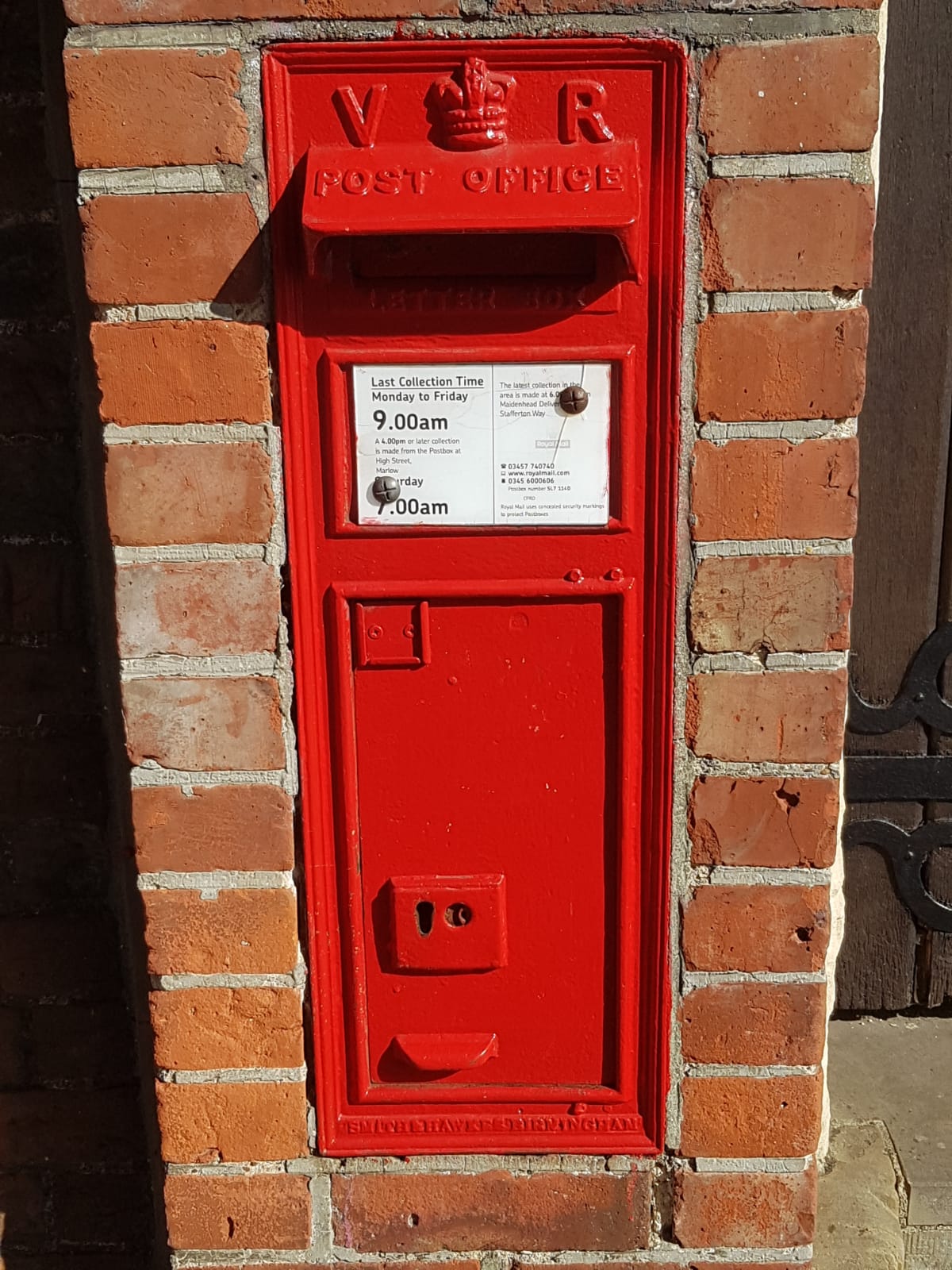
If the postal staff had opportunities for mischief so did members of the public. Daniel sometimes arrived at post box to find that a miscreant had broken off the enamel tablets fastened to the pillar boxes. These gave the details of the the collection times. An appeal was made by the postal authorities locally in 1891 to plead with people to leave this essential information alone! 


Another annoyance for Daniel was the "cribbed, cabined and confined" conditions in the main post office in West Street, especially in terms of the space available for recieving packages. It had occupied two different sites there at various times but neither one had been designed to deal with the explosion in popularity of the post. In 1894 it was finally decided to go ahead with long debated plans to move the post office. Institute Road was the first considered site but the town was not happy with this. In the end the grand and attractive Cromwell House in the centre of the High Street was secured, although not until 1897, opening early the following year. It was converted from a house*. (Even this did not please some of the residents of West Street who lamented having a slightly longer journey to reach the main branch now it was no longer in their road. Plans were made for a sub post office there for their convenience! You could also find another sub post office within a couple of minutes of the High Street, in the grocers on the corner of Station Rd and Mill Lane as it was then. In 1897 Mr Yeoman was in charge there. See pic below.)


William Plumridge of Lane End 

Our second Plumridge connected to the post service is non conformist William Plumridge, of Lane End, son of James and Esther. William worked as a chairmaker and later as a baker, grocer and sub post master at Lane End throughout the late Victorian period. He was assisted by wife Mary nee Ellis and sons Thomas and William at times. William junior's work delivering bread for the family business made him a witness in the Moor End Common murder case which you can read about here

 William senior was obviously a hardworking individual but on his death as an elderly man in 1904 he had a number of debts. His estate could not cover these, to the embarrassment of his family. There is nothing especially unusual about this but the unexpected resolution of the issue was.  Three years after his death William made headlines around the country. An anonymous well wisher paid all of his debts off in full, long after his creditors had resigned themselves to writing them off.  He or she did so as a "token of esteem" for William and his family. The identity of the benefactor(s) was not seemingly revealed, at least not publicly. Perhaps they had spent the years between the death and pay off saving the necessary funds (£167) or perhaps they had been away and unaware of the problem until 1907. Either way, it was a nice thing to do. William junior succeeded his father as sub post master and grocer, also acting as a house agent. Multi tasking obviously ran in the family! There were Plumridges fulfilling the roles of sub postmasters and bakers in Lane End for long after the period our blog covers. 


Written and researched by Kathryn Day. 

Further information:

*History of Cromwell House can be found here

**James Morgans wife applied for parish relief for herself and her 4 children while her husband was awaiting trial at the Bedford Assizes. The Board of Guardians rule was that no "outdoor" parish relief could be given to the family of those in prison, including those waiting trial. (That is no assistance other than a ticket for admission to the workhouse could be offered.) However Marlow's Walter Lovegrove, one of the Guardians  spoke on the behalf of Mrs Morgan, and pleaded for compassion. He was seconded by Marlow's vicar and fellow board member Rev Arthur Fearon who reminded everyone the principal of innocent until proven guilty. In the end a vote to give the family 3s a week plus three loaves of bread was carried unanimously despite grumblings from 3 members about the rule bending. It was one of many examples of Walter Lovegrove speaking out firmly in the interests of Marlow's poor and unfortunate. The relief stopped when James was convicted. 

To find every mention of an individual here, use the A-Z person index in the top drop down menu. There's over 6,000 people listed there. Great Marlow itself is the focus of this blog but for other posts relating to Lane End, Cadmore End and around that we do have, see the index here

If you are interested in some of the other families who quite literally built our town, see the Men Who Built Marlow posts Lovell here Bond here   Corby here

SOURCES: 

Kelly's Directory for Buckinghamshire 1852, 1883, 1905, 1911,1920,1939. (Kelly's Directories Ltd) 

Notice - Changes to Postal Delivery - 1874, 1875, 1877. Thanks to James Purdsey for a view of these. 

Census, 1841-91 - Transcript from the microfilm made by Jane Pullinger. 

Oxford Journal 29 May 1847. 

South Bucks Free Press 5 May 1860

Chesham Examiner 21 January 1891. 

Boston Guardian 7 December 1907, and South Bucks Standard August 1894 - these two copies via the BNA. 

Slough, Windsor and Eton Express Oct 31 1885 - Slough Libraries. 

© MarlowAncestors


Monday, July 4, 2022

1833 Parochial Assessment Great Marlow Part 42

 The next part of my gradual transcription of the original handwritten working notebooks used by the assessors to compile this assessment. These faded notebooks have long been in the possession of my family, and also contain some pencilled in corrections from the later 1830s, though not in these parts.

I am uploading the parts out of order that they appear in the assessment. Instead I transcribe and add them as they chime in with research I am doing for myself or others.

©Marlow Ancestors. Use this transcription with credit to this blog.

Name

Property occupied

Annual worth of that property

Any notes by me in square brackets


Hooks Cottages

Woodrow [no first name]

House and garden

£6

*****

William Stevens

House, garden and shop

£6

*****

Edward Pratt

Cottage and garden

£4

*****

Oakengrove

William Smith

Cottage and garden

£4

*****

Jordan [no first name]

Cottage and garden

£5

*****

William House

House, garden and stable £6

Part of a garden at Lane End 

10 shillings

*****

Thomas ?Fulton

House and garden

£5

*****

Burrough's Grove

John Green

Horse Shoes House [pub], garden, stable, woodhouse and garden

£8

*****

Wymers

Henry Webb

House, lawn, flower garden, stable, chaise house, garden, a cottage and small garden

£21

*****

Handy Cross

William Earies (Earis/Eyres/Ayris)

The Blue Flag house [Pub] shop, shoeing house, cottages, stable and garden

£9

*****

Each occupying a cottage and garden with an annual value of £3:

Jeffrey Sears

John Plumridge

George Wye

*****

Ragman's Castle

William Dance

Cottage and garden

£4


©Marlow Ancestors. Reproduction very welcome for family or local history purposes with credit to this blog.


Tuesday, April 19, 2022

1833 Parochial Assessment Lane End & Ditchfield Part 2


As Lane End was part of the parish of Great Marlow in Buckinghamshire it is covered by my original 1833 parochial assessment working notebooks of the assessors and related correspondence for that parish, which are held by my family. These were the original notes used to compile the tax assessment for 1834. Pencilled in corrections and additions were added in to the notebooks up to circa 1839. I will add any of those in below and highlight them as such.

©Marlow Ancestors. Freely use quotes from this transcription for family or local history purposes if you credit this blog.

Format:

Name of occupier

Description of property occupied

Assessed annual value of that property

Any notes by me in square brackets.


James Goldswain

Cottage and part of yard

£4

*****

Michael Lewis

House, yard, stable and garden

£7

*****

John Tilby

Cottage

£3

*****

Richard Hansell [name corrected in pencil from original Hasell]

Cottage, yard and woodhouse

£4 10 shillings

*****

Charles Tilby

Cottage and woodhouse

£4

*****

Thomas Goldswain

Cottage and woodhouse

£4

Garden at the common

£1

*****

Ellis Styles

House, bakehouse, yard, shed and garden

£10

Stable and piggery

£1

*****

Henry Goldswain

House, garden and piggery

£6

*****

James Seares

Cottage and garden

£4

Garden on the common

10 shillings

*****

James Bowers [name later replaced with pencilled name Harries]

Cottage and garden

£4

*****

John Seares [He was a potter. Later correction in pencil: name Harries in place of Seares]

House, stable and garden

£5

Old Kiln and two pieces of garden [pencilled note that changed name to Harries also corrected value of kiln to £1 and crossed out the gardens]

£2 10 shillings

*****

Pot kiln, yard, drying house and working house

£5

Cottage and woodhouse

£4 10 shillings

*****

William Gray

Cottage and Woodhouse

£4 10 shillings

******

Thomas Gray

Cottage and garden

£4 10 shillings

*****

James Webb

Cottage

£4

Garden on the common

15 shillings

*****

Thomas Arnold

Cottage and garden

£4 10 shillings

Garden opposite

10 shillings

*****

Richard Oxlade

Garden on the common

5 shillings

*****

Thomas Plummer

The Old Sun house [pub], stable, yard and gardens

£9

Orchard and skittle ground

£1 10 shilings

*****

William Carr

Cottage

£2 10 shillings

*****

Widow Wakefield

Cottage

£2

*****

Each occupying a new cottage and garden belonging to W Jarvis with an annual value each of £5 10 shillings

John Sharp

Thomas Barlow

William Grey

Richard Brazier

*****

James Jarvis

House, garden, yard, sheds, 2 large shops and lofts, stables and boiling house

£20

*****

James Hardell

House and large garden

£5 10 shillings

*****

Thomas Smith

Cottage and part of garden

£5

Garden on the common

10 shillings

*****

Richard Brown

House, woodhouse and large garden

£7 10 shillings

*****

Jonathan Plumridge

House and garden

£6

*****

Joseph Townsend

2 gardens on common

£1 10 shillings

*****

Richard Hatch

House, stables, chaisehouse, piggery, woodhouse, garden, meadow and orchard

£20

Cottage and garden

£4

*****

William Lewis

Cottage and garden

£4

*****

Zachariah Blick

House, garden, another garden on the common and 2 woodhouses

£7

*****

Daniel Block

Garden on the common

£1

*****

Joseph Coleman

Shop and a garden on the common £2

*****

James Saunders

House and garden

£5 10 shillings

*****

Richard Brown

Cottage and garden

£4 10 shillings

*****

James Insden

Cottage and garden

£3 10 shillings

*****

Meaks [no first name, note added later "Ditchfield"]


Half of shop and part of garden

10 shillings

*****

John Wakelin

Part of garden Ditchfield

5 shillings

*****

Mary White 

Part of garden Ditchfield

5 shillings

*****

Richard Stallwood

Part of garden and stye Ditchfield

5 shillings

*****

Henry Oxlade

Part of garden and stye Ditchfield

5 shillings

*****

Charles Tilby

Part of garden and stye Ditchfield

5 shillings 

*****

James Martin

Cottage and two gardens Ditchfield

£4 10 shillings

*****

John Carr

Cottage and garden Ditchfield

£4 10 shillings

*****

Joseph Dormer

Cottage and garden Ditchfield

£4 10 shillings

*****

Widow Oxlade

Part of garden

7 shillings

*****

Martin Lovelock [name in pencil added later Stockwell]

Part of garden

15 shillings

*****

Thomas Lovelock

Part of Orchard and garden

7 shillings

*****

George Sears

Cottage and large garden  [later pencil note corrects to "now 4 cottages"]

£2 10 shillings

*****

John Biggs

Shed, small garden, shed [yes shed written twice], large wood yard, drying shed, tile yard, 6 drying sheds, pavement house and kiln yard

£9

*****

John Stevens

Long garden

£1

*****

Joseph Silver

Part of large garden

5 shillings

*****

William Cooper and Edward Taylor

Part of large  garden in joint occupation

10 shillings

*****

Chapman [no first name, later name correction in pencil John Saunders]

Cottage and garden

£4 10 shillings

*****

Edward Wise

Cottage and garden

£4

*****

Powell the Keeper [probably for either toll gate or gate of Seymour Court House]

Cottage, sheds and garden

£5

*****

John East 

Cottage and garden

£4

*****

No name

Seymour Court House Mansion [this more in Great Marlow proper really], stables, yard, coach houses, shrubbery and walks, kitchen garden, 3 orchards and wilderness [!]

£30

*****

The End.

Look at Other Places on the top drop menu for more Lane End content.

The Person Index lists every mention of any individual on this blog.


Wednesday, April 13, 2022

1833 Parochial Assessment Lane End Part One

 As Lane End was part of the parish of Great Marlow in Buckinghamshire it is covered by my original 1833 parochial assessment notebooks for that parish, which are held by my family. These were the working notebooks used by the assessors to compile the local tax assessment for 1834. My notebooks also contain additions and corrections for several years afterwards and scrap related correspondence related to the assessment.

©Marlow Ancestors. Freely use quotes from this transcription for family or local history purposes if you credit this blog.

Any notes by me are in square brackets.

Corrections and amendments to the original notes seems to have been done in the notebook up to circa 1839 and will be noted in my transcription too if they occur in these parts of the assessment.


Charles Fletcher

Property occupied:

Crown Inn house, garden, "etc"

Annual value of property: £9 10 shillings

Also occupies:

Shoemaker's shop

£2

Small orchard

£1

Orchard by Marks 

£3

*****

William Jarvis

House and garden

£5

*****

William Collins

Cottage and garden

£4

Meeting House [note added in brackets afterwards "if rated"]

£7

*****

Jeremiah Almond

Cottage

£3

*****

William Catton

Yard, barn, shop, sheds and garden

£6

House and garden

£6

Orchard, stable and shed

£4

Small garden

10 shillings

*****

James Bird

Cottage and garden

£4 10 shillings

*****

Thomas Hackstraw

Cottage and garden [pencil note added later: " part of garden"].

£3 10 Shillings

*****

Thomas Marks

Beer shop house, yard, stable [pencil brackets later put around the word stable] and garden

£7

*****

?Ramsey [no first name, last hard to read could be Ramey, even Rancey. Later the name "Denham" added in pencil without Ramsey name being crossed out]

Cottage and garden

£3

*****

Joseph Lovegrove

House, yard, stable, carthouse, sheds and garden

£10

*****

Edward Tundall

House and garden

£5

*****

William Janes

House, yard and garden

£5

*****

William Lee

Cottage and garden

£3

*****

Widow Biggs

Cottage and garden

£3

*****

Thomas White

Cottage and garden

£4 10 shillings

******

Joseph Dean

Cottage and garden

£3

*****

Samuel Harris

Cottage and garden

£3

*****

Henry Gray

Cottage, garden and stable

£5

*****

Martha Bateman

Cottage and part of yard

£3

****

To be continued..

Look at Nearby Places on the menu for more Lane End content.

The Person Index lists every mention of any individual on this blog. Find it in the top drop down menu.


Tuesday, March 1, 2022

Lane End Schoolmaster Henry Harman

Henry Harman was the schoolmaster of the school in Lane End, then part of Great Marlow, for over 30 years.

He was born in West Wycombe according to the census (or Lane End or Great Marlow according to his obituary) in 1825. 

His obituary [South Bucks Standard 18th May 1906] states that Henry was a genial, generous man who would willingly give flowers from his beautiful garden to anyone who wanted them if they only asked. It also said that Henry played the cello during church services at Holy Trinity Church, Lane End when younger as well as being in their church choir. The obituary stated that in his church cello playing he was accompanied by his wife playing the harmonium but which wife was meant I am unsure as Henry married 3 times.

The first marriage was to Mary (nee Meakes) who was the Infants schoolmistress at the Lane End school. When the couple retired from there Henry switched to being a dealer in petroleum and benzoline. 

Sadly Mary died in 1874 as the result of a horrific accident in relation to some stored benzoline at their home. Mary found herself engulfed in flames when some of the stored benzoline exploded when she was right by it. What caused the ignition was not discovered. Though neighbours gave the screaming Mary immediate medical assistance she died of her injuries the next day. She left behind a son Henry (also known by his middle name John) aged 14 and daughter Ellen aged 8. 

The next year Henry married at Lane End Jane Rhoda. She was the widow of William Hiatt of Wycombe Marsh.

As some point between 1875 and the 1881 census Henry became an iron founder but continued to deal in flammable oils for many years afterwards. He owned his own property in Lane End by 1891.

Jane Rhoda died in 1896 and Henry married a Harriet. Perhaps their joint love of gardens drew them together as Harriet was herself a prize winning fruit and flower grower at local shows.

He died in 1906. His obituary stated that prior to his death he had been bed bound for 8 months and in poor health for 2 years. I see that he had an allotment however well into old age.

Henry's daughter Ellen (by marriage Butler) grew up to be a schoolteacher herself at Church Stretton.


Written and researched by Charlotte Day. 


See:

Kelly's Post Office Directory 1869.


©Marlow Ancestors. 

Wednesday, February 23, 2022

John Plater Will 1738

 John Plater yeoman of Great Marlow. Will written 1737. Proved 1738.

Says he sick and weak in body but of perfect mind and memory.

Places his soul in the hands of Almighty God.

Beloved wife Mary gets:

Messuage or tenement in Great Marlow with its garden orchard and wood yard which he bought ten years since from John Collett.

£100 to be paid out to her from his estate called Booker in the parish of West Wycombe and his little estate in Great Marlow called Square Close and out of his stock and implements of husbandry.

Household goods and furniture in the parlour and the chamber he lays in, his linen, the dresser with drawers in the hall, a dozen of his best pewter dishes, a dozen of his best pewter plates, his largest kettle, 2 porridge pots and any other household goods she wishes.

Rest of his estate to his beloved brother in law Ambrose Smith of Lane End in the parish of Great Marlow who is appointed executor.

[The will of a different Ambrose Smith proved 1726 is available on the blog here]

Witnessed by Robert Donham, Katherine Law and Sylvester Law. [Sylvester was the landlord of Upper Crown Inn]


This PCC will was transcribed and then summarized by me from a will held at the National Archives, Kew.

All mentions of someone on the blog can be found under the Person Index on the top drop down menu and more wills are under the Will Transcriptions index here


©Marlow Ancestors. You are welcome to use this will summary for family or local history purposes if you credit this blog 


Friday, January 28, 2022

Will of Thomas Goldswain of Lane End, Great Marlow. 1834

 Proved 1834. [Gouldswain, Goldswin]

To daughters Eliza Wheeler and Matilda Gray [probate records reveal these are his illegitimate daughters, both unmarried] £19 10 shillings each.

Rest of money, investments in the Assured Navy bank stock, all furniture and personal effects in his house at Lane End to wife Mary. Also the piece of garden ground he has at Lane End by the Marlow Road. [Probate records say this was small and had little value].

John Joy and James Wheeler to be executors.

Signed by a mark. One witness only John Goldswain. Also made mark only.

Probate hearing considered the validity of the will given fact only one witness had signed it but accepted John Joy's testimony that he had also witnessed the writing and signing of the will. It seems deceased thought he himself could act as a witness to his own will and that his mark was sufficient with one other's mark. He had needed prompting to remember to appoint executors or sign the will so was either very ill or ignorant of the basics of will preparation. The hearing also reveals his wife was supposed to inherit his wearing apparel valued at about £5.

Probate hearing said that the witness John Goldswain was the nephew of Thomas and also of Lane End.

John Joy was a yeoman of G...field, Oxfordshire.

Transcribed and summarized by Charlotte Day from a PCC will at the National Archives, Kew.

To find other wills on this blog see the Wills option on the menu. To find other Lane End content use the Nearby Places option on the menu.

© Marlow Ancestors. You are welcome to use this transcription with credit to this blog and a link here.


Saturday, December 25, 2021

Lane End Historic Landlords #5 Chairmaker's Arms

Chairmaker's Arms, The Row, Lane End. - updated October 2023

Compiled from adverts, court cases, property records, censuses etc.

Not to be confused with the Chairmaker's Arms which was in Dean Street Marlow. Both pubs came under Great Marlow for licensing and at times for census and other tax purposes.

©Marlow Ancestors. If quoting this research please give credit to this blog but you are welcome to do so.

1871- Henry Goldswain. Also a chairmaker.

1883-86  Daniel Sharp

1886- James Leonard

1889-90 E Davis

1890-91 John Jarratt

1902 - (C Brown to H Brazier?)

1911- Thomas J Trinder. Earlier that year at the New Inn. Previously at the Old Arm Chair pub. Probably a trouble shooter or safe pair of hands sent in by the brewery if there was no available tenant to take in an empty pub. Every brewery tried to have someone like that to satisfy the local courts that a premises should not have it's licence withdrawn. It could be hard to get it back once withdrawn.

1939 - Mrs Emma Dean

More Lane End pubs can be found under the Pubs Related option on the menu. Other Lane End content is under Nearby Places on the top drop down menu.

All mentions of someone on the blog can be found under the Person Index on the top drop down menu. 


Sunday, November 28, 2021

Lane End Historic Pub Landlords #4 *updated*


New Inns *New information added August 2022 thanks to information kindly supplied by Andrew Mullis (see comments below). Andrew tells us there were two New Inns in Lane End. The earliest later became the Old Arm Chair leaving the name New Inn free for a second, different premises in the village* We simply record here all mentions of a pub at Lane End called "The New Inn".

1852-61 Richard Oxlade. Came from the Earl Grey (see a previous post here). Also operated as carrier from High Wycombe 1852. Accused 1858 of opening illegal hours. Wife Elizabeth later at the Earl Grey again.

1861 -Edmund Hawes who paid £14 a year rent on a short term lease. Following the death of building owner James Lee meant that the the premises were put up for auction. 

1865 - James Ellis. 

1869-70 William Bird. Pub closed in June 1870. Later that year Thomas H Lovelocke tried to get the pub reopened but the magistrates at Marlow did not think there was any need for any reopening as there was enough calls for the New Inn. A little later that year hower Frederick House has the licence to "the New Inn" Lane End so there appears to have been a change of heart.

1870- 71 Frederick House. Seems to have continued to live on the premises for a period after Henry Hawes took over.

1871-72 . Henry Hawes. Also a carrier. Probably of Bull and Butcher, Turville 1865. Wife Fanny.

1872- Elizabeth Cutler. Later at the Old Arm Chair, but this appears to be a new name for the same premises) Historic landlord listings for the Old Arm Chair here. Nee Carr. 

***


1890- Frederick House again [new information August 2022 from Andrew Mullis suggests that this is a different physical premises from the earlier one using the name New Inn] He and wife Ann define themselves as chair makers on the census 1891 but it is common for known beer sellers to miss their beer selling information off the census. Many had to have other occupations to survive financially and it seems a good few saw the beer trade as a top up to their income only. It is possible therefore that the Houses were actually selling beer 1891.

1901- Frederick House senior. Now defining himself on census as publican.

1911- Thomas Trinder. Previously at Old Arm Chair pub, Lane End. See list of landlords for that pub here. Later in 1911 at Chairmaker's Arms, Lane End. More about that pub soon.

1915- Thomas Reid

1939- Emma Dean. 1939 Kelly's Directory puts Mrs Emma Dean at the Chairmaker's Arms, Lane End instead. 


Crown Inn.

1833- Charles Fletcher. He also occupied a shoemaker's workshop which indicates he had this other trade too, like many beer sellers. His inn consisted of the house and garden worth £9 10 shillings annually in 1833.


Beer shop without a name:

1833- Thomas Marks. Had yard, stable and garden out back.


©Marlow Ancestors. You are welcome to use this research for family or local history purposes if you credit this blog and link here.

Compiled from adverts, censuses, property records, court cases etc


Wednesday, October 20, 2021

Lane End Chairmakers

Lane End within the parish of Great Marlow for a time was home to a large number of men, women and children working in the chair making industry. The village specialised in not only domestic chairs but in church seating too. There was a pub there called the Chairmakers Arms.

Below is listed with as much detail as my notes contain everyone I have ever come across working as a chair maker in Lane End whether as a business owner or a labourer.

I have been compiling this list for years from court cases, censuses, adverts, wills, etc that I was looking at for other research reasons. There are more to upload both in terms of references to individuals already listed and of new individuals to list. The names below will just be the tip of the iceberg in terms of involvement in the trade.

Dates next to any name are when I found reference to them as being both a chair maker and in Lane End. The person listed may have operated earlier or later too.

Allen, Albert. 1894.

Allen, Isaac. Accused of poaching 1876.

Avery, Daniel. 1890.

Bennell, Henry. Accused of assaulting John Sharp (Reading Mercury, 12th October 1872 via the BNA / British Library).

George Biggs. Accused of poaching. 1876.

Bird, Richard. Chair turner 1893.

Bishop, Henry. 1910, 13.

Bishop, Ralph Spence. 1902.

Catton, Amos. Chair manufacturer. 1861- 1893. In 1871 employed 37 men and 27 boys. Born circa 1832.

Catton, Joseph. 1876.

Collier, A. Manufacturer at Moor Common. Garden as well as indoor furniture. 1910.

Cooper, John : In 1897 John suffers a serious accident while working on a "reeding machine" at Mr E Smith's chair factory. This machine has knife blades within it, and John's hands are drawn into them, resulting in injuries to 4 fingers. One is subsequently amputated. This was nevertheless considered a miraculous escape. 

Cutler, Charles AKA Charlie. Chair maker 1881, 91. Wesleyan. Trained as a preacher. Son of Reuben and Sarah. Dad also chair maker. Brother of chair maker James.

Cutler, Edwin. Born circa 1835. Chair maker 1861, 1871. Wife Frances who was a lace maker. Parents Ann and William. Brother of Elizabeth, Isaac, Jane, Reuben too.

Cutler, Elizabeth. 12 year old chair caner on 1861 census. Daughter of Ann and William Cutler. Mother dead by 1861. Father also chair maker. Sister of chair makers Edwin, Isaac, Jane, Reuben.

Cutler, Isaac. Chair maker 1871. Son of Ann and William, also a chair maker. Wife Elizabeth a lace maker. Brother of chair makers Edwin, Elizabeth, Isaac, Jane, Reuben.

Cutler, James. Born circa 1866. Chair maker 1891. Son of Reuben, a chair maker, and Sarah. Brother of chair makers Charles, Owen and Walter.

Cutler, Jane 15 year old chair caner on 1861 census. Daughter of Ann and William. Dad also a chair maker. Possible marriage for her West Wycombe Albert Stephens 1866. Sister of chair makers Edwin, Elizabeth, Isaac, Jane, Reuben.

Cutler, Owen. Chair maker 1881. Chair back maker 1891. Born circa 1862. Wife Mary. Moved to Bolter End. Son of Reuben, a chair maker and Sarah. Brother of chair makers Charles, James, Walter.

Cutler, Reuben. Prominent Lane End Wesleyan, involved with the Wycombe chapels too. Member early 1900s of Lane End Parish Council. Prize winning cottage gardener. Specifically chair back maker. Son of Ann and William, who was also a chair maker. Brother of chair makers Edwin, Elizabeth, Isaac, Jane, Reuben. Wife Sarah lace maker early in marriage.

Cutler, Walter. Born circa 1861. Chair maker 1881. Son of Reuben, a chair maker and Sarah. Brother of chair makers Charles, Owen, James.

Dunn, Harry. Fined for being in a pub after hours. 1879.

Ellis, George. Born circa 1825. Apprentice chair maker 1841. Chair maker 1851,61. Born West Wycombe. Son of Alice and Stiles Ellis. Wife Sarah. Father of chair maker Sarah Jane.

Ellis, Sarah Jane. A 15 year old chair caner 1861 census. Daughter of chair maker George and Sarah his wife.

Fletcher, William. Charged poaching Stokenchurch 1869.

Gill, Charles. A 16 year old chair maker census 1861. Brother of chair maker William.

Gill, William. A 14 year old chair maker on 1861 census. Brother of chair maker Charles.

Gray, Richard. Drinking in a pub after closing time. 1879.

Jarvis, James. 1843-52.

Jarvis, Joseph. Grocer and chair manufacturer 1861-83. Born circa 1824 Reading according to census. Wife Sarah who was buried Lane End 1903 and was nee A..ns (Atkins?) Father of chair makers Leonard and William.

Jarvis, Leonard. 1881-92 when became insolvent. Born 1857 West Wycombe to Joseph, also a chair maker. Mother Sarah. Wife Charlotte.

Jarvis, William. Chair maker 1881. Born circa 1862 to Joseph, also a chair maker and Sarah. Brother of chair maker Leonard.

Jones, Joseph. Fined for being drunk and disorderly. 1879.

Plumridge, George. Born circa 1848. Was a 13 year old chair maker 1861 census. Brother of chair maker Henry. Child of James and Susannah.

Plumridge, Henry. 15 year old chair maker 1861 census. Son of James and Susannah. Brother of chair maker George.

Rolfe, William. 1877.

Rose, John. In a pub after hours 1879. (Bucks Herald. 10th May 1879. Via the BNA / British Library)

Savage, John. 1843.

Savage, William. 1852.

Sears, Emmanuel. Born circa 1833. Parents Henry and Hannah. Chair maker 1851, 1861. Wife Ann lace maker. They moved from Lane End. Emmanuel died 1908. Siblings Henry, James, Mary Ann and Richard all chair makers.

Sears, Henry (1). Born circa 1810. Chair turner. 1861-9. Wife Hannah. Father of chairmakers Emmanuel, Henry, James and Mary Ann and Richard. Hannah died in Maidenhead aged 81 in 1892.

Sears, Henry (2) born circa 1846. Chair maker 1861 census and 1868. Beer retailer and chair maker 1872-1883. Pub was Bricklayer's Arms Moor Common. Son of Hannah and Henry. Dad a chair turner. Brother of chair makers James, Mary Ann and Richard.

Sears, James (1). Old offender fined for drunkenness 1865 ( Bucks Herald/28th Jan 1865).

Sears, James (2). Born circa 1844. Chair maker 1861. Parents Henry, a chair turner, and Hannah. Siblings Emmanuel, Henry, Mary Ann and Richard also chair makers.

Sears, Mary Ann. A 12 year old chair caner 1861. Daughter of Hannah and Henry Sears. Dad a chair turner. Sister of chair makers Emmanuel, Henry, Richard and James.

Sears, Richard. Born circa 1837. Chair maker 1861. Son of Hannah and Henry. Siblings Henry, James, Mary Ann all chair makers.

Sears, Samuel. Chair maker 1861 census employing 60 men, 10 boys and 15 girls. Owned Brickmakers Arms Lane End 1872. Still chair maker and also grocer 1883. Wife Anne. Samuel was born circa 1816 and died 1890.

Sears, Thomas. Accused poaching 1876.

Seymour, George. 1918. Employed by Mr Smith.

Smith, Richard. Owned chair making business from circa 1892. Sued 1896 for unpaid timber bill of £50. Sued for alleged damage at Twyford caused by him carting timber over the land of Francis Bulkeley (Bucks Herald 7th Aug 1897, via the BNA and British Library) Bankrupt 1904.

Stevens, Thomas. 1880.

Trendall, John. 1877.

For more Lane End content see "Other Places" on the menu.

All mentions of an individual on this blog can be found under the Person Index.

©Marlow Ancestors.

Sunday, October 10, 2021

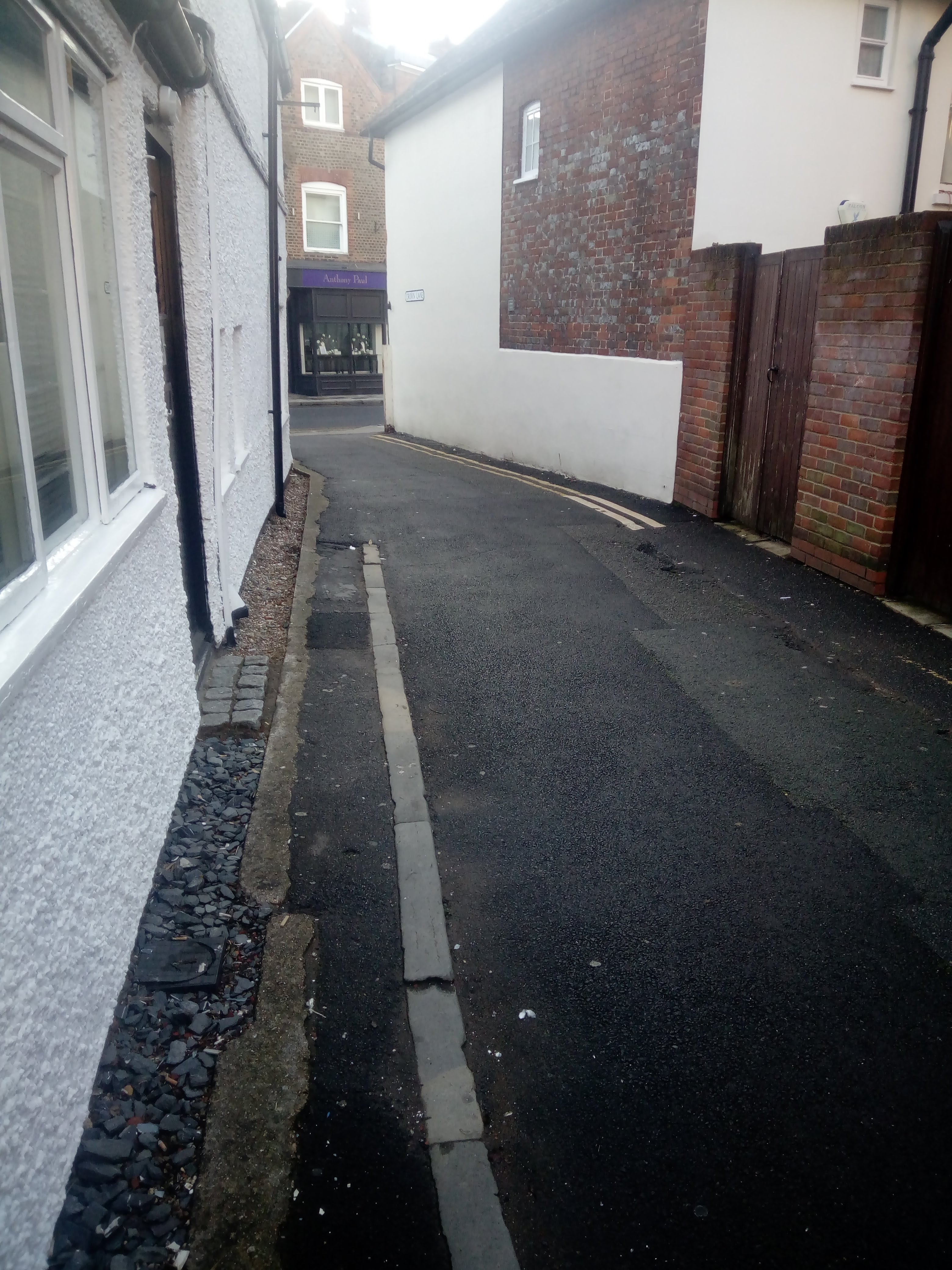
Miss Perfect and Some Tragedy In Crown Lane


Most people who have lived in this lane in Marlow have done so from the early 1890s onwards. Before that the lane existed as a way around to a few buildings but was only ever home to a couple of families at a time. It was sometimes early on called Spittal Lane as it comes off Spittal Street. (For a potential candidate date for the origin of Crown Lane, see the Crown timeline post here - under date 1650. )

On the 1861 census the White and Davis families had homes there. Anthony Davis was a labourer at the paper mills near the river while his wife Elizabeth was a housewife. Thomas White was a sawyer and his wife Mary Ann was a laundress.
Sadly two different residents of Crown Lane were found drowned in the Thames at Marlow- Thomas Holford in 1902 and Arthur Bristow in 1916. In neither case were there any witnesses so the respective juries at the resulting inquests returned verdicts simply of "Found Drowned".
Arthur Bristow aged 43 suffered from "locomotor ataxy". He believed his condition to be worsening and expected to soon lose the use of his legs. As a result he was very depressed and the implication from the evidence of those who knew him at the inquest was that suicide was a probability.  But no one saw him go into the water hence the "Found Drowned" verdict. The jury in his case donated their fees to the Red Cross. Such donations of fees tended to occur when the case heard had been particularly tragic, typically a suicide of an adult or the death of a small child. Both inquests took place at the Two Brewer's pub in St Peter's Street near the river. Local man Albert Truss helped to recover the body.

On the theme of losing the use of legs in 1900 resident "Frank" Tapping took out an ad in the South Bucks Standard thanking all those in the town who had donated money to him after he had to had his right leg amputated. This was in fact Harry Frank Tapping who would have been only 17 at the time. He was the son of Police Constable George Tapping and Mary. Frank appears on the 1901 census as a hairdresser and barber living with his parents and siblings in Crown Lane so the amputation didn't hold him back from starting a career. 
The family had moved there at some point in the 1890s. George was the constable for Lane End from at least 1889 to at least 1892. Prior to that he was stationed at Amersham.
He and Mary married in 1876. Her maiden name was Perfect hence this blog post title. I hadn't heard of this last name before and I had to check it twice to be sure!

The year of Frank's amputation 1900 was also a tragic year for another Crown Lane family when Elizabeth Tubb aged just 40 and a mother with half a dozen children still at home, died. Her husband William, then a labourer, had already had a very troubled life. His father had died at Medmenham when he was only a few months old. His mother brought him back to live with her parents in Dean Street Marlow. He became a shoemaker but found it hard to stay out of trouble. In 1868 he was prosecuted for stealing oats, in 1875 for not paying his lighting rates, in 1880 for rioting when the local Liberal candidate lost the election [more on this in future. Many local working people felt cheated and dispirited by this loss], in 1889 for stealing a piece of leather from Mrs Dewey's Chapel Street shop, and numerous times for failing to pay other local taxes. Poverty looks to be the main factor in these cases. When he stole the leather he said he was a father of ten who had no work for a week after his job with "Messrs Burrows" finished and he was now desperate. The case is a stark reminder of the fact that many families then could afford to make no savings and a single week without pay pushed them to the brink. William received 14 days in jail for that theft. This the court said was a mercy because of his hard pleading of his dire circumstances. The Messrs Burrows had a boot and shoe manufacturing workshop in Marefield, Marlow. 

He still lived in Crown Lane in 1910 when he was summoned for the last time I could find - this time for using bad language.

There was a laundry in Crown Lane in 1929 and an ice cream supplies business at the "Farm House" in the 1950s. When (or if) that house was a farm house I am unsure, it is on my very long "to do" list of further research! It was apparently a school in the early 1830s.

Sculptors Doreen and George Dereford had a studio in Crown Lane in the 1960s.
 
For histories of other Marlow streets or buildings see the "Specific Shops, Streets etc" option on the menu. All mentions of an individual on the blog can be found on the Person Index on the top drop down menu. 

Photographed Summer 2020.
Post written and researched by Charlotte Day. Photos by Kathryn Day.

Sources:
South Bucks Standard 16th November 1900 and 9th December 1910, Reading Mercury 1st February 1902, Bucks Herald 25th July 1868, 14th September 1889 and 19th August 1916. Newspaper copies all from the British Library Archives and accessed via the BNA March 2021.

GRO Marriage Index and Death Index online from their website.

1891 and 1901 census transcribed from microfilm by Jane Pullinger. Thanks Jane.

1881 census from Familysearch website, ran by the LDS [Intellectual Reserve Inc]. Accessed March 2021.

©Marlow Ancestors. You are very welcome to use these images or research for family history purposes if you credit this blog and link here so that our sources remain credited for the information they provided. Thanks!

Thursday, September 2, 2021

Lane End Historic Landlords #3 Clayton Arms


Clayton Arms, Lane End>

Compiled from adverts, censuses, court cases, property record etc. 

*UPDATED FEB 2026*

 This pub is not to be confused with a pub of the same name in Marlow. Both were under the jurisdiction of Great Marlow for licensing and census purposes.

The pub was sometimes used for property auctions and coroner's inquests. It was also the site of the Lane End Agricultural Society annual dinner from at least 1838. The pub usually seems to have been let along with nearby meadows. Sir William Clayton used the pub for the resurrected Court Leets for his manor in the 1860s and 1870s. (The one held on 21st June 1866 was the first for 18 years)

Post ©Marlow Ancestors. If using this research content give credit to this blog and link here.

1844 - Charles Fletcher?

1852- David Bigg.

1859- William Savage. Also a farmer. Described as a "working millwright and publican" in 1864. 

1864-67 Jane Savage, widow of above. She died in 1867. Also a farmer. The contents of the pub and farm were sold off by auction following her death. From this we can see that she grew fir trees for wood, raised a crop of wheat and had a few milk cows.

1870- Mrs Hatch, later Samuel Sears.

1870-75 Joshua Seers / Sears. Regarded as a generally "well conducted house" so got away with 50s fine for staying open outside of allowed hours in 1873, and the licence was not endorsed. 

1875-76 Zilpah Sears widow of Joshua Sears above.

1876-85 Charles Bird.

1885-87 Frederick Goodchild. He had transferred from the Osborne Arms Lane End.

1887- 91 Frederick Moss. Also farmed. Sold up and left the village.

1891-92 Albert Hanks.

1892- Mary Lucinda/Lucina  Hanks, widow of Albert above briefly.

1892- William Barley? Most likely Varley. 

1893- Henry Hawes.

1897-1901 Sarah Varley took over from her deceased husband William Varley who had died suddenly at the age of 49. She had found him unconscious in bed. The parish nurse Kate Byrne tried and failed to revive him with application of mustard and water to his throat and legs and by artificial resuscitation. Found to have had an apoplectic fit [South Bucks Standard reporting Feb 5th 1897, British Library Archives].

1907 - Harry Darton. 2. James Henry Coles

1909-15 William Oakley.

1921- Mr Oakley

1939- Jack Oakley

Many more landlords to to come!

 Look at the Pub Related option here for previous posts.

To find every mention of an individual here see the A-Z person index in the top drop down menu. There's over 6,000 people listed there. 

To see every post relating to Lane End and around see the index here

© Marlow Ancestors

Saturday, August 21, 2021

Will of Joan Howell or Howll of Great Marlow 1736

 Transcribed by Charlotte Day from a copy of the National Archives and then summarised here.

Widow. Will written 1735. Proved 1736.

Says she sick and weak in body but of sound mind and memory.

Commends soul to God.

3 freehold cottages in St Cuthbert, Chetford Norfolk given to her by her husband John to her brother Thomas East of Land End, Great Marlow, butcher and his heirs. He to give half the sum of £5 worth of bread to the poor of St Cuthbert and the other half of the sum of £5 to testator's kinsman John Sharp son of testator's brother in law Robert Sharp. Money to be given to John at age 14 for his apprenticeship if he goes into one, or at age 21 if he does not.

Sister Sarah Hubbard gets testator's biggest gold ring.

Sister Jane Eardly other gold ring.

All rest goods chattels and personal property after debts and funeral expenses paid to brother Thomas East who is appointed sole executor.

Witnessed by Richard Oxlaide [Oxlade], John Deane, Richard Walker.

Will index here

©Marlow Ancestors.

Tuesday, August 17, 2021

Lane End Historic Landlords #2


Compiled from court cases, adverts, censuses, property records (some uniquely held by my family), etc.

These pubs came under Great Marlow for licensing and censuses.

©Marlow Ancestors. If using this research credit this blog but you are welcome to do so.


Old Armchair, High Street (Thanks to information from Andrew Mullis we understand that this pub was previously called the New Inn). In 1885 described as both a grocery shop and a pub, a double fronted premises with a yard and stabling.

1881-84 Elizabeth Cutler. She was also a lace maker. Previously at the New Inn but this appears to be the same premises, just with the name changed.

1884- December, Benjamin Stocks takes it on temporarily.

1885- Charles Mead temporarily, then Benjamin Stocks again temporarily to George Tilbury then he to Daniel Lyford all in one year. Rapid turnovers of landlords were common in the past. Freehold premises sold in that year. Wellers brewery were then the tenants, paying £18 a year rent for the double-fronted pub and grocery shop property with outbuildings.

1888- John Lyford

1900- Edwin J Day 

1900-02 Thomas Williamson

1902-03 Charles Wackett / Wackitt

1903-06 Frederick Crump. Came from running the Cherry Tree pub in Dean Street Marlow. Also a blacksmith.

1906 Thomas Trinder, briefly. Later at Chairmaker's Arms Lane End.

1909 : referred for closure under local authority powers to limit the number of pubs in an area. They say there's 5 other licenced premises within 92 yards of this one, the property is in very bad condition and there isn't a bar, only a tap room. The licensee then is said to have kept a general shop too. Weller's of Amersham are the brewers. 


Old Inn 

Bit of a mystery this one! Is he actually at the Old Sun? Almost certainly. 

1887- Frederick Goodchild. See above. 


Old Sun AKA The Rising Sun (Be aware of the Rising Sun in Chapel Str Marlow too) 

1833- Thomas Plummer. Premises then had a yard, skittle ground, stable and garden attached worth a combined £10 10 shillings.

1841 - George Haines? 

1851 - George Haines? 

1871 - Elizabeth Haines?

1871-3 Elizabeth Hawes. 

1874 - Elizabeth Hawes to Richard Cutler

1881-87 John Cutler. John Cutler died 1887 and premises were passed to his widow Elizabeth.  

1898 - 1 Mrs Goodchild. At this point if not before the pub was a Wethered's Brewery (of Marlow) one. 2. Oscar Knoff or Knopff (hold over). 3 Mr Piercey. 

1900- Many complaints as to bad conduct on these premises reported in the South Bucks Standard 28th December.

1901 - Edward Piercey, wife Ellen.

1903 - E Piercey 

1905 "Olde Sun" Edward Albert Piercy to Noah Stone. 

1911 Noah Stone to Benjamin Thomas Prue 

1915- John Austin

1915-23 A. E Stevens [Albert Ernest]. He was a beerseller 1911 Kelly's Post Office directory which also lists Benjamin Prue so he must have been selling beer already elsewhere before he took over from Benjamin. Albert probably died 1923.

1924 - John Shaftesbury Hogg 

1939- David George Fall

Lots more Lane End landlords to come. Take a look at the Pub Related option on the top drop down menu for what is already on the blog. Use the "Nearby Places" option for other Lane End posts. 

Sunday, August 15, 2021

Brief Will Summary for John Plumridge [Plomridge] 1630

 I have transcribed to the best of my ability this will which is held at the National Archives Kew and then summarised it briefly here. ©Marlow Ancestors. You are welcome to use this summary elsewhere if you give credit to this blog and link here.


JOHN PLUMRIDGE [PLOMRIDGE] 

Commends soul to God- the father, son and Holy Ghost.

Burial in Marlow Church in a Christian manner. On day of burial money to be distributed to the poor people of Great Marlow at executors' discretion.

To well loved wife Margaret the house [in another sentence called a farm house] where they live in Lane End and a four foot by four foot strip of the "backside or yard" that belongs to it. This strip, running from the kitchen door, will give her access to come and go from the house. The rest of that backside goes to nephews John Plumridge son of my brother ?R.... and John Plumridge son of my brother William Plumridge of Bray in the County of Berkshire, tilemaker. These two nephews will inherit the backside strip and the house after Margaret's death.

Margaret also gets the moiety of one half of the household stuff, utensils, furniture in their Lane End home.

A house in Marlow High Street and the edifices, backsides and gardens that go with it which is in the occupation of Thomas Shirley to nephews William Northe son of Henry Northe deceased and of Agnes my sister and Henry Cane son of Mathew Cane and of .... my sister.

To any nieces and nephews not already mentioned who are alive at my death 40 shillings each.

Executors my loving brethren Richard Plumridge and ?Plumridge.  These get all residual goods. Will overseers William Plumridge and Mathew Cane. To each of them as token of love and esteem 5 shillings.


To witness Robert Farmer, William Plumridge, John...


Thursday, July 29, 2021

Will Benjamin Cutler

Benjamin Cutler of Lane End, Great Marlow. Will written and proved 1811.

Carpenter.

Says he in perfect health, mind and memory.

Wife Hannah £15 and his messuages and tenements in Great Marlow in occupation of his mother Hannah, George Oxlade, the testator and Jonathan Oxlade.

This PCC will is held at the National Archives, Kew. Transcribed by Charlotte Day.

©Marlow Ancestors. You are welcome to reuse this content for family or local history purposes with credit to this blog.

Sunday, July 25, 2021

Rachel Hall The Butcher

Born according to the census in Hurley as Rachel Thatcher somewhere between 1782 and 1791, Rachel married her butcher husband Robert, a widower by license in Medmenham. They then moved to his native Marlow. After his death in 1823 Rachel ran the butcher's shop herself. It was located in West Street on the same side as the Ship Inn, about half away along the road. Rachel would go on to run the shop for some 30 years.


On the 1833 parish assessment her premises consisted of a house, shop as part of that, stables, slaughterhouse, yard, sheds, a garden and offices (as in the old meaning of the word - places for the fulfillment of those domestic chores or business functions requiring their own space).

Both her step sons William and Robert became butchers. William assisted Rachel for at least a while, as did Rachel's niece in law Alice Hall. Robert operated his own business in Hambledon. Relations between him and his step mother were not cordial it seems. He was engaged in lengthy litigation against her for unknown reasons according to a report in the Windsor and Eton Express 1842. Dissatisfied with the speed at which the case was progressing Robert junior walked into Marlow, dragged his legal representative into the street and gave him a good shaking. For this he was arrested and bound over to keep the peace. The lawyer is not named in reports. There were several in Marlow at the time. If the injured party was Ralph Spicer who lived and worked in premises close to Rachel's shop in West Street Rachel likely witnessed the event.

Relations with his step mother may have deteriorated following Robert being kicked off the list of Marlow men eligible to vote. At the time you needed to occupy a certain amount of proper in order to register as a voter. Robert had claimed to be in partnership with Rachel, who owned her shop. This wasn't deemed sufficient property qualification and his voting rights were removed. Rachel may have been blamed for this if she denied to investigators he had any part of the Marlow business. This was nothing but the truth, but still.

Her husband's will was unequivocal, the business went to Rachel for life as long as she didn't remarry. After her life or if she remarried the property, and others he owned, was to be divided equally between his children. If Rachel decided she wanted to give up the business before her death or remarriage then son Robert got it. He was not made a partner in the business otherwise.

Robert senior also gave Rachel for life two houses in St Thomas's Street Marlow (now called Spittal Street).

In 1832 Rachel's shop was broken into and a saddle of mutton, 4 ribs of beef and a shoulder of veal were stolen. She offered a reward for the apprehension of the guilty party but I find no evidence that he or she was found.

Twelve years later Rachel had a leg of mutton stolen from her shop and six years after that 31bs beef disappeared. In the latter case the thief was caught. Keziah Godding  received a sentence of 14 days. She was apprehended immediately on leaving the shop by parish constable Thomas Walker, with the meat hidden under her apron. The shopman Thomas Webb Anthony said he had only sold her a shillings worth of mutton, which was also beneath her apron. 

Rachel was suffering no particular targeting of her premises- thefts from shops were common in Marlow and elsewhere.

Whatever difficulties Robert junior and Rachel had they were forgiven at least on Rachel's side by the time of the writing of her will in 1852.

She herself had three properties to leave: a cottage in Lane End left to Robert junior, a cottage in Spittal Street with all it's encumbrances (debts secured upon it or mortgages or annuities drawn upon their rents) to son William and a further cottage in West Street. This latter, in the occupation of Ann Plumridge, was to go to the will's executors Robert Maddox (who lived in the High Street) and James Thomas Lovegrove (a plumber in West Street who lived a few doors from Rachel ) to sell. The money raised was to be used to pay her debts and funeral expenses and to help pay off some of the encumbrances on the property she was leaving. Any money left after that was to be equally divided between Robert junior and William. In 1853 William advertised the butchery business for sale, along with immediate possession of the premises it was carried out in. 

Josiah Smith and Robert Howard later ran their own butchery businesses on the same premises. Robert Howard was also a dairyman.

More posts like this can be found on the menu under Biographies Of Individuals menu option here.

More West Street shopkeepers and other residents are listed on the menu under "Specific Shops, Streets...Etc" option here

Looking for more Hurley related people? See Other Places on the menu, which has a Hurley section here

For all mentions of an individual on this blog search the Person Index.

Sources:

Wills of Rachel Hall and Robert Hall senior. Obtained from the National Archives, Kew and transcribed by me.

Reading Mercury 16th April 1832 [theft from Rachel].

Windsor and Eton Express 20th August 1842 [Robert junior duffs up his legal representative] and 10th October 1840 [Robert's voting problems].

All newspapers accessed October 2020 via the BNA online. Copies held at the British Library archives.

Judicial records research of Jane Pullinger. Thanks Jane!

1841 and 1851 censuses my transcription from microfilm.

Medmenham parish records 

Post ©Marlow Ancestors. You may reuse it for family or local history purposes if you credit this blog and link here so that my sources remain credited for information they provided.


Friday, July 23, 2021

Historic Cost Of Living In Marlow *expanded May 2026*

Updated May 2026

Historic cost of living in Marlow (up to 1939) Part One. Part Two concerns the historic cost of fun, leisure and transport in Marlow and is available here. We have gathered these from many period sources- adverts, court cases, letters, auction information etc all specific to Marlow. To put these costs into context see Charlotte's post on wages in Marlow history here. A post about the Marlow cost of living for the 1940s -60s is now available here.


Homes:

(All unfurnished unless stated) 

Rent of Widmere Manor, per year 1518 = £12.

Rent of a 2 bedroom cottage with garret, wash house, wood house and garden in St Peters Street 1785 = £6 per annum. 

Rent of Albion House West Street 1817, per year = £63.

Annual rent of a 2 bed cottage and garden Dean Street 1829 = £3 10 shillings.

Annual rent of a 4 bed, 2 reception cottage near Holy Trinity 1861 = £14.

Weekly rent of a small cottage West Street, 1862 = 2 shillings 6d.

Annual rent for The Parsonage, St Peter's Street, 1865 = £50.

Annual rent for a 2 bed, 2 reception cottage with a small garden in Quoiting Square, 1866 = £11.

Weekly rent of a 5 room cottage with a garden in West Street 1872 = 2 shillings 6d.

Max rent a lady and gent were prepared to pay for 4 unfurnished rooms in a "genteel house" in or near Marlow, 1879, per year = £16.

Annual rent of a six bed house with walled garden in the High Street, 1879 =£45.

Combined sale price for two 2 bed houses in Station Road 1891 = £250 for the two.

Annual rent of Court Garden estate, (17 room house, and 33 and a half acre grounds including lodge entrance, stabling, kitchen gardens, vineries, peach houses, boat house and creek to river) 1891 = £225. By 1898 this had risen to £300.

Danesfield Estate 1896 [mansion, gardens, park, farm etc] sale price = £36,000

Freehold house Weir Cottage sale price 1896 = £1,930.

Building plots in the newly laid out Seymour Park Road suitable for bungalows or small villas 1899 = £40-50 (mostly not sold though!)

Yearly rent of a 4 bed, 3 reception room house in the High Street with an interior w c but no bathroom 1899 = £45

Yearly rent of a 2 bed bungalow in Newtown Road early 1900s = £25. 

Down payment required to secure one of several building plots on Newtown Road 1904 (cash only, no credit) = £25

Weekly rent of semi detached cottage Wycombe Road 1905 = 6 shillings 2 pence.

Rent for a semi detached 3 bed villa in Little Marlow Road 1905 = 9 shillings a week.

Rent of Quarry Wood House 1908 (7 bedrooms, 4 reception rooms, cellarage, conservatory, large garden, coach house, stabling) = £55 a year.

Rent of a 2 up 2 down cottage Dean Street with yard and outbuildings 1909 = £13 a year.

Rent of a "prettily furnished"  2 reception 3 bedroom house with bathroom, near to river, 1912 = 2 and a half guineas a week. Seems very expensive compared to Quarry Wood House above, which shows the sharp difference between furnished properties and those that were not. 

Rent of a brick cottage with two bedrooms, kitchen, scullery, store room and pantry (no living room), at Highfields on the outskirts of Marlow 1913 = £18 4 shillings a year.

Board and residence for a gentleman as paying guest in home Station Rd, inclusive of meals etc, 1913 = £1 a week. 

Rent of 3 bed, 2 downstairs rooms house Marlow 1914 =  5 shillings 6 pence a week.

7 room house to let, includes bathroom. Furnished, 1921 = 30s a week.

Rent of the one of the newly erected concrete pre fab 6 room cottages at West Str/Spinfield, 1924 per week - 10s. Only applicants with children need apply!  (These rents are deliberately set lower than local average)

A 4 room detached cottage with gas supply, for sale Marlow, 1925 = £525m

Single room to let to a lady, unfurnished, 1926 = 4s 6d a week.

To let in Wycombe Road, 3 bed detached house with three quarter acre garden and garage, 1932 = £80 per annum.

To let modern 3 bed, 2 reception room semi in Marlow with bathroom and electric lighting, 1933 = £1 per week.

3 room bungalow with 1/4 acre garden, Marlow, 1934, to rent = 11s a week. 

5 room bungalow known as The Rest, Oak Tree Road, with "splendid garden" and garage, 1935 = £700 freehold or would rent for £60 a year. 


And to furnish or maintain your home:

Print showing the cavalry of the Bucks Yeomanry, bought from an artist selling out of the Crown, Market Square, 1829 = 1 guinea.

Print of "North West View of Great Marlow Church" by Thomas Rumble, 1835 = 1 shilling 6 pence. 

Silver polish from Foottit's Chemist, High Street, 1859 per large bottle = 3s.

Cheapest clock available from Mr Stradling, "practical clock and watchmaker", High Street, 1862 = 7s 6d. 

A metal teapot, from the High Street shop of John Boroday, 1864 = 6s.

A Harper Twelvetrees washing machine (hand powered) ordered from agent  J Meakes ironmonger in Spittal Street and delivered free, 1864 = 50-60s.

Gas from the Great Marlow Gas Company per 1000ft consumed, 1866, = 7s 6d. This price is seen as extortionate! In 1897 the price was only 4s 6d for the same.

A ton of coal delivered from Walter Porter, whose wharf was at the Railway Station, 1873 = 37 shillings. In 1892 it was possible to obtain good coal for just 20s -21s a ton, delivered so the price fluctuated.

Tin of metal polish from Clifton's grocers in the High Street, 1885 = 1s.

Pair of solid silver salt cellars and spoons in a case from Rowes the jewellers in High Street, 1894 = 13 shillings 6 pence.

Oil-fueled table lamp, from Jasper Collins of Chapel Street, 1895 = From 9 and a half pence. 

Smokeless kerosene oil for lamps from Jasper above 1896 = 7d a gallon.

Expected cost of hiring a cart from the Marlow Urban District Council to empty your cesspit (you providing the horse to pull it and the labour to actually do the emptying) 1897 = 3 shillings 6d plus 5 shillings refundable deposit to ensure you returned cart in good condition.

Silver plated toast rack from Rowes, High Street 1897 =  from 3s 6d.

Bed quilt, from J Morgan & Sons, 1901 = from 2 to 30 shillings.

Cost of hiring the most basic small gas cooking stove from the Marlow Gas Co, per quarter 1901 = 2 shillings (includes repairs but not the cost of the gas itself or the rental of the gas meter)

Dust proof alarm clock from Rowes jewellers in the High Street 1904 = 4 shillings.

"Jewel" Anthracite stove (the latest tech with smokeless operation and little maintenance required they say) from Eddowes ironmongers 1909 = from £2 17 shillings.

1 pound in weight tin of paint for your walls, many colours to choose from, Barnard's Stores Chapel Street 1909 = 3 shillings.

Plate glass mirror with oak frame, from Barnard's as above, 1909 = 6 and 1/2 pence

Occasional table from Cudes furnishers in the High Street 1909 = from 5 shillings 6d.

Complete bedroom suite from G H Cude as above, 1909 = £2 17s 6d Note this didn't include a bed. It comprised dressing chest, wash stand, chair and towel stand, enamelled in any colour.

1 broom from Newman & Chalk, High Street, 1910 = 1s 9d.

Van load of firewood, mostly beech from G Dean & Son, 1920 = 10s .

Bunch of flowers, delivered free locally, from Coryton, Marlow Bottom, 1928 = from 1s. No telephone so send a postcard or call in to place an order. 

Second hand ice chest (to hold a block of ice for keeping food stored in the lower part cool. A no electricity "fridge"), 3ftx2ft, 1929 = 35s

A ton of coal, delivered by G E Stevens, Oxford Rd, 1934 = 38s for "London Brights" coal for general purpose use, 42s for Steven's "22 hards" blend "splendid for open grates" or the very best coal 54s. 

Second hand timber built garage, to fetch from Winchbottom Lane, 16x10ft, 1935 = £6 10s

Murphy brand radio set from R J Platt Radio Shop, 1937 = from £6 10s.

1 dozen daffodils, picked while you wait, from Millhouse Farm, Marlow Common, 1939 = 2d.


For the garden:

Gravel from Mr Allum / Allam Bovingdon Green 1874, per cart load = 5 pence.

A dozen tulip bulbs from Elliott's in the High Street, 1881 = 1 shilling.

Flower seeds from Elliott's in the High street 1882, per packet = 3d.

Cauliflower seeds from Elliott's in High Street 1882, per packet = 3d.

Broccoli seeds as above = 6d.

Lettuce seeds as above = 3d.

1lb of raffia grass for tying in garden plants, from Newman & Chalk, High Street 1898 = 6d.

Loam ideal for growing roses. From the brick works in Newtown Road (which also sold gravel for your garden paths) 1910 = 1s 6d a load.

A Ransome motor lawnmower from Batting & Sons, 1933 = from £22 17s 6d with 5% discount for cash payment.


Food and drink / preparing it: 

A half peck loaf of bread, price as fixed by MP William Burt Esq during severe winter of 1767/8 =  6d [a half peck loaf was the typical loaf size at this period, weighing 8lbs 11oz. Remember that poor ate bread for every meal, and sometimes only bread for a meal]

A pot of beer [equivalent to half a pint], regulation price in town 1846 = 4 pence. Went up to 5 pence in 1847.

"Large" loaf of bread Little Marlow 1847 = 4 pence.

3lb beef from Rachel Hall's butcher's shop West Street 1850 = 1 shilling.

2lb basic bread from Charlotte Sawyer baker of West Street 1851 = 2 pence. 

4lb loaf of finest white bread from baker Joseph Maskell of West Street, 1857 = 7d

2 ounce packet of coffee from George Cannon the bookseller (many booksellers and stationers sold tea and coffee too), 1858 = 2 shillings.

Cost of one pigs foot (yum!) in Marlow 1859 = 2 pence.

Pint milk from Westhorpe Farm Little Marlow 1860, delivered in Marlow = 1 and a half pence.

A pound of "nutritious" arrowroot, as prepared by native Christian converts at missionary stations in the South Sea Islands, from Fullicks, 1861 = 1s 6d 

A pound of pure unadulterated China tea from George Cannon, High Street 1861 = from 3s 6d.

1 quart of soup, from the town soup kitchen, cost subsidised by subscribers, 1862 = 1 penny. (Available only to any poor with a ticket, twice per week over winter.)

Tea (food and drink) served at the Temperance Societies rural fete at Harleyford 1865 = 9d. 

A pint bottle of Guinness Extra Stout from Fullicks and Coulton Grocers in the High Street, which was also an off licence, in 1867 = 4 sh 6d.

Supper of bread, bacon and potatoes served at The Carriers Arms, Wycombe Road, 1873 = 6d, plus a pint of beer for 2d.

A 4lb loaf from Mr Brooks on the Causeway, 1873 = 6d., a 2lb loaf from Henry Turner of West Street 1875 = 3 and a half pence.

Bottle of "Castle A" sparkling hock (white wine), from Edward Hewett, 1874 = 2s 9d . (Prices had recently increased due to demand created by "favourable recommendations from the medical profession" the makers said)

One orange from Walter Lovegrove the grocer in the High Street 1878 = 1 penny.

A rabbit from Coster's grocers in West Street, 1879 = 1s 7d.

Tin of biscuits from Joseph Dorsett's grocery shop 1881 = 4 shillings

A pound of "very fine" Black Hamburg grapes, sold by the gardener of Suffolk Lodge to the public, 1883 = 2s 6d.

A bottle of claret from the Greyhound Hotel, Spittal Street = 2s 6d.

Jar of marmalade or glass tumbler of blackberry jam from Robert and Sarah Ann Loosemoore's Spittal Street grocers 1885 = 4 and a half pence. 

Cost of hiring one of the new parish allotments Berwick Road 1886 = 6 pence [6d] a pole. Foxes Piece allotments 1908 = 10 pence per pole.

1 pint of gin, served in a jug with two glasses - Hare and Hounds, Red Pits, Henley Road, 1886 = 2 shillings.

A pound of pork sausages from Stillmans Spittal Street, 1888 = 9d. (Or go for cheaper beef ones at 6d a pound)

Pot of lemon curd, from confectioner William Kempster, High Street 1888 = 1 shilling (Confectioners didn't just sell sweets but all kinds of sweet treats e.g pastries too. Most were also or primarily bakers).

A bottle of rum from Clifton grocers and wine merchant High Street, 1888 = 2s 3d.

A cup of coffee from the Mission Rooms, Dean Street 1891 = 1 penny. This was subsidised in the hope it would divert the locals from alcohol!

Bread, butter and tea at Hurley Lock 1893 = 6d. This seen as a real bargain.

1lb tin of biscuits from Death & Sons 1894, "suitable for gifting" = 9d.

Home cured bacon from Joseph Dorsett, mild cure, 1894 = from 6d per pound. 

1 egg from Wymer's Farm 1895 = 1 penny.

Bottle of Spey Royal Whiskey, from Smith & Co, High Street, 1895 = 4d plus 1d deposit on the bottle. 

1lb "Special" Ginger Nuts from Death & Sons Bakers 1895 = 4d.

Bottle of whiskey from Smith and co, High Street 1896 = 4 shillings plus 1 shilling returnable deposit for the bottle.

Fancy box of dates, part of Christmas range, from Walter Lovegrove grocer of the High Street 1896 = 9d.

A dozen bottles of Jacob's Pilsner Beer from Walter Lovegrove grocer, 1896 = 5 shillings.

14 mince pies for Christmas from Death and Sons bakers 1897 = 1 shilling, a pound of mincemeat for Christmas from Browns in the High Street 1909 = 6 and a half pence, a pound of Christmas "New Marlovian Shortbread" from the same 1909 = 8 pence.

1lb lard from the Co-Op Market Square 1897 =  3 and a half pence.

Can of salmon from the Co-Op Market Square 1897 = 5d.

Wholemeal loaf from Death's Bakery 1899 = 1 and a half pence small, 3 pence large. (Weight not given)

Grapes from A E Howard, grocer High Street 1900 = 6d a pound.

York ham from A E Howard, High Street 1900 = 1s 2d  per pound.

Fresh butter from A.E Howard 1900 = 1 shilling 2 pence per lb. In 1902 it cost from 1s a lb from Howard's successor Frank Over.

Ripe stilton as above = 1s 4d per lb.  

1lb finest pork sausages from A.E Howard, High Street 1900 = 6d to 8 and a half d.

Half gallon of ale or stout from High Street grocer A E Howard 1901 = 8d.

A pint of beer at the bar of the Crown Hotel 1901 = 4d. A glass of beer cost 2d in the bar or 3d in the coffee room of the Crown. 

1lb of finest Ceylon tea, 1902, from Frank Overs Stores, High Street = 1s 6d (Frank took over A E Howard's premises in 1902). Alternatively 1lb of special blend tea from another High Street grocer Alfred Illsley would cost from 1s 4d per lb in the same year. 

Demerara sugar per lb, Frank Over's Stores, High Street 1903 = 2d.

Bag of self raising flour from Brown's Market Square 1905 = 3d.

3 pint tin teapot from Barnard's Stores Chapel Street 1909 = 6 and a half d.

4 pint iron gas kettle, from Barnard's as above, 1909 = 6 and half d.

1 cup and saucer, from Barnard's, 1909 = 1d.

Fancy pastry cutters from Barnard's as above, 1909 = 1 and half d.

7 lb (yes 7) jar mixed fruit jam, Barnard's as above, 1909 =  1s 4d plus 3d extra for the jar.

Large tin pineapple chunks, from Barnard's, 1909 = 4 and half d. (In 1929 a tin of pineapple from International Stores cost 5d).

Hindquarter of best Canterbury lamb, from E Hogg butcher of Market Square 1910 = 7 and a half d per lb. 

1 pint of soup served at the Communal Kitchen, High Street 1917 = 2d (Bring your own cutlery). 

1/2 pint portion of stew with dumplings, in Communal Kitchen as above = 2d
Treacle Tart, as above 1917 = 2 and a half pence.

Quartern loaf of bread (4lb, a traditional loaf size), from Co op Stores, Station Rd, 1917 = 10&1/2 d

A lb of damson from Neighbours in Market Square 1917, = 1 and a half pence. Delivered free.

Tin of haddock (no size given) from Barnard's Stores, 1921 = 4&1/2d (this is a special offer price as they have just taken in 1,000 of the tins apparently).

Mitre margarine "made like butter, looks like butter, tastes like butter, made with butter" , from International Stores, High Street 1923 = 10d per llb.

Large pork pie, available from The Queen pub Marlow, 1923 = 6d. Delivered fresh daily from Broomfield's bakery, High Wycombe. 

3lb bag of "Tastit" self raising flour from grocer Mrs Coventry in Chapel Street, 1923 = 8d "the cheapest and best money can buy". 

Lunch for hotel guests at the George and Dragon 1924 = 3 shillings 6d.

Large tin Ovaltine (weight not given) available from various Marlow shops, 1926 = 4s 6d. "Builds up brain, nerve and body"

Bottle return charge for bottled beer sold to be consumed off the premises at the George & Dragon, 1928 = 2d. (A label is stuck to the bottles by the barman when purchased to identify them. You pay the 2d charge then and get it refunded when the same bottle is bought back. If you don't, you loose the 2d which the landlord has then to pay the brewery for the loss of the bottle.)

1lb good cooking potatoes from Tomlinson the potato merchant, Dean Street. (He's also a corn and coal merchant and seedsman), 1929 - 1d (which seems cheap compared to other suppliers in South Bucks).

A 5lb cake from Dorsett's grocers 1930 = 5s.

Bottle of "toasting port", 1917 vintage, from Budgen's Stores - grocer/wine merchant, High Street, 1932 = 7s 6d.

2 pounds of oats from International Stores Marlow 1933 = 3 and a half d.

Tin of pilchards in tomato sauce from International Stores 1933 = 5 and a half d..

A pound of Empire Cheese from International Stores 1933 = 8d.

1lb pound of Burford Marvel tomatoes, picked while you wait, at Coryton, Marlow Bottom, 1933 = 6d.

Full course dinner at The Crown Hotel, c 1934 = 5 shillings. Cheaper dinners available on request! The most expensive breakfast available in the same year cost 3s 6d but sadly we do not know exactly what food was on offer for that. 

Can of grapefruit, from the Chesham & High Wycombe Co Operative Society Society shop, in Station Road, 1934 = 8 & 1/2 d.

1 quart milk from the Seymour Court Farm dairy, delivered, 1935 = 7d.

Large tin of red plums, sweetened, from Brown's, High Street "the Quality shop" 1935 = 7&1/2d

8lbs loaf sugar from Dorsett's grocers, 1937  = 2 shillings.

1lb tea from Dorsett's grocers, 1937 = £2 2 shillings.
 
Tin of assorted chocolates from Barksfield Brothers in the High Street, 1937 = 6 shillings 6 pence.


Medical and Health Costs:

Tincture for scurvy, per bottle from Mr Hubbard, 1768 = 1s 6d.

Cure for bladder / kidney stones from John Howe, patent medicine supplier (and stationer and bookseller) High Street 1784 = 2 shillings a bottle.

Box of "Pectoral Lozenges of Tolu", for hoarseness, asthma, coughs etc, from John Howe as above, 1785 = 1 shilling. 

Dr Waites Celebrated Worm Medicine in the form of gingerbread flavour "nuts", per 13, from Miss Hawes, 1792= 1 shilling 1&1/2d. 

Cure for itching and "skin eruptions" from the shop of Miss Hawes, per bottle 1815 = 2 shillings 9 pence.

A "cure" in a bottle for cholera from Little Marlow quack medicine supplier 1851 = 1 shilling.

Large bottle of Dr Torren's one minute toothache cure from Foottit's chemist in the High Street, 1857 = 1 shilling.

Trowbridge Pills Of Life And Beauty" (actually indigestion pills for women!) from Foottit's chemist, 1860 = 1 shilling 1 and a half pence per packet.

A pair of "patent pantheoscopic" glasses for all types of vision difficulties from Stradling's the jewellers /watchmakers in the High Street, 1862 = 5 shillings. More basic glasses could be got there for 1s 6d.

Woodcock's wind pills from Foottit's chemists in the High Street 1862 = from 1sh 6d a box.

A small bottle of Johnson's Sarsparilla And Bark Pills for skin eruptions (which also cures scurvy, liver complaints, bowel problems and dyspepsia while they're at it) from Foottit's chemist in the High Street, 1864 = 13 and a half pence. Especially recommended for anyone about to embark on a course of sea bathing or a trip to the tropics.

Bottle of Heald's Essence for "head ache, face ache, and ear ache" from George Cannon in the High Street, 1864 = 7 and a half pence.

Orchard's cure for deafness from Foottit's chemist in the High Street, 1873 =13 and a half pence per bottle.

Dr Wilkinson's midwifery fee, 1874 = 10 shillings 6d.

Herrington's Balsamic Cough Elixir from Banbury's chemist shop Marlow per bottle, 1874 = from 13 and a half pence. A bargain 11 shilling extra large bottle available. This elixir was fir all coughs including those by consumption.

Complete set of artificial teeth, upper and lower, as made by "legally qualified  surgical and mechanical dentist" William Gregory of Maidenhead. Sold through Banbury's Chemist Marlow, every other Tuesday.  1875 = £3 3 shillings. Liberal discounts for mechanics and servants. Consultation free. 

Bottle of Banbury's own label tasteless Digestive Pills for indigestion, from William Banbury, chemist, High Street, 1876 =7&1/2d. William says the population of Marlow suffer from digestive complaints to "an enormous extent" and in fact very few people don't need his pills. 

Course of first aid training by St John's ambulance at Marlow, 1883= 5 shillings or free to firemen or members of the Royal Bucks Volunteers.

A bottle of "invigorating" health saline from Charles Dye's Pharmacy in the High Street 1896= from 1 shilling.

Tube of Burnolia cooling cream for sunburnt skin, especially marketed at boaters, tennis players and cyclists, from W Baxters chemist High Street 1896 = 6 pennies.

Oleatum Japanese rheumatism remedy from Baxters chemist 1896 = from 1 shilling a bottle.

Bottle of the "best nerve and brain tonic" Sulphurized Quinine and Iron, from W Baxter as above, 1897  = 1 shilling 9 pence.

A box of Harris's anti-nit children's hair pomade from Harman's Chemist 1908 = 4 and a half pence.

Bottle of a cure for neuralgia from Snow's Chemist in the High Street 1909 = 1 shilling.

Snow's exclusive bronchial balsam from Snow's chemist High Street 1912 = from 1 shilling.

Nostrolene naval spray to guard against hay fever, flu, thrust infections and head colds from Snow's Chemist High Street 1919  = 1s 3d.

Extraction of a tooth and an artificial replacement, by the American Dental Co who attend Marlow weekly, 1920 = 2s 6d (reduced prices available to servants, soldiers and seamen and their dependents).

A pair of good plain nail scissors from Rowe the jeweller, High Street 1921 = 2 shillings.


Education:

Yearly fee for a pupil Mrs Trash's boarding school for young ladies 1799 = 30 guineas.

Cost of attending the Royal Military Academy, West Street if you did not have a father in the military 1802 = £100 a year (boarding). A discount of between 50 and 90 per cent was available to sons of army men. Orphans in these circumstances paid nothing. The pricing structure changed over the years.

Yearly fee for attending Prospect House Academy boarding school for boys 1849 = 22 to 25 guineas.

Annual fee for boarders aged 5-8 attending the Misses Westbrooks prep school for boys and girls in Chapel Street 1850 = 18 Guineas. Daily pupils 4 guineas. Laundry 2 guineas extra. 

Mail order school books written by Joseph Guy the former geography teacher at the Royal Military College Marlow, 1852, each = 1 shilling to 9 shillings.

Day pupil cost for boys attending George Verney's school - the place for farmers and tradesmen to give their sons a "sound business education" so he says.  1857 = £5 a quarter with extras "a mere trifle".

Day pupil cost for a quarter at the Misses Winter's Preparatory School For Young Gentleman, West Street Marlow (there was a separate school for girls), 1865 = 12 shillings 6d. This did not include optional music, singing or drawing classes.

Annual fee for boarding pupil (boys) at Marlow Place School for boys 1870 = 70 guineas. Some subjects cost extra.

Italian classes for the young ladies at Chapel House School, per quarter 1881 = 15 guineas.

Cost of 10 dance lessons at Downshire House School for girls (open to non-pupils) 1882, = 1 guinea .

Annual fee for scholars at Borlase who did not have a Foundation scholarship, 1882 = £1.

Cost of painting class for ladies, per term, as organised by the Marlow centre of the Technical Education Committee, held at the Institute, 1903 = 10s 6d. (A two hour class a week). General classes in French, shorthand, chemistry, woodcarving (popular with women) and maths cost 2s 6d per term with sessions lasting between 90 minutes and 2 hours a week at the Institute.

Annual boarding fee at Borlase 1906 = £54. 

Annual fee for girls at a school (boarding) in Glade Road 1909 = 18 guineas.


Clothing and Footwear etc:

Printed cotton for dress making, per yard, from Messrs Wilkinson and Burrough, 1789 = from 10d to 4s 6d (These gentleman were selling the items at a reduced price as they have bought up the discounted stock of a London draper who was giving up his business)

A petticoat, Marlow 1850 = 2 shillings.

Pair trousers from John Morgan's drapers and outfitters shop in the High Street 1859 = 7 shillings.

Value of a man's smock frock stolen from a Turville farm in 1858 = 4s 

Man's coat from John Collins Clark tailor 1861 = £2 12 shillings 6 pence

Cheapest silver watch available from Mr A Stradling, watch and clockmaker, High Street 1862 = 15 shillings. 

Pair of man's slippers from Mr East shoemaker of Marlow, 1863 = 2s 6d.

Pair of boots (probably top quality) from Charles Phillips bootmaker, 1864 = £1 1 shilling.

Gold wedding ring, from Stradlings, High Street, 1865 = from 7s 6d

Cost of hiring a Britannia sewing machine as hairdresser Robert Pearse of Marlow did in 1876, per week = 2 shillings. Ideal for making your own clothing. 

"Fancy dress material" for making your own fine dress, from draper etc Alfred Davis, High Street, 1880 = 1&3/4d - 4&3/4d per yard

Child's ready made jacket, from Alfred Davis as above, 1880 = 6&3/4d

Reward for finding and returning a fancy striped silk shawl lost near Marlow, 1880 = 5s

Good quality overcoat and trousers from Richard Barnes, tailor of Spittal Street 1885 = £3 10s

Ladies watch, solid silver, guaranteed 10 years from Rowe's the watchmaker / jewellers, High Street 1894 = £25 (the cheapest one advertised by Rowes  in 1897 was just 15s 6d- probably silver plated only).

Special all wool trousers from tailor Alfred Davis, High Street 1894 = 10s 9d

Beaver overcoat for a gentleman, with velvet collar and tweed lining from Morgan's 1895 = 21s

 "Suitings" (men's suits) from James Gray, tailor, High Street 1895. Made to suit any shape = from 45 shillings. 

"Special Quality" made to measure  flannel trousers James Morgan & Sons 1897 = 12 shillings 6 pence. Other qualities from 10 shillings 6 pence.

Special Quality made to measure tweed suit James Morgan & Sons 1897 = 35 shillings. Other qualities from 27 shillings 6 pence.

"Ironside" brand tweed and serge suits, to measure, from A E Sutton General Clothing and Boot Store, West Street. "Fit, style and wear guaranteed" 1897 = from 2 guineas.

Gold scarf pins from Rowes, High Street 1897 = from 2s 6d.

Cheapest gold necklace from Rowes, High Street 1897 = 10s 6d.

Shoes from West Street Post Office (which was also Suttons clothes and shoe shop at this point ) 1899 = from 2 shillings 6 pence a pair.

Men's overcoats from Sutton's as above, 1897= from 3 shillings 6d.

Flannelette for making underclothing, from Morgans as above, 1901  = from 2 and three quarter pence to 8 pence per yard. 

"Lotus" thick soled laced ladies shoes from Langston's Boot and Shoe Warehouse, High Street 1905= 12 shillings 9 pence a pair. 

Tin of black or brown shoe polish from Barnard's Stores Chapel Street 1909 = 1 shilling.

Ladies blouse in "cotton crepe", from James Morgan & Sons, 1920 = 9s 8d. 

Leather gauntlet motoring gloves but "suitable for anything" , from Walter Davis tailor/hosier, 1923 = 3s 6d (extra shilling if lined).

Ready to wear winter suit for men in Wearproof Tweed (a branded item for which Todd was sole local agent), from Frederick Todd, West Street, 1926 = 60s. Youth size 55s. 

Pair of men's flannel trousers in the latest shades of grey, from Morgan's, 1931 = from 6s 11d to 21s.

Delta ladies shoe suitable for "town wear" in "black satin mat kid" leather, also available in the shades "bulrush" and brown, Milward's, High Street, 1933 = 23s 9d (one of the more expensive shoes).

A pair of "topping summer shoes" for young gents, in black or brown suede, from Milward's in the High Street, 1934 = 12s 9d.

Dunlop Wellington's from Milward's, 1935 = from 14s 9d .

Ladies Sunshine Sandals in white green or blue, from Milward's, 1938 = 6s 11d.


Business and farming costs:

Annual rent of a butcher's shop in Lane End (then part of Great Marlow parish) 1757 = £6.

Annual rent of Wethered's brewery premises in the High Street which they had on a repairing lease 1795 = £15.

Annual Rent of Seymour Court Farm 1833 = £172 18 shillings.

1 lamb in Marlow or Little Marlow 1837 = 1 shilling

Annual rent of Fountain Head beer house in High Street with the carpentry workshop attached 1838 = £12 12 shillings.

Team of 3 farm horses sold by Mr Eeles of Lane End, 1843 = 16 guineas.

An ewe sheep, Little Marlow 1849 = 30 shillings.

Rent of land in Great Marlow Common Field per acre 1849  = between £2 15s and £3 .Note that this land was what would be soon known as Wycombe Road Farm, and was subject to some common rights still although this portion was privately rented. The following year the rent was doubled.

Forty pounds in weight of good meadow hay, from Little Marlow, 1852 = 3 shillings.

Rent of Jacques water powered corn mill with associated family residence 1858 = £105.

Rent Westhorpe Farm Little Marlow 1860 per annum = £500.

Annual rent of a combined house and baker's shop with a stable West Street, 1862 = £16.

Cost for a licensed victualler of getting a licence to sell alcohol at a one off event like a fete or cricket match 1862 (a new requirement this year) = 5 shillings. 

Annual rent Hope Beer House, High Street 1865 (a small but newish, purpose built premises) = £15.

A reaping hook from Battings, Marlow 1875 = 1s 10d. Workers who already had their own tools were much more likely to be hired by a farmer.

Rent Wymers Farm 1876, per annum = £68.

A bottle of Wrights Universal Embrocation for horses, cows and sheep (but could be used on chapped human hands too). This cured "joint evil" in lambs, swollen udders in cows, sore feet, lameness and wounds and acted as a fly deterrent. From Foottit's chemist, High Street, 1883 = 2sh 1 and a half pence.

Rent of Dog and Badger Medmenham 1895, per annum = £30 10s.

Rent paid by Spindlo's bakery 1897, per annum  = £30 (this included the house which incorporated the shop, plus a separate bakehouse, flour store and small stable).

Cheapest bullock at Marlow Cattle Market sales 1897, generally = £17.

One first class sheepdog, from Bockmer Farm, 1898 = £1. 

Annual rent of a small  tobacconist shop with living accommodation in the High Street, 1902 = £35.

Annual rent of a double fronted grocer's shop in Marlow High Street with living accommodation, 2 stall stable, two storey warehouse and coachouse 1908 = £80.

Ton of coke from Marlow Gas Company 1909 = £1. Delivery fee 3 pence per ton.

Stable lantern, from Barnard's stores 1909 = 6 and a half pence

Sale price of Holmers Farm (123 acres) Marlow 1910 = £2,150.

A pail of food supplement for stock animals (horses, cows, sheep, pigs), strengthening them, purifying their blood, and encouraging milk flow from J North corn dealer West Street, 1913 = 14 shillings.

Cost of buying Westhorpe Farm Little Marlow 1917 = £5,450.

Nanny goat juvenile from Field House Farm 1917 = £1.

A dozen Rhode Island Red day old chicks, from Seymour Hill Poultry Farm, 1934 = 12s

100 egg incubator secondhand from Woolmer Farm, Marlow Common, 1934 = 50s

A secondhand Chevrolet lorry from the Gibbons secondhand dealership in York Road, 1934 = £35


Personal Care

Exotic scented perfume from Little Marlow supplier W Brown 1844 = from 2 shillings sixpence.

Mail order tablet of high quality soap sent from London to Marlow 1855 = 6 pence [6d].

Hair colouring shampoo from George Cannon the chemist 1866 per packet = 10s 6d.

Butler's Rosemary Hair Cleaner from Footitt chemist High Street (invigorates hair and removes dandruff), per packet 1860= 6 pence [6d] This makes a pint of "hair wash" up.

Marlow Bouquet - a perfume from Baxters chemist in the High Street 1896 = from 1 shilling 6 pence [1s 6d].

Antiseptic tooth powder "cleansing and refreshing", from Walter Duplock chemist, High Street 1906 = from 1 shilling.

Vaseline from Barnard's Stores 1909 = 1 penny a tin.

Tin of tooth powder (for cleaning teeth) from Barnard's 1909 = 1 penny a tin.

Shaving stick from Barnard's Stores, 1921 = 6d

A permanent wave at Milady ladies hairdresser and beauty parlour, West Street 1937 = 15s. Edith Neighbour of Derriford, Newtown charged the same price in 1934. 


Other:

Cheapest gold wedding band available from Stradling the watchmaker, 1861 = 7s 6d

Dutton and Allen and Co Commercial Directory for Bucks with map 1863 = 21 shillings if you were not a subscriber.

13.2 hands high pony 8 years old, and "strong", sold from Oakengrove Farm, 1920 = £45

Second hand navy blue pram, with canopy and hood, 1920 = £7.

Pedigree Alsatian puppy, 1927 = £4.


1905, Smith & Co ad.  Generally a newsagents and bookseller etc, they were one of a number of non grocery stores in Marlow who were agents for one particular brand of tea or other.

Complied by Charlotte and Kathryn Day. 

To find out more about everyday life in old Marlow see the post listing here

For more on the shops etc mentioned above, see the index here

You may also like Food in Victorian Marlow


Sources too numerous to fully list but included:

South Bucks Standard 28 December & 27 March 1908, 15 January, 23 July, 26 November 1909 - Copies from the British Library and accessed via the BNA. August 2020.

Dickens Dictionary of the Thames (Dickens, 1889)

Dickens Dictionary of Thames from Oxford to the Nore (1880 edition, issue 2)

Marlow Guide 1903 &  1905

Information from Kathleen Day, Jane Pullinger and Jean Martin. 

Slough Eton and Windsor Observer October 24 & 31 October 1885; Slough Library

The Victoria County History of Buckinghamshire, 1908. Edited by William Page.

Maidenhead Advertiser 13th January 1875. 

Adverts, receipts, bills, account books, and letters etc. 


©Marlow Ancestors. 

PHOTO ID ANYONE?

 Can anyone help a fellow family history researcher Linda identify where this staff photo may have been taken in Marlow? Underneath are some...