Search This Blog

Showing posts with label Chequers. Show all posts

Tuesday, March 3, 2026

Life in 1930s Marlow Part Four- Style and Annual Events


Part one dealt with employment, homes and general shopping here. Part two covered sport and leisure plus transport and is available here

Part three dealt with childhood and religion and is available here


Post by Charlotte ...


Looking Swish 

Hair and cosmetics:

The hairdresser's in the town in the thirties was Maison George in the High Street. One of the hairdresser's trained there Miss Edith Neighbour ended up trading on her own account as a private hairdresser, offering the trendy permanent wave. You could write to or telephone her for an appointment. In 1935 a whole head permanent wave by Edith would set you back 15 shillings.


A 1930s permanent wave. Picture by Louis Calvete. Creative Commons Licence.CC BY-SA 3.0.

Maison George were agents for Ineco hair dye and "lady's beauty aids". 

There were at least five other hairdressers in Marlow apart from Maison George during the 1930s. Maison George gained a serious competitor in 1936 when Milady (as in "my lady") opened at 72 West Street. This was a beauty parlour which also offered high class hairdressing for women and children. It's opening "special offer" was a full head permanent wave for 15 shillings, the same price as Edith Neighbour above charged as her standard price for a full wave so Edith was good value, especially as she would come to your own home to wave your hair.

Perfumes and early cosmetics could be bought from Marlow chemists, though by no means all women routinely wore any makeup let alone a full face look. It was considered especially likely for "country" girls to go make up free. In the 1930s Marlow was still considered to be a country town. Cheap make up was not so easily available as it is today so cost constraints also played a role in determining how many cosmetics if any a woman could wear. The most commonly worn cosmetic product in the 1930s was face powder, usually in a pale shade. Eyebrows were severely plucked into a high arched shape and often darkened. Over plucking meant that a reasonable number of women lost their eyebrows and instead had to draw them on. Lip colour was available in various shades but red won out. Mascara was still applied by brush from a palette. Hollywood glamour looks encouraged fashionable women to exaggerate their lashes as much as possible. 


Wednesday, December 8, 2021

World War Two In Marlow part 2 1940-41

 Part Two 1940-41 - updated October 2025.


1940- Winston Churchill's scientific advisor Frederick Lindemann, of German origin but hater of the Nazis, moves his Statistics Department from London to Sentry Hill House on the edge of Marlow. The building was requisitioned by the government for the war effort. Members of the department lodged there, and worked there of an evening to escape disturbance in the Blitz. Filing cabinets were transported to the house in the backs of cars which was perhaps not the most secure way of doing things. The department left in 1942.

Frederick's father Adolf had lived in the neighbouring house The Heights at the time of his death in 1931 so Frederick already knew Marlow well when he arrived.

Jan 1940 - blacking out of the windows of all the town schools has been completed. Residents are reminded to step carefully off pavements and listen hard for cars when walking around at night.

Jan 1940- general meat rationing is about to begin so the townsfolk need to register with one of the town butchers. Bacon and ham are already rationed.

Jan 1940- a row in the cemetery is to be reserved for the graves of the anticipated war dead.

Jan 1940- the ARP is giving out baby head protection helmets in the town.

February 1940 - elderly Edwin Wye of Victoria Road is struck by a car he couldn't see and which couldn't see him thanks to the blackout when he steps into Spittal Street.

April 1940- doorstop salvage collections begin of paper, rags, bottles and metal for the war effort .

May 1940 - £800 is spent on buying the piece of land known as Foxes Piece in Marlow for a recreation ground thought necessary because of the increased numbers of children in town due to evacuations. Authorities are very aware of the even greater numbers expected to arrive in the coming months. That recreation ground is in the present day the site of Foxes Piece School.

May 1940 Colonel M .O Clarke A.R.P officer for Bucks lives White Lodge, on the edge of town. (Bisham)

August 1940- the council gives up the metal gates of Higginson Park and some metal benches there to the war effort but decide to keep on to the railings around the Causeway enclosure for now. An hydraulic lorry is to be bought for the town's salvage collections.

August 1940- Fitzroy Clayton of Harleyford fined for allowing lights to be seen from his house during the blackout. He blames his guests.

September 1940- multiple bombs fall in fields off Old Pound Lane near to Pen's Place, leaving 21 craters. Other bombs also hit the outer edges of the town injuring some in Berwick Road and a further resident, Leo Ryan is killed. Ryan's Mount in Marlow will, in the future, be named for him. For security purposes or perhaps for reasons of keeping up morale, the local press during the war do not report bomb deaths or injuries as anything other than fatal or non-fatal "accidents" occuring to local people.

September 1940 - a plaque is out up in Borlase school chapel to commemorate  the first former pupil from the school to doe in this war- W Tagell of High Wycombe who drowned when his naval ship went down. 

September 1940 - the first anniversary of the war breaking out is marked the following Sunday with a national day of prayer.

September 1940- the town launches a Spitfire Fund.

September 1940- Folley Brothers at Sheepridge Little Marlow fined for not complying with an earlier order to turn over a portion of their land to ploughing. They say the land is using yo graze cattle which is surely part of supplying food for the war already.

October 1940 - the air raid shelter for the Infant School in Oxford Road is being built but the other schools in Marlow are still without them. The cellar of the Clayton Arms pub will be used by the infants as a shelter if needed before they have their own one complete.

October 1940- A letter to the Bucks Free Press from an anonymous refugee in the town criticizes the town's large house owners for supplying no meals and refusing the women staying with them from using the kitchens to make their own. Instead they have to walk down to the refugee canteen in town. It also highlights the overcharging of refugees for their accommodation in town.

October 1940- road accidents in the town are up despite far fewer cars being on the roads. This is put down to the blackout.

October 1940- rules banning council housing tenants from taking paying lodgers is to be relaxed as so many refugees in the town need somewhere to stay (this rule does not seem to have been stuck to previously anyway in practice). The Freemasons Hall us being used as overnight emergency accommodation for those who arrive in town without anywhere organized to stay. These are mostly people who have fled bombing in London.

October 1940- Finnamore Wood Camp outside the town has been built and is being used to house evacuated girls from an Ilford school. The King and Queen briefly visit them while in the area.

October 1940- Bucks Agricultural Committee hears that some farmers are reluctant to ask their assigned land girls to drive tractors or do "rough work". It also however hears from farmers who say that their land girls have no problem with any such tasks, in fact they have been found to be better than the former male workers at such things.

November 1940 - Lucy Nicholls Stanley the soon to retire landlady of the Chequers in the High Street is fined for not filling in alien registration forms for most of her guests, as required by law. These had to be filled in whether someone was foreign or not. She has been fined twice this year already for blackout offences. At least she can receive foreign guests if they come to her. Nearby High Wycombe has been designated a Protected Area and no civilian foreign nationals may enter to work or stay without police or home office permission.

November 1940- the Women's Voluntary Service is based at the Armoury Institute Road. They are collecting underwear and costs for bombed out families elsewhere.

November 1940- there are 855 refugee children in Marlow plus 441 adults.

November 1940- plans are mooted for adding special concrete block walls in front of the windows of the town's council houses so that their front rooms effectively become bomb shelters in themselves. I'm not sure how that was going to work! Construction begins in Berwick Road council homes the next month.

December 1940- donate any binoculars you have to opticians so that they can be sent to the front where there is a shortage. Meanwhile magazines can be donated at the Post Offices to be sent to troops abroad.

December 1940- those trying to flag buses down in the gloom of a winter evening are warned not to use a torch to signal to the driver to stop. Instead they should carry a white hanky or white cloth and wave that.

December 1940- all business premises in the country told they should have fire watchers (paid or community volunteer) because of the risk posed by German incendiary bombs.

1941- Spinfield, a house in Spinfield Lane partially taken over for accommodation of RAF personnel. Danesfield House has by then also been seized entirely for RAF use, including by photographic reconnaissance officers. Soldiers in camouflage hide in the woods protecting this base.

January 1941- work is ongoing to build more air raid shelters in the town for the schools.

June 1941- Marlow F.C lost to Reading in the final of The Berks and Bucks Red Cross Cup, organised to raise money for the Red Cross Fund. Over £120 was raised.

June 1941- a motor launch comes along the Thames through Marlow several times one Sunday. The occupants use a loudhailer to urge women they see on the riverbank to sign up to take serving men's places in factories and workshops. A novel idea! 

December 1941- Nazi sympathiser and British Fascist Frederick Joseph Rutland living with his brother in law Henry Rupert Hood-Barr and Spinfield, a house in Spinfield Lane West, Marlow as mentioned above arrested by police on suspicion of espionage and later interned for the duration of the war. He was suspected of passing secrets to the Japanese while in America and the Pacific. He had been decorated for his aerial reconnaissance work during WW1 for the RAF. Frederick had been spied on by people working for MI5 and based at Spinfield House for some time.

Part one of Marlow In World War Two deals with preparations for the war and the first few weeks of it as is available here. Part Three moves on to the years 1942-3 and can be read here.

Interested in WW1 in Marlow? Kathryn has a detailed year by year series of posts on it 

1914

1915

1916

1917

1918-19


From October 1941. 


More sources:

Bucks Examiner 27th June 1941. British Library Archives via the BNA.

Bucks Free Press 9th February 1940, 11th and 24th October 1940. Bucks Free Press Archives.

Papers of Frederick Lindeman, Nuffield College Library, National Archives catalogue.

Operation Crossbow: The Untold Story of Photographic Intelligence and the Search for Hitler's V Weapons. By Allan Williams. Published by Random House. 2014. Read more about Danesfield in the war in this interesting book.

The Times, October 15 1941 - thanks to Archibald Friend for a copy of this. 

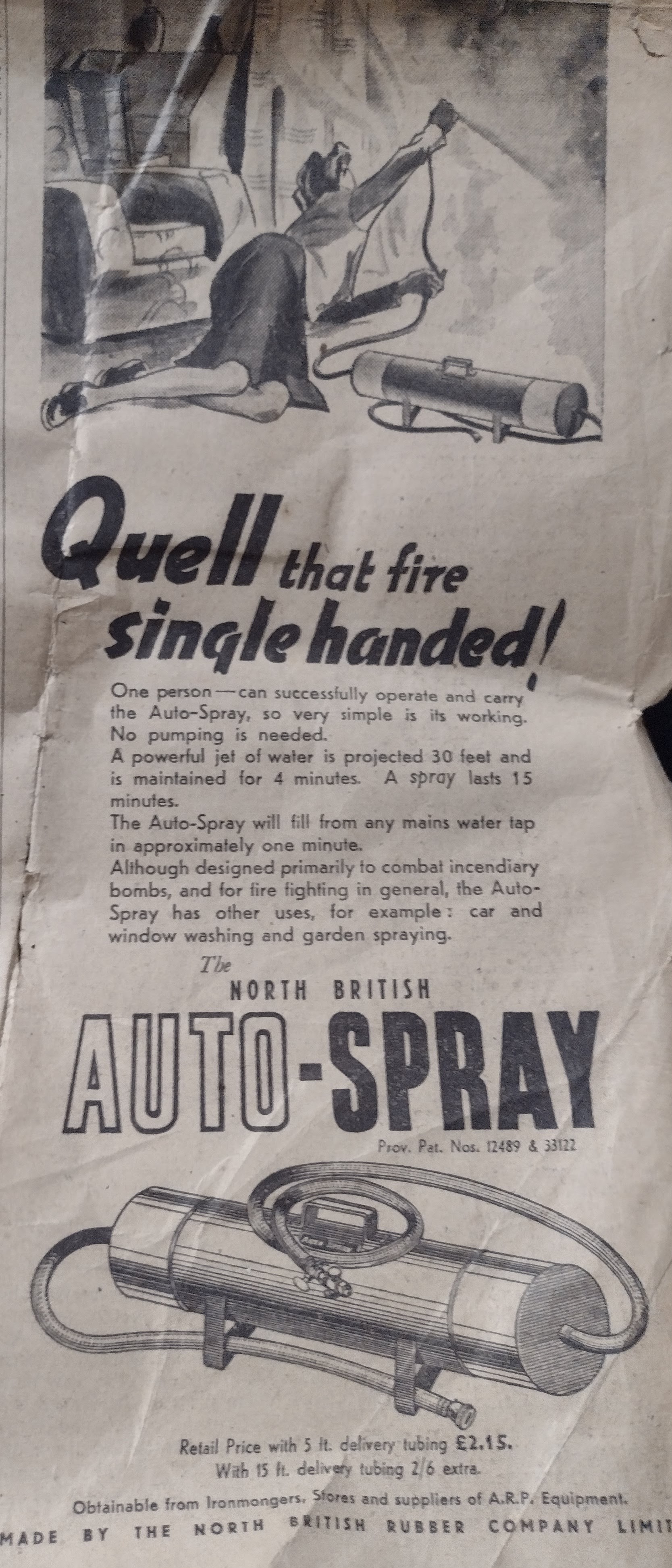
Historic advertising literature.


To find all mentions of an individual here, use the A-Z Person Index in the top drop down menu. New content added weekly. More than 10,000 Marlow people are mentioned.

Monday, September 13, 2021

List of landlords of The Checkers /The Chequers, High Street, Great Marlow.

 Updated by Charlotte April 2026.


The premises that the original Chequers /Checkers extended into, above. 


The core Chequers premises. 

This post is updated as new information emerges. The building is clearly old and may have been a pub far earlier than this but we have no firm evidence of that. Pubs in old buildings are not necessarily old pubs as not many started life  in purpose built premises. More usually they were set up in converted houses or other buildings which already existed.

1801 = pub known to be operating. The Chequers social club (for men) was formed and ran until the early 1880s. 

1823 - George Davis " The Checkers".

1830 - George Davis.

1833 - George Davis.

1839 - David Davis "Checkers  Inn". David was also described as a liquor merchant in 1832. Wife Elizabeth nee Pecover of Reading. 

1843 - George Davis.

1845 - David Davis. Suffered serious break of his knee that year after falling down the cellar stairs while carrying several bottles of wine. It proved difficult to set and was thought likely to leave David with a limp. 

1853 - David Davis "The Checkers"

1864 - David Davis.

1865  - David Davis "The Chequers Inn" transferred premises to Edwin Nicholls (2nd source gives name as Edward).

1869 - Ed. Nicholls.

1871 - Ed.  Nicholls (also carpenter).

1872 - Edwin Nicholls.

1876 - Edwin's wife Ann confronted two men that she caught robbing the till. She was the one serving at the time. The men were later jailed.

1877 - Ed. Nicholls (also builder).

1880 - 1.) Edwin Nicholls 2.) William James Lovegrove.

1881 - 1.) William J Lovegrove  2.) James Warne Udy ? "Chequers Inn" .

1882 - "Lewis" Wade, real name Edward Wade, bought the business.

1883 - "Lewis" Wade [Edward]. The magistrates said that the licence of Lewis would not be renewed as he was considered to have run a "badly conducted house". In particular the serving of beer after hours. After numerous complaints, Sergeant Maneely of Marlow police organised a watch on the premises and caught Lewis seeing beer some time after last orders should have been called. An attempt for the drinkers to flee out the rear was unsuccessful!  2. John Finch (hold over, John often stepped in to temporarily look after a premises while a permanent landlord acceptable to the authorities was found. He is also at the Cherry Tree this year, and see also the Bank Of England)  3. Edwin Greetham. (Creetham?) 

1887 - John D W Merer. (Wrongly put as Meres in one source) John's wife Catherine dies this year at Fir cottage Beaumont Rise, age 42. 2 -  John Phillips.  John was previously a coachman to Col O P Wethered. 

1888 - John Phillips.

1892/3 - John Phillips transfers  premises to WT Shaw.

1895 - Premises extended into adjacent house. Now has large "coffee room" as well, opening onto the lawn at the rear, the latter which has a private entrance from Institute Rd. The hotel can also boast of a bathroom (singular) with hot and cold running water. Has a separate 26 x 20 foot billiard room with a dais each side of the room to allow spectators to more easily view matches. This was made by the Marlow based Buckinghamshire Chair Co from wood grown at Thames Bank and Quarry Wood. The hotel also has a sitting room for guests, and at the front, both a public and private bar. It also acts as a depot from which "telephonic conversations" can be had. 

1899 - William Thomas Shaw     

1903 - W.T. Shaw "hotel and billiard room"

1904 - W T Shaw (see ad below).

1909 - WT Shaw. Premises are on the telephone already. 

1910 - Mr Shaw retired. John Kelpen Ellis took over. Ellis came from the Crown Hotel, Cookham. Lasted less than a year. Succeeded by WH Dawe. 


1905 advert above

1911 W H Dawe died. His widow Hannah took over. 

1915 - Mrs W Dawe (Hannah, the W is her husband's initial following the conventions of the time)

1916 - Hannah Dawe then Emily J Lewis. 

1917 - Emily Lewis transferred to Lillian Long.

1917- 28 (at least) - Mrs Lillian Long. "First Class family hotel" with billiards offered. Lillian came to Marlow from London in 1917.

1935 - C L Stanley.

1939 - Clarence Leopold Stanley.

1940 - Lucy Nicholls Stanley who struggled to keep up with the new war regulations. She was fined three times that year for related offences, twice for blackout offences and once for failing to complete alien registration forms for her guests. She retired that year.

1942 - Herbert Lee. Fined in this year for having poor blackout of the rear windows. Previous warnings had been given hence the fine. 

(At least) 1959-63 - "Joe" [Maurice] and Mary Hussey. Joe died in 1963.

Notes - 

Many Marlow landlords changed premises multiple times. Some places changed in how they were described over time- so licenced premises listings on this blog take in not just beer houses, pubs and inns but common lodging houses and hotels which sold alcohol too. 

Related Posts:

There are posts on this blog about individual families associated with certain pubs, as well as on individual pubs themselves so have a look at the Pub Related index here  & don't forget the Person Index for all mentions of someone on this blog. Find it on the top drop down menu. 

Posts about life in the High Street and neighbouring streets here

More beer sellers than bakers -Temperance in Marlow here

Lists of posts about everyday life in old Great Marlow here


SOME SOURCES :

1853 Mussons and Cravens Commercial Directory (Compiled 1852) 

Bucks Herald 28 October 1865, held at British Library and accessed via the BNA November 2020

South Bucks Standard - 14 October, 1892, 22 February 1895, 27 May 1910 as above

South Bucks Free Press 25th November 1887

Berkshire Chronicle October 25 1845

1833 Parochial Assessment. Original notebooks held by my family and transcribed by Charlotte.

Kelly's Post Office Directory 1864, 1869, 1877, 1883, 1903. Published by Kelly's Directory's Limited. Accessed via Google Books December 2020 - March 2021.

Bucks Free Press 2 Jan 1942. 

Pigots Directory 1823, 1830

Robson's Directory 1839

Census 1871,1881,1891. Transcriptions from microfilm by Charlotte. 

Numerous court cases, property records, licence hearing reports etc. 

© Marlow Ancestors. You can reuse this research for family and local history purposes if you credit this blog and link here so that our sources remain credited for information provided.


Thursday, September 9, 2021

Morris The Drapers


John Morris started his business as a linen and woolen draper on these premises (bow windowed part) in 1809. He took his son, also called John into business as a partner in 1833. That year the premises consisted of a house, yard, storehouse and garden and were assessed as having an annual value of 
£20. The shop would of course in those days have just been part of the house.

The next year a William Harrison got two months in jail for picking the pocket of John Morris and making off with a handkerchief. Whether the victim was John Junior or Senior the records do not say.
In 1839 the duo took out an ad in the Reading Mercury telling us they are in full not only linen and woolen drapers, but silk mercers, haberdashers, hatters, hosiers and makers of thread lace. They sold sundry items like blankets, sheets and cloths as well as fancier items, not to mention a large selection of mourning items.

John Senior died in 1843. His will which was written two years earlier left £19 19 shillings to his servant Elizabeth Middleton who had been with him since at least the time of the 1841 census. His live - in shopman Thomas Watson received £40. The will also tells us that his recently widowed niece Frances was the widow of George Davis late publican of the Chequers Inn right next door to the Morris's premises. Other legacies went to his widowed sisters and to his son John Junior.
Interestingly, the shopman Thomas Watson was also a beerseller in West Street when he wasn't in the shop. He should not under the law have lived off premises, and is censused at the pub. Earlier Thomas is given as first a grocer (1833-35) and then draper's assistant so it may mean that his employer meant to say "former live in assistant" in the will or that Thomas was spending some time living in at the drapers because John Senior was ailing despite the risk to Thomas's beer license in so doing.

John Junior decided not to continue with the drapery business in Marlow and he out it up for sale in 1844. He eventually moved to Clayton Cottage at Bourne End/ Wooburn where he died. By then he had married. His own will tells us that prior to their marriage he and his wife Margaret [née Washbourn] had had two illegitimate daughters Claudia and Alice, the latter of whom had not been baptised at the age of 5. There was also a son John Walker Morris.
John Junior received a legacy of £19 19 shillings from the 1848 proved will of 91 year old Martha Cleobury of Chapel Street. His father had been appointed one of the will's executors but died before the testator.
Margaret Morris returned as a widow to live in the Marlow High Street property. She earned a living from rental properties in the town and from taking in lodgers. Claudia never married and became a governess. She appears on the 1861 census away at school as a pupil herself in Lambeth. Alice worked as as a music teacher. In following a course in the sphere of education these women were part of a long tradition in their mother's Washbourn family. For information on the school ran by their aunts in Marlow see our Schools post. 


Photo and research by Charlotte Day
Photo taken January 2021.


I determine historic occupancy of buildings by cross referencing multiple sources including wills, censuses, property records, photographs historic advertisements etc. For some buildings in Marlow I can determine occupancy back into the 1700s. I will post photos and information here as and when I can.


Related Posts:

To find every mention of an individual or family here see the A-Z person index in the top drop down menu. 

To find out about other historic shops and businesses see: here

For recreated trade directories for the 1600-1800s Great Marlow, and posts about everyday life in old Marlow see the index here

Additional sources:
1833 Parochial Assessment notebooks. Original record held by my family and transcribed by me.

Will of John Morris 1843 and John Morris 1849. Both PCC wills held at the National Archives and transcribed by me.

Will of Martha Cleobury. Transcribed by me, as above.

1841 census transcribed from microfilm by Jane Pullinger.

1861 census from Familysearch website ran by the LDS (Intellectual Reserve Inc) accessed March 2021.

Reading Mercury 1st April 1833 and 12th October 1839. Copies held at the British Library Archives library. Accessed via the BNA March 2021.


South Bucks Standard December 3rd 1897 [Margaret's obituary], as above.

Oxford Chronicle and Reading Gazette  24th November 1849, as above.

Kelly's Post Office Directory of Buckinghamshire 1854 published by Kelly's Directories Limited. From Leicester University Archives.

GRO Death Registration Index, online.

© Marlow Ancestors. You are very welcome to use this image or research for family history purposes if you credit this blog and link here so that my sources do not lose credit for the information they provided. Thanks.


Wednesday, May 12, 2021

No Rational Dress Allowed


This post is about the entertaining and sometimes bizarre history of the late Victorian and Edwardian Marlow men and women who took to up the cycling craze. It was a time when the cost of bicycles had come down and the comfort had increased thanks to the Safety bicycle with two equal size wheels. It gave new freedoms to the lucky woman able to buy or hire a cycle and must have made travel much easier for many working people. In 1910 even the parish surveyor got an allowance for the maintenance of his bike.


Join the Club

The Bicycle Touring Club (known as the Cyclists Touring Club after 1883) had a local headquarters in the George and Dragon. This was a national organisation that sometimes lead organised group rides as well as producing a magazine and route maps. Touring members could get advice on local roads from the representative, and they got preferential rates when staying at a HQ.  It's members wore a uniform, so they would be hard to miss on their jaunts. But they were not the only cycling club in town. 


Above, an example of an early Edwardian cycling map. One was also produced for Bucks.


In 1895, the Marlow Cycling club came into existence. They would be open not just to those intending to travel on two wheels but tricyclists as well. Tricycles were not so much a novelty in adult use as they seem to us.  Praised for their comfort and safety, they were the subject of a strong trend of their own. 


The first meeting was held in the new Coffee Room of the Chequers. There were important issues to discuss. Would women be allowed to join? Yes. Would these women be allowed to wear Rational Dress on club runs? Definitely not. What the Victorians called Rational Dress, we might call "practical" options. This meant bloomers/pantaloons or culottes for the women - "divided skirts". These were regarded as unfeminine, lacking in grace, and / or immoral by some. The alternative was to wear a skirt. Some woman had special cycling skirts with the hems stiffened with horse hair so as to lessen the risk of material catching in the mechanism of the bike or the pedals before that. Those who supported Rational Dress suggested that the slightly billowing nature of skirts loose enough to allow a woman to mount the bike in the first place could become unintentionally revealing as it floated outwards as the lady pedalled. There was also the argument that dispensing with skirts allowed women to use a wider range of bicycle frame types. But these arguments did not fly in Marlow as far as the Cycle Club was concerned. More on cycle outfits below. 


What everyone in the club would wear was a sort of uniform. No self respecting Victorian cycle club could be without one. Club colours were navy and gold and there would also eventually be a club badge in the form of a shield with scroll (from 1899). Subscription fees were set at 2s 6d a year, with membership open to those over 17. Their regular headquarters were to be at Timberlake's Cycle Depot in the High Street, from where trips would begin. 


Their first club run was to Henley on a fine May evening in 1895. In all 36 members went, led by Club Captain Ilsley and Sub Captain Miss Nellie Creswell. They arrived at the Catherine Wheel and spent time punting and boating, before returning home at 8 with gas cycle lamps lit. They dismounted at Timberlake's and congratulated each other on a successful trip with no punctures to contend with. 


And so they continued organising "gallant spins" to various local spots such as Beaconsfield and Windsor, with something like 30-40 men and women taking part each time on average. The Club also organised social events, even for a while an annual ball in the Crown. Then there was the "At Home" social gatherings in the large club room of Sycamore House, West Street, which was ran as a sort of private lodging house by Jacob and Hannah Ransome.  But after a while membership declined, and in 1902 the question arose as to whether to continue the club as few people attended on a regular basis but the existing members voted for yes. Their headquarters were now in Chapel Street. 


Mine's a "Marlow" model

There was a lot of places in Marlow which were eager to sell you a bicycle (or tricycle). Many of them started out in other guises but expanded into offering cycling "machines" and accessories. Many were actually manufacturing the bikes themselves either on the premises or elsewhere in the town. A lot also expanded into offering motor cycles. I'll mention a few. 


First up is Mr. W H Carter of Market Square who would offer to hire you a bicycle by the day, week, month or season. He also sold them, and now that cycling was ever expanding in popularity, he could be sure of offering a good supply of second hand machines as well. Repairs and replating would be done "at the lowest prices compatible with good workmanship." [1893]


Mr Barnard was advertising his Chapel Street shop as "the Cycle stores" in 1897. He offered lessons - ladies a speciality - with the assurance of his personal attention. He said he had taught many of the neighbourhoods distinguished residents to ride, and would come to you if the thought of taking your first steps in public was too off-putting. (Biography of Barnard available here)


Alternatively you could go to see cycle agent [Horace] Matthews in Station Road (where Hunts is now). A carriage builder as well, he was now specialising in bicycles. He had the distinction of being the official repairer for the Cyclists Touring Club and of course also offered lessons. In 1904 they claimed to be the cheapest shop in Marlow for cycle accessories. Bells would cost you 9d each and acetylene gas lamp 2s 9d. But they did not just offer cheap. They were the Marlow agents for the Coventry Cross Cycles "recognised by experts to be the best in the world."


Timberlake's Cycle depot was mentioned above. Their slogan was "first class goods at popular prices." Thomas Timberlake was a Maidenhead man and life long cycle enthusiast. In his premises in the High Street (no 18 & 19 in old numbering), you could see not only the very latest designs in bicycles but also one or two ancient models that Mr Timberlake himself had used as a young man. One, built in Marlow by Eustace O Jackson, had a 36" front wheel and rear of 24" both with puncture-less tyres made of steel. Next to this you could see the up to the minute 1899 Timberlake Roadster. If your existing bike was looking worse for wear then Timberlake said he could rebuild it for you so it would look as good as new, for 25s including enamelling and nickel plating. Timberlake also specialised in phonographs, a not uncommon pairing with cycles! 


Above, 1907 advert from the Marlow Almanac and Directory, printed by Marlow Printing Co, for Timberlake's Cycle Depot. 


If you wanted the "Marlow" bicycle, it was to C J Bateman "Cycle Expert" in West Street that you needed to go. It would cost you from £4 in 1904 with a 5 year guarantee and was built in the town. By 1910 the bikes were fitted with Thames Tyres, guaranteed for 15 months.  He could offer other machines built to order from £6 10s and up or ones from stock could be bought from £3 15s. [Prices from 1904-1908. Models included Centaur, Hudson, Premier, Swift, and Unity] Part exchange was also available although you may not get a high price for the boneshaker at the back of the shed. NB Bateman's became Baileys Motor and Cycle Engineers c1914. 


George Hitchings of West Street (opposite Quoiting Square) distinguished himself in 1909 as a "practical cycle maker" which sounds much better than an impractical one! He, like Timberlake, also repaired phonographs, and gramophones as well as prams and mail carts. A second hand bike from Hitchings cost 30s and up in 1909. 


Jasper Collins, of the late Victorian bicycle warehouse in Chapel Street claimed his "Star" bicycles were like thoroughbreds with a graceful appearance and easy running. Jasper would also hire you a bicycle and offered bike riding lessons - ladies a speciality. He said he had the largest selection of models in this district. 


You could also buy or hire a bike from Batting and Sons or from Henry Harris saddle and harness maker of Spittal Street amongst others. 


Don't forget your woolies

Above I mentioned the Marlow Cycling Club uniform and their rational dress policy. I have not found any Marlow shops advertising ready made ladies cycling costumes that might have appealed to those not subject to the club rules but of course many ladies would have expected to buy material and make the items up themselves, or have someone else do it for them. One item that you could buy here was the Platinum Anti Corset, available from George Hide in West Street. It was the only type of corset to be considered for athletic pursuits according to George. Morgan and Sons could offer you cycling gloves and W B Langston's had cycling shoes available. These had soles which apparently allowed for more efficient pedalling. 

General outfit advice for would be cyclists stressed the importance of avoiding chills and suggested woollen underwear was by far the safest choice. Mr Jaeger's brand was perfect, and available from Morgans. 

If on the other hand, engaging in outdoor sport had left you dealing with sunburn or gasp, freckles, then High Street chemist William Baxter would recommend a  tube of his exclusive Burnolia ointment. At 6d a time it will cool and soothe your skin. Others recommended rubbing soap into the inside of your socks to avoid blisters on long runs. 


Overall, your cycling outfit should avoid anything "loud or conspicuous" - perhaps not so easy for some cycling club members. Instead it should be characterised by "the quietness that always characterises the dress of a gentleman."


Cycle gymkhanas and the rest

If taking a conventional spin was starting to bore our Marlow ancestors, there was plenty of other cycle based entertainment on offer. Perhaps they would like to take part in the annual cycle gymkhana. (Later called a Cycle Fete.) It occurred over several years as part of "Marlow Week" or "Fete week", a series of entertainments that finished with Marlow Regatta. The gymkhana was organised by the Marlow Cycle Club, and was intended to show off their proficiency. The 1897 show attracted some 300 entries over two days!  It occurred alongside the Fete Week horticultural show, in Alder Meadow (where Marlow Cricket Club is and adjoining field). So what sort of events does a Cycle Gymkhana consist off? 


There was a ladies only mounted egg and spoon race, a tortoise race (slowest rider wins, much harder than it sounds!) and obstacle races. The latter involved weaving in and out of poles stuck in the ground, and pedaling along a plank or two raised off the ground. The gentleman's races involved more weaving between markers as fast as possible. All of this was to the accompaniment of suitable music. There was also a tilting at a ring competition but no cycle jousting as far as I can see! Prizes tend to go to Cycle Club members - Nellie Creswell being the lady to beat in woman's events, and a fair few of the mixed ones. The number of entries some years would suggest the event was open to non members too, with the exception of the first which was more of an exhibition. The gymkhana continued until just before the First World War. 


If gymkhanas did not appeal, there was a bicycle polo team active around 1900 -1912, with S.J Smith as the Captain. Exhibition matches took place as part of the Cycling Gymkhana as well. And in 1903 a bicycle paper chase was held. This started on Marlow bridge with 4 human "hares" setting off down Pound Lane, ahead of the "hunters" and dropping a paper trail as they went. It was presumably not too windy as the "hares" were  successfully tracked across Alder Meadow up to Red Pits hill taking in 4 styles on the way, round by Danesfield and down by Medmenham Ferry. They crossed the Thames using the ferry boat, and finally finished at the East Arms Hotel in Hurley where 30 weary cyclists sat down to tea. Let's hope they all had the more modern bikes for this cross country route. 


Cycling problems

The Cyclists did not have uninterrupted pleasure on the roads. They could attract the ire of other road users when travelling en masse, snazzy Club uniforms not withstanding. Some came to the attention of police for not abiding by lighting up time regulations in 1897. Then there was the issue of poor quality road surfaces. In 1904 Mrs Hall of Bridge House went out for a ride with her husband, the former riding in the lead. While pedalling through Bisham, she considered the road to be in so poor a condition that she decided to retreat to the footpath to continue. An off duty constable saw this and called out for her to stop and give her name and address. She claimed she did not hear him, and on seeing a man jogging along after her and then attempting to bring her to a stop by grabbing at her bike, she pedalled faster. Her husband heard a commotion and turned back. At this point they understood their pursuer was indeed a policeman and surrendered their details. The magistrates remonstrated with the Constable for not clearly identifying himself earlier and risking an accident by trying to seize the ladies bike. So Mrs Hall escaped with a nominal 6d fine and a warning not to trespass again on the footpath. 


Things did not always run smoothly for the cycle sellers either. In 1914, Vincent Aubrey Herbert Timberlake, had gone bankrupt a year after taking over his father's cycle store in Marlow. He had previously managed it for the family who also had a branch in Queen Street, Maidenhead. Vincent's problem was they had got stuck with a stock of older, more expensive machines that no one wanted any longer. And they could not afford to buy or make the more desirable modern models until they had got rid of this old stock. The trend for cheaper models was good for cyclists but the Timberlakes were paying the price for changing fashion. 


One last problem to consider was how much cycling was considered safe, especially for females. While it was generally considered good exercise, within moderation, there were some dangers to avoid other than chills. The Victorian era Idler Magazine, co edited by Jerome K Jerome, offered some advice to female cyclists in 1895. The writer supported rational dress and agreed on the necessity of chill preventing underwear. He added that over fatigue combined with a timid cycling style had been known to cause severe cases of nervous prostration, sometimes long term in nature. You have been warned cyclists! 


Two 1905 ads.


For a post about Victorian/Edwardian gymnastics in Marlow see here 


Sources

Cyclists Touring Club Monthly Gazette, November 1895, Vol 13-14, (Cyclists Touring Club). 

The Idler Magazine, Volume 8, 1895, (Chatto & Windus)

Pemberton, Max 1895, The Season of The Lady Cyclist, as published in The Album July 29 1895. (Ingram Brothers, 1895)

Grace, William G. Outdoor games and recreation: An Encyclopaedia for Boys (Religious Tract Society 1892) 

Post Office Directory 1883, 1891, (Kelly's Directories Ltd.)

The Marlow Guide, 1905. 

South Bucks Standard 24 March 1893,12 May 1895, 21 August 1896,  21 May, 13 August, 9 & 16 September 1897, 19 May, 2 June, 14 July 1899, 12 & 19 January, 08 June, 28 September 1900, 18 April 1902, 7 April 1903, 15 January, 22 April 1904, 2 November 1906, 21 February, 27 March 1908, 25 June, 23 &30 July 1909,10 January 1910 - copies from the British Library Archive and accessed via the BNA September 2020. 

Maidenhead Advertiser 25th July 1910, as above. 

Bucks Herald July 18 1914, as above


For more on the history of the touring club see:

https://www.cyclinguk.org/about/history/ctc-history-timeline 

And cycle outfits:

https://www.cyclemuseum.org.uk/Cycle-Clothing.aspx


©Marlow Ancestors.


PHOTO ID ANYONE?

 Can anyone help a fellow family history researcher Linda identify where this staff photo may have been taken in Marlow? Underneath are some...