Search This Blog

Showing posts with label Spinfield. Show all posts

Tuesday, January 2, 2024

Carson Grave, All Saints, Great Marlow


This 11ft Aberdeen granite obelisk  arrived in the churchyard of All Saints in August 1873, more than a year after the man it commemorates passed away. 

The base of the marble angel bears the words "He is not dead but sleepeth". The family crest and motto is above. 

The inscription reads: 

Sacred to the memory of James Carson of Spinfield, near Marlow in the county of Buckinghamshire and of Albion and Constant Spring [Estates/plantations] in the island of  Jamaica. J.P and D.L for Bucks, High Sheriff for the same county (1868), he departed this life 26th May 1872 and was the second son of Thomas Carson Esq of Belfast, and Agnes, daughter of James Simpson Esq of Cammoney county Antrim. He was a Magistrate and Major in the Militia of Jamaica. He succeeded his uncle James Simpson Esq of Spinfield in 1851."

To read more about Spinfield see here. 

To find other graves/memorials see the index here

All mentions of an individual can be found in the A-Z Person Index in the top drop down menu. 

©Marlow Ancestors. 

Tuesday, June 21, 2022

A History Of Spinfield House / Spinfield Lodge

 Spinfield (s) as a name long predates the existence of Spinfield Lodge / House or the modern housing development. Spinfield Farm is used to refer in 1700s to the 2-3 enclosures of land such as Spinfield Mead which had long gone by that name and to the nearby areas such as Poynetts and Oxford Lane Close which were almost always let and farmed in tandem with it, around 30-40 acres in total. This farm did have a farmhouse attached to it, but I can't not say for certain where that was. The English Place Name Society journal of 1925 suggests Spinfield as a place name originated from a 13th century Marlow landowner William de Espineville. 


1804 - first found use of "Spinfield Lodge" as place of residence.  Occupier William? Ongley of Great Marlow, who appears as witness to two legal documents, and a will. (He has not been researched further at this point). This mention therefore predates the construction of the Lodge detailed below. 

1807 - date of construction of Spinfield Lodge based on descriptions of the house for sale when it was said to be 13 and 22 years old respectively. These sale descriptions match one of a house built by William Bond, builder of Marlow at this time. Biography of William here. Was the earlier lodge the farmhouse, another building or is the (admittedly consistent) remembered date of construction a few years out? 

1808 - first advertisment showing it available to lease appeared. A term of 3 years was offered. At this point it had entrance hall, 7 bedrooms, drawing, dining and breakfast rooms plus "excellent" kitchen and domestic offices. Coach house and stabling. "Suitable for small genteel family" [Oxford Journal]

1812 - up for lease again. Resident unknown. Now 8 bedrooms. Advertisements stressed the home's modern interior with folding doors between reception rooms ,allowing the whole to be turned into one large space for balls etc. 

1813/14 - Mr Sawyer resident. Several possible candidate Mr Sawyers within Marlow of right social standing to afford this property. The one at Spinfield was definitely a strong financial supporter of the original Marlow Institution for adult education. More on this endeavour here . This was not the same as the later Literary and Science society. The Mr Sawyer of Spinfield was most likely William Sawyer previously of West Street who died 1814, a friend of Bond the builder. 

1820 : up for sale (leasehold) with 10 acres. Described in the Morning Herald as as substantially arranged so as to admit construction of another level on top if desired. 

1824 -1829 at least. Henry Shepherd Pearson Esq and his wife Caroline. Henry was a man who had spent many years in the Bombay civil service in various roles from circa 1793. Also civil servant at the settlement on Prince Edward Island, now Penang, Malaysia.  Later a merchant. Son of Admiral Richard Pearson. 

1829 - lease for sale again. This time it was spelled out that the house and the core 10 acre garden are leased from the Dean and Chapter and Bristol, for a peppercorn annual fee. The rest of the 5-6 acres was usually let with the house as paddocks/parkland was leased from the Vicar and Churchwardens of Marlow, later the General Charities of Marlow, administered by the same. (This 6 acre area is also known as Martin's Close and may be described as part of the "Poor Lands" eg land which was used to generate income to support the poor as result of a charitable bequest either of the land itself or funds to purchase it ). House had been enlarged and newly "fitted up". Had gained a bathroom and water closets above and below, plus servants hall. Stabling had doubled since 1808. "Excellent" cellarage. Outbuildings now included gardener's cottage, carthouse, piggeries, cowhouse and dairy. First mention of the "paved veranda".  

1832 : leasehold up for sale. "Very large sums recently been expended on improving every part of the house and grounds". First mention of the "ornamental lodge" which was the gardeners residence, possibly the same gardener's cottage mentioned 2 years previously. (Known as The Lodge, Spinfield) Carriage drive extended. Offered with 15 acres of pasture, and available with or without farming stock and household furniture. Now suitable for a "moderate" family. Lease purchased by James Simpson Esq, merchant of the Constant Spring and Albion Estates, Jamaica. (Sugar and coffee). Wife Mary. 

1833  - Spinfield Lodge and garden was valued at £75 in the Parish Assessment. 

1834 - James Simpson was leasing the 6 acre Martin's Close (see above) plus Spinfield Mead of 7 acres, the latter from the Dean and Chapter of Bristol. A separate 6 acre close known as Spinfield was leased by Mr Muspratt and farmed by Mr Webb. 

1840s - house continued to be leased by the Simpsons who lived there with the daughter of Mary by her first marriage -  Ann Crosbie. Ann was blind and suffers from mental instability (as defined at the time). See below. They also spent much time in London. 

1851 - James Simpson died at Spinfield. He left the property (still leasehold) to his wife during her life, and it was then to be inherited by his nephew James Carson, who had been managing the Jamaica estates for his uncle. 

1851-1858 - the widow Mrs Carson lived at Spinfield. She was an active member of the Society for the Promotion of Christian Knowledge and donated to many charitable causes in Marlow. "Her little kindnesses.. were unbounded". Both she and her husband were buried at All Saints. After her mother's death, poor Ann Crosbie was declared insane under the terms of the Lunacy Act 1853. Her affairs were managed by trustees. 

1859 - James Carson took on his inheritance, with wife Sarah nee Marriott. Their first child born at the house arrives prematurely and remains constantly ill. Little Brenda Paulina died age 13 months old while on a visit with family to Brighton. James had previously spent many years in Jamaica, serving as a JP there and as a major in the Jamaican Militia. He buys the adjacent meadow known as Crooked Close to add to Spinfield's pleasure grounds. 

1861 - James Carson is voted to chair at a meeting organised to set up a Committee to promote the abolition of slavery in America. He is said to have always "encouraged" its abolition on estates his business  connections dealt with. His family did not use use enslaved labour on their own properties. The meeting is addressed by two black preachers, one a former slave living in Canada, the other a distinguished orator from the United States. Carson says he will take down the name of any man willing to help "so good a cause as the emancipation of slaves".   More on the history of slavery and abolition in Marlow history in this post

1862 - Spinfield Lodge is undergoing extensive work to enlarge and improve it yet again. It was to be transformed from a villa to a mansion they said, and would will henceforth be one of the principal seats in the region. The work was completed within a year and Carson celebrated with a grand celebration at the house, attended by a military band and all the local gentry. Amongst the new features are a conservatory and more glasshouses. 

1863 - James Carson is reported to have "recently" succeeded in his desire to purchase Spinfield House and core grounds from the Dean & Chapter of Bristol so he now holds it freehold. He opens the gardens to the public so they can admire his recent estate improvements. 

1865 - James Carson was in Jamaica and became an unofficial correspondent for several London newspapers when he wrote to describe the "murderous" uprising by native workers on his and neighbouring estates around Kingston. He was back in England by the end of the year but the trouble did not go away. A dispute over pay on his Hopewell Estate in Jamaica turned violent and the estate manager was seriously assaulted. James claimed that his agent regularly visits the property and would deal with any "genuine" grievances. His language often smacked of the dismissive attitude to the capacity of the non white population to manage their own affairs which was commonly expressed at the time. Back home, Carson donated a large amount to the work of the Wesleyan Missionary Society, which met at High Wycombe. He seems to have concerned himself with mainly local affairs overall in the late 1860's, serving a term as the High Sheriff of Bucks and working as a magistrate. 

1872 - James Carson died at his London house. 

1873 : the 11 ft high granite and marble obelisk monument to James Carson was placed in All Saints churchyard where you will still find it today. His eldest son, lawyer Captain James Simpson Carson occupied Spinfield, now often called Spinfield House, until 1883, when he began to prefer to remain in London. But during his decade in Marlow Spinfield was used to host dozens of events from Sunday school treats, to agricultural and horticultural shows and outdoor "promenade concerts" by the Choral Society. 


1884 - Charity commissioners sold their land at Spinfield and nearby, raising a large sum. From then on Spinfield was offered as a freehold property in entirety. Some of the money was reserved to pay for the education of poor girls from Marlow parish at teacher training colleges. 

1885 - Simpson Carson family tried to sell Spinfield but it failed to find a buyer at auction. Offered again for sale by private treaty, with 35 acres of land. 18 bed and dressing rooms. The garden is now advertised as containing a fernery, fountain and tennis lawns as well as the standard glasshouses, vineries and orchard. 

1886 - 1908 lawyer Robert Hay Murray purchased the property. He was the grandson of an earl. Previously he lived in Kent and Surrey.  And of course, Hay Murray began to do renovations on the house as soon as he took possession. Robert usually let out Spinfield Lodge during the river season when he was either in London or abroad. For example he spends 4 months in Italy in 1893 and spends 6 months on the continent the following year. A regular summer tenant wass Hudson E Kearley Liberal M P,  (later Lord Devonport) founder of what became known as the International Stores/International Tea stores. He rented the home year after year. Later Kearley would rent Medmenham manor house, and own Wittington House and States farm near Medmenham. When he was there, Hay Murray continues the tradition of letting the park at Spinfield be used for many events, including agricultural shows and children's treats. He was very interested in the promotion of good practice in farming and horticulture. A role as magistrate also comes his way, a job he had also fulfilled in Surrey. In 1898 Murray opened the grounds of Spinfield to the public on Sunday afternoons during the summer. I believe he did so in other years too. Despite an earlier retracted news story to the contrary, entry was restricted to the those with an invitation card, which had to be applied for in advance. 

1908 - 1914 Mrs Elizabeth Hay Murray remained at Spinfield after her husbands death. Their son Robert Evelyn sadly pre deceased his mother in 1910. 

1914 on Mrs Scott Murray death, the house contents are sold off including her husbands huge library of antiquarian books. Spinfield itself with 34 acres was then offered at auction but we are uncertain that it found an immediate buyer.  The house had now mushroomed to include 17, yes 17,  bedrooms and dressing rooms, two staircases and 6 reception rooms! It had a garage and now not 1 but 3 cottages offered with it. A particular attraction was the provision of mains gas and water plus a telephone connection. If not sold does the widow's son retain ownership? He died in 1917. 

1916 - Spinfield was used as a HQ by officers of the Home Counties Royal Engineers, who are camped at Marlow Common. When their Captain Ticehurst, of Battle, East Sussex married Muriel Kilby at Bisham, the Engineers cook used the Spinfield kitchen to produce a wedding cake shaped like the emblem of the RE. Long term Spinfield head gardener Thomas Blackmore uses flowers from the gardens to produce a large floral bell to decorate the church. (Muriel was the daughter of Complete Angler proprietor Robert Kilby/Kilbey)

1919 - purchased by the future Lord and Lady Terrington, then known as the honourable Horace and Vera Woodhouse. Vera was a pioneering lady MP and the two lead an eventful life, which eventually saw Terrington jailed, and the couple divorced. A post on them will follow. Suffice to say they spent vast sums on Spinfield, which was said to resemble a palace when you walked in. He bought many antique and lavish fittings into the house. 

1927 - contents of the house sold by order of the mortgagee, followed by the house itself and 53 acres. Building purchased by Charles Stambois who was rumoured to be planning to turn the lavish interior into a residential country club/hotel for businessmen. Plans were said to be advancing in 1928 but then Stambois invited the gentlemen of the press to the house to tell them the official new plan.....

1928 - Stambois says he is intending to develop the house into a health club with a "sports arena", to be run in conjunction with the New Health Society.  The society was founded in 1925 to promote fresh air, exercise, a wholesome diet and sunbaths. The founder thought the population was "degenerating" and these actions would make the nation great again, at least as far as their moral and physical health went. Fibre was key and your life goal was to achieve 3 bowel movements a day. Stambois seems to have expected the club would provide some of the funding. A sale of his extensive and very valuable wine cellar was intended to help meet the cost. Stambois planned to add an extension to the east wing to accommodate a new larger dining room plus a ball room. There is some indication he may have started work on this part. The roof would also be removed to allow for a new top floor of bedrooms. Behind the house were to be hard and grass tennis courts. The "sports arena" would occupy a meadow to the east of Spinfield Lane. It was intended to comprise a swimming pool, "galloping tracks", a gymnasium and changing rooms. But regardless of this ambitious plans,  Stambois then suddenly offered it for sale again later that year. 

It was purchased by Henry Rupert Hood Barr, a managing director of a steel barrel making company, Scammels. We don't think he necessarily intended to live there originally, but seemingly purchased it as an investment opportunity. I say so because he himself offered it for sale within a year of buying it, with various parts of the grounds divided into plots and offered for building purposes. There were no takers for the actual house, but in 1930 we are told that the owner intends to develop Spinfield Lodge into a mixture of apartments and offices. He also had a plan to build a commercial laundry in the grounds. This would exploit a new German cleaning process apparently. Did any part of this actually happen? Well apparently not as in 1936 the house was sadly due for demolition, and therefore the entire contents are up for grabs, from floorboards, to the doors, staircase and wooden paneling. We have heard rumours that the house suffered a fire at this time, which was used as a reason for the demolition, but we can find no contemporary report of this as yet.  As you can see from the pre demolition sale, the sort of wooden fixtures and fittings you wouldn't expect to survive a severe blaze were intact at that point so if there was a fire, it presumably came after the decision to demolish the property had already been made. Also note that the house sale includes antique stone carved crest and fireplace both dated 1649 but it can't be said they belonged to an older version of Spinfield Lodge with any certainty. Both Hay Murray and Terrington were said to have added antique features to the house. Hay Murray was a keen antiquarian in particular, interested in archaeology and a member of the local society  for that. He even had some ancient Egyptian artefacts at Spinfield. 

1938 - Architect Edgar Ranger is commissioned by the Hood Barrs to build a smaller house to replace Spinfield Lodge of old, but on the same site. Nicholas Pevsner tells us in his book "Buildings of Buckinghamshire" that the Italianate Georgian kitchen of the original house was preserved within the design, which is a unexpected delight as it means a tiny piece of Spinfield Lodge hopefully still exists. The ice house, in an artificial mound, was visible near the entrance to Spinfield Nurseries very clearly in the early 1970s (the first nursery was offered for sale in 1978) but have become progressively overgrown. In 1973 the remains of the horse drawn extraction wheel for a deep garden well at Spinfield (literally powered by a donkey) were reported by a journal of industrial architecture. I remember seeing this some years later. 

1940s - the new Spinfield Lodge most often just called "Spinfields" (plural) was still home to the Hood Barrs. In the second world war it was partially requisitioned for billets for those working at the top secret facility at nearby Danesfield although the owners were allowed to stay put too. Some scandal came about as the brother in law of Hood Barrs was arrested at Spinfield as a spy and Nazi sympathiser and subsequently committed suicide. For more see the post here. The Hood Barr family remained at the Lodge until the mid 1950's. 

Written & researched  by Kathryn Day


Related Posts:

Use the A-Z person index in the top drop down menu to find every mention of a person here - there are 4,390 individuals listed there as of April 2022. 

List of gardeners employed at Spinfield: here

Other posts relating to specific houses/locations can be found on the index here: here


SOURCES INCLUDE:

Beamon, Sylvia, Roaf, Susan - Ice Houses of Britain, Routledge 1990.
 
Wills of Arabella Gilbert, Thomas Langley, William Sawyer, and James Simpson transcribed by Charlotte from PCC copies National Archives Kew. 

Goddard, Charles. An Account of The Origin, Principles, Proceedings, And Results of A Institution..1816.    

Census 1841,1871 - transcript from microfilm by Charlotte Day and Jane Pullinger. 

1833 Parish Assessment, original notebooks held by our family. 

1834 - Owners and Occupiers of Land assessment, Great Marlow, original notebooks held by our family. 

Accounts and Papers, Great Britain Houses of Parliament, Vol 49, digitised by Google. 

Journal of the Society for Promoting Christian Knowledge, 1859. 

Kelly's Directory of the Titled, Landed and Official Classes,1880. (Kelly & Co)

Illustrated London News Vol 49 , digitised by Google. 

Decorative Arts and Modern Interiors yearbook, 1940

Public Ledger and Daily Advertiser, 1 August 1827. 

Reading Mercury 16th September  1772, 5th October 1861. Copy from the British Library and accessed via the BNA. 

Oxford Journal collected editions 1808 and 1812. 

Morning Herald 1 May 1820, 18th May 1829, 16 January 1851 

Bucks Gazette, 29th April 1832. 

Bucks Herald 12 February 1859, 4 July 1914, 8 December 1920. Via the BNA as above. 
 
"Fashionable Arrivals", scrap of news sheet! London,1825

Boyles Court and Country Guide,1884. 

Country Life, collected volume for 1919. 

The Motor Owner, 1 December 1927. 

South Bucks Free Press 14 February 1862 & 10th April 1863

Buckinghamshire Advertiser and Free Press 2 May 1936

Lahore Civilian and Military Gazette, 10 April 1930

Sporting Gazette 10 November 1885. Digitised by Google. 

Bedfordshire Times, 4  June 1872. 

Dundee Evening Telegraph, 3 June 1908. Copy from British Library Archive as above. 

Reports of Charity Commissioners of Great Marlow,  1884. 

GRO death index. 

Reading Standard, 12 May 1928

Bexhill on Sea Chronicle July 1916 

Gardeners Chronicle and Horticultural Trade Journal, Collected Edition. 1955 (Haymarket Publishing)

Kelly's Directory 1939. (Kelly's Directory Ltd)

Pevsner Nicholas, Wilkinson Elizabeth - Buildings of Buckinghamshire. 1994 Edition. 

Journal of Industrial Archaeology, 1973. 

English Place Name Society journal, Volume 2 1925. 

Walford, Edward County Families of the United Kingdom 1860  

South Bucks Standard - 22 July & 5 August 1898, old Wycombe Libraries. 

Link to founding aims of New Health Club: https://wdc.contentdm.oclc.org/digital/collection/health/id/2521/

© MarlowAncestors. 


Tuesday, February 15, 2022

Howard Graves, Great Marlow and Little Marlow


 Above, grave of Edward Howard, At rest. D. Sept 18 186?

"In the midst of life we are in death". All Saints Parish Church, Great Marlow.


Above, the metal grave of Blanche Agnes Dec 7th 1862 age 3

AND

Frank James

Age 6 Apr 15th 1863

"The beloved children of Robert and Anne Howard of Spinfield Lodge".

At All Saints Parish Church, Great Marlow.


Above, the grave of Sarah, wife of John Howard - died January 3 1850 age 54. 

ALSO

The above John Howard who died July 11 1871 age 67. 

This grave is Little Marlow church yard. (St. John the Baptist)


Above, grave of Rebecca wife of Mr John Howard. Died Feb.  6th 1820 age 40. This is also located in Little Marlow Church yard. 


©Marlow Ancestors. You may use this image for family or local history purposes if you credit this blog and link here. 

Wednesday, December 8, 2021

World War Two In Marlow part 2 1940-41

 Part Two 1940-41 - updated October 2025.


1940- Winston Churchill's scientific advisor Frederick Lindemann, of German origin but hater of the Nazis, moves his Statistics Department from London to Sentry Hill House on the edge of Marlow. The building was requisitioned by the government for the war effort. Members of the department lodged there, and worked there of an evening to escape disturbance in the Blitz. Filing cabinets were transported to the house in the backs of cars which was perhaps not the most secure way of doing things. The department left in 1942.

Frederick's father Adolf had lived in the neighbouring house The Heights at the time of his death in 1931 so Frederick already knew Marlow well when he arrived.

Jan 1940 - blacking out of the windows of all the town schools has been completed. Residents are reminded to step carefully off pavements and listen hard for cars when walking around at night.

Jan 1940- general meat rationing is about to begin so the townsfolk need to register with one of the town butchers. Bacon and ham are already rationed.

Jan 1940- a row in the cemetery is to be reserved for the graves of the anticipated war dead.

Jan 1940- the ARP is giving out baby head protection helmets in the town.

February 1940 - elderly Edwin Wye of Victoria Road is struck by a car he couldn't see and which couldn't see him thanks to the blackout when he steps into Spittal Street.

April 1940- doorstop salvage collections begin of paper, rags, bottles and metal for the war effort .

May 1940 - £800 is spent on buying the piece of land known as Foxes Piece in Marlow for a recreation ground thought necessary because of the increased numbers of children in town due to evacuations. Authorities are very aware of the even greater numbers expected to arrive in the coming months. That recreation ground is in the present day the site of Foxes Piece School.

May 1940 Colonel M .O Clarke A.R.P officer for Bucks lives White Lodge, on the edge of town. (Bisham)

August 1940- the council gives up the metal gates of Higginson Park and some metal benches there to the war effort but decide to keep on to the railings around the Causeway enclosure for now. An hydraulic lorry is to be bought for the town's salvage collections.

August 1940- Fitzroy Clayton of Harleyford fined for allowing lights to be seen from his house during the blackout. He blames his guests.

September 1940- multiple bombs fall in fields off Old Pound Lane near to Pen's Place, leaving 21 craters. Other bombs also hit the outer edges of the town injuring some in Berwick Road and a further resident, Leo Ryan is killed. Ryan's Mount in Marlow will, in the future, be named for him. For security purposes or perhaps for reasons of keeping up morale, the local press during the war do not report bomb deaths or injuries as anything other than fatal or non-fatal "accidents" occuring to local people.

September 1940 - a plaque is out up in Borlase school chapel to commemorate  the first former pupil from the school to doe in this war- W Tagell of High Wycombe who drowned when his naval ship went down. 

September 1940 - the first anniversary of the war breaking out is marked the following Sunday with a national day of prayer.

September 1940- the town launches a Spitfire Fund.

September 1940- Folley Brothers at Sheepridge Little Marlow fined for not complying with an earlier order to turn over a portion of their land to ploughing. They say the land is using yo graze cattle which is surely part of supplying food for the war already.

October 1940 - the air raid shelter for the Infant School in Oxford Road is being built but the other schools in Marlow are still without them. The cellar of the Clayton Arms pub will be used by the infants as a shelter if needed before they have their own one complete.

October 1940- A letter to the Bucks Free Press from an anonymous refugee in the town criticizes the town's large house owners for supplying no meals and refusing the women staying with them from using the kitchens to make their own. Instead they have to walk down to the refugee canteen in town. It also highlights the overcharging of refugees for their accommodation in town.

October 1940- road accidents in the town are up despite far fewer cars being on the roads. This is put down to the blackout.

October 1940- rules banning council housing tenants from taking paying lodgers is to be relaxed as so many refugees in the town need somewhere to stay (this rule does not seem to have been stuck to previously anyway in practice). The Freemasons Hall us being used as overnight emergency accommodation for those who arrive in town without anywhere organized to stay. These are mostly people who have fled bombing in London.

October 1940- Finnamore Wood Camp outside the town has been built and is being used to house evacuated girls from an Ilford school. The King and Queen briefly visit them while in the area.

October 1940- Bucks Agricultural Committee hears that some farmers are reluctant to ask their assigned land girls to drive tractors or do "rough work". It also however hears from farmers who say that their land girls have no problem with any such tasks, in fact they have been found to be better than the former male workers at such things.

November 1940 - Lucy Nicholls Stanley the soon to retire landlady of the Chequers in the High Street is fined for not filling in alien registration forms for most of her guests, as required by law. These had to be filled in whether someone was foreign or not. She has been fined twice this year already for blackout offences. At least she can receive foreign guests if they come to her. Nearby High Wycombe has been designated a Protected Area and no civilian foreign nationals may enter to work or stay without police or home office permission.

November 1940- the Women's Voluntary Service is based at the Armoury Institute Road. They are collecting underwear and costs for bombed out families elsewhere.

November 1940- there are 855 refugee children in Marlow plus 441 adults.

November 1940- plans are mooted for adding special concrete block walls in front of the windows of the town's council houses so that their front rooms effectively become bomb shelters in themselves. I'm not sure how that was going to work! Construction begins in Berwick Road council homes the next month.

December 1940- donate any binoculars you have to opticians so that they can be sent to the front where there is a shortage. Meanwhile magazines can be donated at the Post Offices to be sent to troops abroad.

December 1940- those trying to flag buses down in the gloom of a winter evening are warned not to use a torch to signal to the driver to stop. Instead they should carry a white hanky or white cloth and wave that.

December 1940- all business premises in the country told they should have fire watchers (paid or community volunteer) because of the risk posed by German incendiary bombs.

1941- Spinfield, a house in Spinfield Lane partially taken over for accommodation of RAF personnel. Danesfield House has by then also been seized entirely for RAF use, including by photographic reconnaissance officers. Soldiers in camouflage hide in the woods protecting this base.

January 1941- work is ongoing to build more air raid shelters in the town for the schools.

June 1941- Marlow F.C lost to Reading in the final of The Berks and Bucks Red Cross Cup, organised to raise money for the Red Cross Fund. Over £120 was raised.

June 1941- a motor launch comes along the Thames through Marlow several times one Sunday. The occupants use a loudhailer to urge women they see on the riverbank to sign up to take serving men's places in factories and workshops. A novel idea! 

December 1941- Nazi sympathiser and British Fascist Frederick Joseph Rutland living with his brother in law Henry Rupert Hood-Barr and Spinfield, a house in Spinfield Lane West, Marlow as mentioned above arrested by police on suspicion of espionage and later interned for the duration of the war. He was suspected of passing secrets to the Japanese while in America and the Pacific. He had been decorated for his aerial reconnaissance work during WW1 for the RAF. Frederick had been spied on by people working for MI5 and based at Spinfield House for some time.

Part one of Marlow In World War Two deals with preparations for the war and the first few weeks of it as is available here. Part Three moves on to the years 1942-3 and can be read here.

Interested in WW1 in Marlow? Kathryn has a detailed year by year series of posts on it 

1914

1915

1916

1917

1918-19


From October 1941. 


More sources:

Bucks Examiner 27th June 1941. British Library Archives via the BNA.

Bucks Free Press 9th February 1940, 11th and 24th October 1940. Bucks Free Press Archives.

Papers of Frederick Lindeman, Nuffield College Library, National Archives catalogue.

Operation Crossbow: The Untold Story of Photographic Intelligence and the Search for Hitler's V Weapons. By Allan Williams. Published by Random House. 2014. Read more about Danesfield in the war in this interesting book.

The Times, October 15 1941 - thanks to Archibald Friend for a copy of this. 

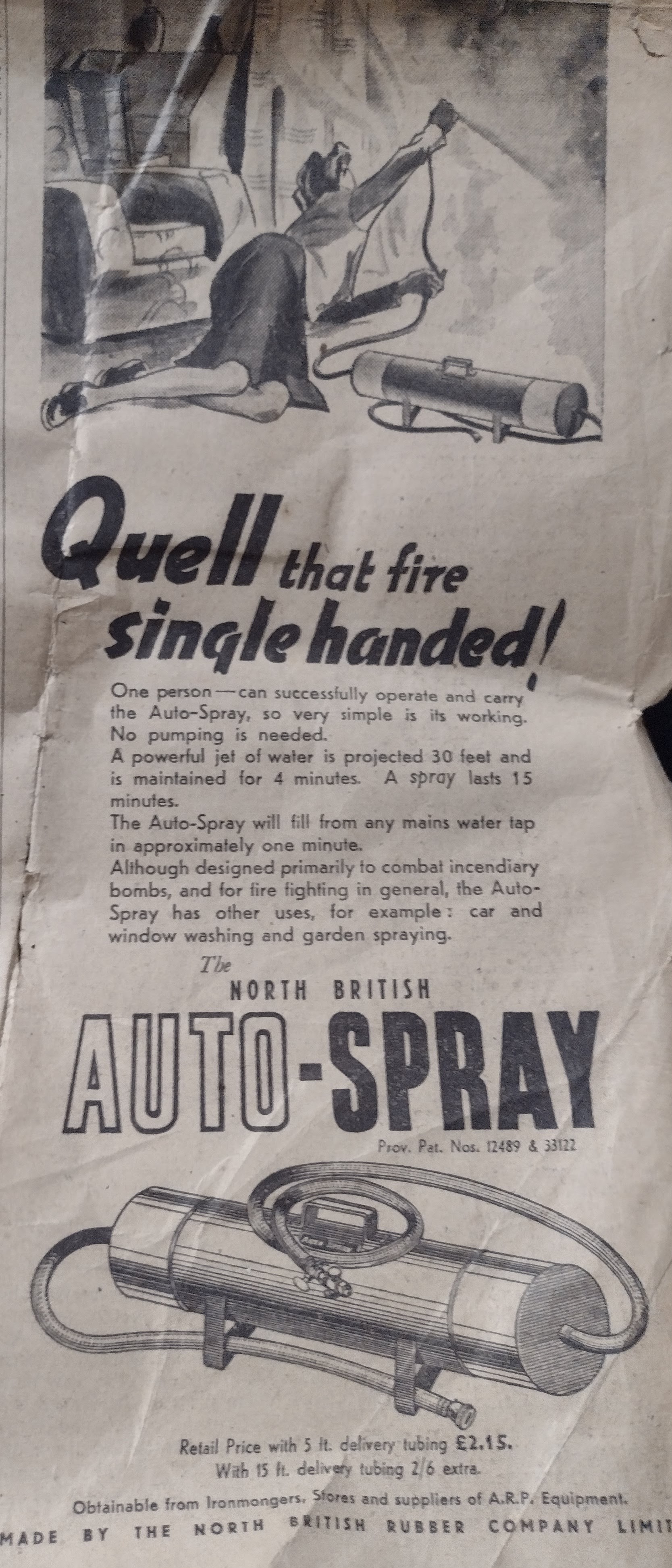
Historic advertising literature.


To find all mentions of an individual here, use the A-Z Person Index in the top drop down menu. New content added weekly. More than 10,000 Marlow people are mentioned.

Friday, August 27, 2021

Where Your Gardener Ancestor Worked


Those listed may be head or assistant gardeners. Domestic gardeners only in this post, more on the nursery gardeners of Marlow in future. There were a great many of those. Dates next to a name show when I have concrete evidence of a person being in the job. They may have been there earlier or later too. Many more names to add as time permits. Spelling as per original source which can lead to some interesting variations! *Updated by Charlotte May 2026*. To find out more about the houses themselves check the index here


Head Gardener Alan Day working on the New Kitchen Garden at Remnantz, 1991 (formerly part of the lawn tennis courts) . The old brewery chimney can be seen poking over the yew hedge - a hedge which was over a century old already at that point. Sorry the pic is not the best! © Marlow Ancestors


Beechwood, Henley Road 

1859 -  House then known as Beech Lodge - Thomas Gibson

1881- George Smith. Not the same as the George Smith at Suffolk Lodge.

1883 - Alfred Lambourne

1898 - E Keene

1901- E Keene (head), Thomas Brown and George Mealing 

1907 - E Keen qv and T Brown. 

1911-16 - George Henry Moores. Lived in a 4 room cottage on the estate. This was said to be part of the original older Beechwood house. With a stucco front, "rustic porch" and veranda it certainly sounds more impressive than the usual staff quarters. In 1916 his employer tried to get George totally exempted from military service but the local tribunal refused to grant this. From at least 1911-13 the assistant gardener was George Harris who lived in the Lodge at Beechwood. Though the rates for the lodge were paid for by his employer Thomas did not have the use of the cottage as part of his job and paid rent out of his wages to live there. 

1928 - G Austin. Arrives from the Manor House Stoke Poges. 


Bohemia

1899- 1917 Mr Thomas William Jordan. Was a domestic gardener living in Marlow High Street by 1891 probably working at Cromwell House.  Wife Louisa. Grave of their daughter and her husband here.


Borlase School (for head E W Clark)

1898/99- William Soley


Bisham Abbey

1846 - Mr Sutton

1866 - Mr Henderson. Wife Ann dies this year age 60 after falling down stairs while making a visit to a friend. 

1901,03 - G Martin. 

1927 - W McCaul (head) 

Unknown dates- Joseph Curtis who was later at Bridge House Marlow and who died in 1905.


Blounts, Bovingdon Green

1894 - Alan Axten 

1903-39 at least - J Platt (Head) - (to Walter Wethered then A R A Heath Esq) Blounts Cottage. Frequent winner of classes at the local Chrysanthemum show and a judge of classes at the Bovingdon Green Show.


Bridge House

To early 1905 from unknown date Joseph Curtis who had previously worked at Bisham Abbey. Ill health forced his retirement. Lived at time of his death 1905 at Platts Row Marlow. 


The Cottage, Oxford Road (a large size house not a little cottage and not the same as Oxford Cottage)

1861-1874 Dennis Wargent. Moved to Hurley by 1881 (probably 1878 ish) where he was also a gardener (mostly for Rev F T Wethered). He was a churchwarden there too. A detailed biography is available here.

1884 - Ernest Levy.

1898 &99 - E Harvey? 


Court Garden House

1827- John Stewart. Died that year. His will was subject to a fraud which caused a nationwide sensation. More on that here.

1861- 1864 William Neighbour and see Harleyford below. Lived in the lodge, Pound Lane. Wife Emma. For more see here and biography here.

1866-1872- Thomas Lockie. Probably moved on to Oakley Court, Windsor. Placed an ad in the Gardeners Chronicle and Agricultural Gazette May 1872 seeking a new position after 5 years at Court Garden. It said that he had been brought up to a garden from childhood. "First class testimonials" available. A champion cucumber grower! Friends with Mr Hancock gardener at Suffolk Lodge.

1873&4 - D S Gillett.

1871-1881 John Waitman. Not necessarily head gardener. Lived in the lodge with wife Eliza 1871. Later lived in rooms above the stables Court Garden (set of three rooms). Retired gardener living at Glade Road and widowed 1901.

1881 - Charles Swadling. 

1901 - 1911 at least Robert Gibson.

1915 - Charles Croxon. 


Cromwell House

1893 - Mr Jordan (later at Bohemia).

1895 -1900 Mr Weaving.


Danesfield.

1846 : Henry King.

1850-1859 Henry Wood. His family were Catholic converts. His sister Lucy Anne who lived with him briefly at Danesfield was a troubled young woman who struggled to hold down a job and was widely rumoured to, having become a nun, eloped from her nunnery with a baron. While the marriage to the Baron de Camin (or perhaps "baron") looks to have been true Henry insisted his sister had never been a nun. De Camin was generally regarded as an imposter himself. Henry was a grower of "extraordinarily fine fruit". In 1858 he won two silver medals at the Royal Botanic Society Show held in Regents Park, London. 

1860-1901 Head - Edward Croker who was also a Catholic. In 1867 Danesfield hosted the Marlow Horticultural show and rural fete, and Mr Croker carried off a number of prizes. Wife Arabella and he married in Marlow's Catholic church in 1861. Biography here

1861 - Garden apprentice is 14 year old Robert Columbine, whose family lived at Albion House, West Street. Dad Colour Sergeant James Columbine. More on this family here

1889 - Henry Bennett (assistant gardener). Joseph White (assistant gardener, see below)

1898 - William Murray Geddes (head), William Dalton (foreman), Joseph White (assistant gardener- early in the year but sacked on suspicion on stealing expensive flower seeds and sent to trial for the offence).

1899-1904 James Gibson. At first the Under Gardener, then Head Gardener from at least 1901. James was regarded as an authority on "vegetable culture" and lectured on this subject to regional horticultural institutions. He sent collections of vegetables for exhibition as far away as shows in Birmingham. Also won many prizes for carnations. When advertising his desire to seek a new position in 1904, James tells us that he has the "highest testimonials for "ability, sobriety and civility" as well as experience in estate re modelling - Danesfield was extensively altered during his time there. 

1905- Mr O Smith.

1906-07 Mr G.W Smith.

1910-1920 Webster Hillier. Wife Mabel. Moved eventually to Reigate, Surrey. Gardener to A H Lewis. Assistant gardener :Arthur Weller (1912) . Webster acts as a judge at local flower shows for categories he's not eligible for,  and wins many prizes himself. 

1910-William Buck assistant gardener (foreman of glasshouses). Died 1 week into post. Committed suicide on estate by jumping into the water tower. Had suffered a nervous breakdown a little before. 

1910 - Assistant gardeners: Arthur Cook, George Plumridge. 

1915 - Assistant gardener Anthony Martin Weller. Volunteered to fight in WW1 and died after contracting smallpox while serving in Mesopotamia in 1917. He was 21 years of age at the time of his death.

1926 -32 at least -Arthur E Friend. Received £500 from the will of Danesfield owner Mrs Helen Hornby Lewis, allegedly the richest woman in Britain. She left many generous bequests, to her staff and others. 


Field House, near Newtown Road.

1921 - William Grimsdale.


Gossmore House

1921 - Joseph Grove (lived Mill Road).


Gyldernscroft, Henley Road

1862 - Mr Adams. Assisted by Thomas Harris. 

1861 - Robert Thomas (probably assistant gardener) Lived Croft Lodge. 

1881-1883 Alfred Maxim. Lived Croft Cottage / Lodge nearby. Wife Amelia. Left Marlow by 1891.

1888 -1903 - Walter Lawrence - head. 

1901 - George Langley.

1910-1926 William Brigden, originally from Tooting. His employer in 1916 tried unsuccessfully to get him temporarily exempted from war service. William helps to judge the first Marlow Horticultural Society post war show in 1920 and many thereafter. 


Harleyford House

1822-43 Mr Kirby.  Not sure if head gardener (but likely).

1846,7 - John Cheetham. 

1861 - William Hunt, gardeners boy age 15. 

1861 -66 William Blackman.

1869 - Sir William Clayton has a telegraph system installed with 3 miles of underground cabling to allow him to communicate with the gardeners, lodge keepers and other staff. 

1866-1872- William Neighbour. See also Court Garden above. Biography here

1869 - 1879 - Stephen Goldswain, under gardener. Stephen's employment comes to an abrupt end when he is convicted of stealing potatoes from the gardens, along with 2 garden labourers. He received 1 month in prison for this with hard labour.

1875- Mr Harding.

1879- 1888 Charles Knowles. Lived in the Gardener's Lodge. Wife Elizabeth. In 1879 one of the assistant gardeners Stephen Goldswain who had worked on the estate for ten years was found guilty of stealing potatoes from the garden after Charles gave evidence against him.  Two casual labourers in the estate had also stolen some. Stephen was jailed for a month with hard labour. By the time he left Harleyford, Charles was the head gardener. 

1879 - Thomas Brewer and William Thatcher. Garden labourers. Unfortunately they are convicted along with Stephen Goldswain above for stealing potatoes from the gardens. William had a previous conviction so received a 6 week sentence with hard labour, while Thomas was sentenced to 4 weeks, also with hard labour. 

1881 - Walter Garner (under gardener) and Frederick Stratfield ditto. Frederick Cheetham / Cheethman is gardener's labourer. 

1886 - J Fletcher age 22, under gardener. Seeks position elsewhere this year as second gardener or "first journeyman in the houses". In other words he is looking to further his career by moving to another garden in a more senior role. The houses referred to are the glasshouses or greenhouses. Some large estates had gardeners whose main role was to tend to the vast amount of plants grown under glass. Experience in caring for these was valued and Fletcher says he has experience in this field. 

1888 - Alfred Myson, head. Possibly left 1890. 

1895- 1909 James Sharpe, head. Wife Millicent. Manages to grow bananas on the estate, harvesting 60lb of them in 1903. 

1915 - Walter Barklam. Assistant gardener then Edward Farmer. Edward died aged 29 in 1918. This was as a result of an accident during his WW1 military service. He was thrown from his horse and died of his injuries.

1926 - G Edworthy (head) 


Highfields

1881-1883 James Munday.

1903 - John Weaving. Lived in a four room cottage Highfield's Lodge.

1907 - T Weavin. Possibly a mistake for J Weaving.

1911 - John Weaving.

1924 -29 at least.  J E Jones. Came in 1924 from Major Argles in Westmorland. 


The Lawn, Mill Road.

NB not the same house as Thames Lawn.

1921 - Henry Smewing.


Little Marlow Manor.

1861 - Edwin Anstead? Might be at Westhorpe now. 

1863 - Edwin Anstead.

1897-98 - George Cooper.

1920 - George Latchford.


Little Dean / Littledean/ Littledene (New Town)

Probably the house formerly known as Rivermead(s)- if not they were very close together. 

1921 - Albert Brooks.


Marlow Place, Station Road

1739 - Robert Rudkin (to "Madam Wallop") [Alice/Alicia]

1907, 1915  - J B Trendall.

1921 - Benjamin Trendall (Head).

1930- Mr Trendall (Head).

*For 17 years prior to the first world war Henry William Reeves was under gardener. Unfortunately a leg wound sustained in 1917 at Ypres meant Henry could no longer work as a gardener as he could no longer bend his knee. Instead he eventually opened the longstanding Reeves tobacconists and confectioners in the High Street. 


Medmenham Abbey 

1911 - James Aird, head gardener for Col Douglas Frederick Dawson. 

1915 - Ernest Henry Wye Clark, under gardener. Ernest was killed in action at Passchendaele in 1917 aged 26. His parents, who lived in Queens Road Marlow, knew that he was missing but did not learn that he had definitely died for almost a year. A photo of Ernest's grave is on the blog here.


New Court, off High Street.

Uriah Piggott who died in 1906 was said to have worked there for over 30 years. Wife Ann. In 1881 he is listed as a coachman of Platts Row and in 1871 as a groom. 

1907/8- Mr Turnedge. Under gardeners- Mr Brinsden and Mr Silver.

1915 - A Brown .

1926 - C Absolom 


The Orchard(s), Bovingdon Green

Richard Evans by 1907 to Mr H Slattery. By 1913 to at least 1915 Richard was the gardener to Mrs Slattery, widow. Looks to have moved to Lady Findlay at Warfield by 1927. 


Remnantz, West Street

John Neighbour - 1850s. Read more here

1871-1889 Alfred Hitchcock. Lived 83 West Street next to Remnantz. He lodged with Charlotte Rose, a laundress employed by the family at Remnantz. Alfred died 1889. Wife Catherine (m 1878, née Orme). William was one of those who gave evidence as to the damage done during the election riots of 1880, of which more here 

1891 - assistant gardener, Walter Trim. Killed this year in an accident while climbing a tree (not at Remnantz) in pursuit of a magpies nest. 

1903 - Samuel Fisher. Lived at Remnantz Lodge/Cottage. 

1911- William Farthing. Lived at Remnantz Cottage (81-83 West Street, old numbering, 81 currently.)

1918- A Brown. Due to wartime labour shortages the 45 year old was managing all 12 or so acres alone AND acting as groom for Miss Wood, the tenant of the house.  He lived at Remnantz Cottage, which is now 81 West Street but was differently numbered in the past.


Rookery, off Chapel Street.

1863 - Richard Ward. He won first prize for his peaches at the Marlow Horticultural Show in this year.

1865- J Goldswain.

1872 - G Frith.

1888-1899 at least  - George Frith. Brings the fruit garden into a state of perfection, with renowned pear trees. 

1914 - T Allaway, arrives after  spending 7 years as second gardener at Englefield Lodge, Englefield Green.

1927 &8 - Mr Lewis. 


Seymour Court

1883-1890 William Andrews, lived Eton Place rather than on site. Left 1890. Is still censused as a gardener later in Marlow but I don't know where he worked.

1890- 1891 William R Williams (yes his name was William Williams). Head gardener. Lived Dean Street 1891 which would be about a mile walk to work for him each day, and home again. Born in Wales. You'd think William Williams would not be a common name but there was also another man of the same name in Dean Street 1891 in a different household! Moved to Seymour Court from position as garden foreman at The Cedars, Wells, Somerset, and prior to that was at the Royal Botanic Gardens Kew. 

1891 - Sidney Chalk. Also worked at Court Garden, date uncertain. See post here for more on Sidney's later career as ironmonger etc. 

1891 - Richard Heath.

1899- 1902 Walter Parsons.

1901 - George Giddings?


Spinfield Lodge / House (original largely demolished, but a 1930s house replaced it) 

History of the house and the occupants of it is available here

1841- Thomas Piggott? 

1847- H. King.

1853- Mr MacKeith.

1860- Mr Clews. Oversaw expansion and significant improvement of the gardens and grounds.

1863- William Neville. Or in second source G Neville. 

1873- H Heath. Seems to be under gardener or garden labourer rather than the head gardener.

1879 - Mr German.

1879 - Mr Excell (Second gardener. That is under gardener) 

1881 - William Thurman. Head  Leaves this year to take up position at Fairthorne Park, Botley. 

1881 - John Heath - garden labourer.

1882- W. J Clarke. Moved from Kilkerran, Ayrshire to take the job.

1883- Abraham Hubbard.

1887- John Kent. Lived in the lodge. Unsure of position within garden staff. 

1891-1899 William Shorter. Was in his 70s and shortly after this became the lodge keeper at Spinfield instead of gardener because of his ailing physical condition. He died at the lodge aged 81 in 1900. Wife was Rebecca who after his death became a ladies maid at Spinfield. She was some years younger than him. William had at his death worked for the wider Murray family 60 years plus and they thought the world of him. Assistant gardener Mr Finch (1898)

1892-93 Mr Cole. Moved 1893 to Swallowfield Park Berkshire. Effectively the head gardener on a day to day basis but the elderly William Shorter was officially still the head. 

1898- 1916 Thomas Blackmore. Rose specialist and florist who provided floral decorations for many public events in Marlow. Judge regularly at local horticultural shows. A native of Devon. He gave some talks to the local boy scouts on horticulture in 1914. He  provided the plants for some formal planting displays at Marlow Cemetery in the years after it opened. He lived in a 4 room cottage on the estate. The under gardener lived in the Lodge house in 1911. Thomas used a portion of Spinfield Gardens as an independent commercial enterprise (selling bedding plants etc)  from some point after 1916 until shortly before he set up as a nurseryman, seedsman and florist, at West Street 1921. 


Suffolk Lodge, off what is now Station Road. Later called Marlow Lodge (There was also a Marlow Lodge at Little Marlow) More on the house here

1840 - George Davidson.

1868- Edward Hancock. Died suddenly this year of a fit of apoplexy just outside the gates of Suffolk Lodge. Had suffered fits of apoplexy and occasional difficulty breathing for some months. Age 63.

1869 - Mr J Meakes. Won prizes at the "floral fete" held at Harleyford in this year. 

1871 - Bartholomew Dingle.

1874-1875 F Russell.

1881- George Smith. Wife Margaret a servant in the house. Both live in. Not same George Smith as at Beech Lodge above.

1882 - Mr Edwin, and a "boy". 

1907-1918 at least Herbert Elkington. Lived in the gardener's cottage with wife Florence.

1917 - A Frith also worked there, presumably under gardener.


The Sycamores, Mill Lane 

NB not the same as Sycamore House West Street. 

 1911 - 1921 - Sydney Charles Rye. 


Temple House, Temple.

A history of the house can be found here

1835-1852 - George Davison./Davidson. 

1853 - Charles Adams. Features in the press as the American Aloe plant at Temple is 30ft tall including its flower stem. 

1861,1862- Henry Payne.

1880, 1886- George Keates. Wife Charlotte. Plays a big role in assisting the other staff to remove valuables from the house during the devastating fire of 1886. An entire wing containing dozens of rooms is gutted. 

1888 - R Cooper (journeyman age 21)

1890-1920 at least George Grove(s) (head) moved there from the Rangemore Gardens in Burton on Trent where he was foreman. Meticulously monitored a weather station at Temple and so provided many meteorological reports to local newspapers as well as trade journals. In 1900 George's "magnificent melons" were used to illustrate the Sutton's autumn catalogue. He'd managed to produce 4 melons from one plant weighing in total just over 31lbs. Acts as a judge at local horticultural shows when not carrying off prizes himself. 

1891 - Arthur Williams (under) . Moves to be head gardener for Mr H. Willan at Albion Lodge, Maulleys Castle, Worcs. NB one source had him as Arthur Wilson.

C1892 - for one year, F J Toms. Came from 2 year stint in fruit department of Lord Sudeley, Toddington, Glos and left for Brakspear, Uxbridge where he would be one of the foreman gardeners. 

1890-1892 Albert Pearce (Foreman) Moved to Summer Hill House, Kidderminster.

1893-c1896 - Charles Horn (General Foreman). Previously at Spye Park, Wilts. Left Temple to seek position as head gardener. 

1892 - 6 gardeners kept. Has bothy and gardeners perks including pick of vegetables. 

1893-Thomas Watson. Under.

1908 - James Davis. We think he was an under gardener. From the garden saw the lock keeper's teenage daughter fall into the lock. By the time he reached the spot it was too late, she had drowned.


Thames Bank, Riverside.

1846-1870 Mr Robert Hobbs. Pear grower extaordinaire. (In 1862 one of his trees produced 320 pears, with some extraordinary specimens measuring 13" round. The tree was photographed by Marlow photographer Rebecca Blake.) When fellow gardener (not at Thames Bank) Ford of the nearby South Place committed suicide by hanging himself in 1867, Robert was the first one on the scene responding to the cries of the dead man's sister. He cut the deceased down and gave evidence at the inquest. More on the case in this post. Assistant Mr Hollis. 

1871 - John Rose

1872-c1892 -1894 Albert George Bridg(e)man of Wiltshire. His toddler son William drowned in a water cistern while "helping" dad water the garden with a toy watering can at Thames Bank in 1875. Albert won many prizes for his produce. Later became a seedsman. Wife Elizabeth died 1888, second marriage was to Susannah.  Biography here. In 1888 one of the garden labourers was George White. George had the unpleasant task of retrieving the dead body of a Marlow man from the river by the house.

1894 - Douglas Brown (head). Came from Boscombe Manor, Bournemouth.

1895- Mr Hobbs.

1901 - C Anderson. 

As LYMBROOK - 

1921 - . Albert G Earis (possibly the head), Thomas Blewitt & George Hester 


Thames Cottage

1916 -1921 - Robert Thomas Davis. Also caretaker. In 1916 Robert's employer Percy Hoar twice applies for Robert's enlistment to be delayed Robert himself may then have asked for a exemption on personal grounds as in April 1917 the exemption is still in place but it is made conditional on his also doing farm work. Previously it was given on the condition that he joined the local rifle volunteers. He is placed on a farm by the Substitution Officer (to free up someone else to serve).  NB at time of 1916 Local Tribunal hearings his address is 86 Dedmere Rd. 

1921 - George Thorne. 


Western House, West Street

1862- Mr Tait.

1874-1879 James Rimmell. Also spelt Rymel and Rimmel. Organised a horticultural show in the grounds of Western House in 1874.

1888 - H Everist. (Everest?)

Early 1900s- Mr Absalom who had a sideline in taking photographic portraits of children.


Westhorpe House, Little Marlow

1869 - G. Davis. 

1890- George Davis.

1911 - William? Davis

1915 - George Davis (to Major Herbert Spencer Gordon) 


Additional research by Charlotte Day.

To find other posts about general Marlow history, see the index here

People of Potlands post lists many gardeners: here.

©Marlow Ancestors.


Sources:

Journal of Horticulture,  Cottage Gardener, and Home Farmer, collected, 1882 and 1890.

Journal of Horticulture and Cottage Gardener Article by George W Johnson FRHS and Robert Hogg LLD. Digitized by Google.

1883 Kellys Post Office Directory of Buckinghamshire, published by Kellys Directories Limited.

1911,1913 & 1915 Kelly's Directory as above

Reading Mercury 25th April 1868.

The Gardener: A Magazine of Horticulture and Floriculture, collected  - 1871.

South Bucks Standard September 9 1902, February 21st 1908, 11th August 1905, 14th March 1912.

Journal of Horticulture And Practical Gardening, Volume 26 1893. Digitized by Google.

History and Topography of Buckinghamshire by James Joseph Sheahan. Published by Longman, Green, Longman and Roberts 1861.

Bucks Herald 1862 22nd November, via the BNA / British Library Archives.

Reading Mercury 7 June 1867.

Bucks Free Press 21st October 1932, and Oct 11th 1918,  Bucks Free Press Archives.

Census, Jane Pullinger's transcription from microfilm.

Royal County Directory of Beds, Bucks, Berks etc 1876 by J.G Harrod and co.

Gardener's Chronicle, 1882, 1886, 1888, 1890, 1894, 1927, 1928 

Private letters.

Marriage cert Alfred Hitchcock.

A Letter To The Editor Of The Hampshire Chronicle Regarding The Winchester Nunnery by Ignatius Collingbrooke, published in book form by the Catholic Publishers and Booksellers Company 1858. Digitized by Google.

Clipping "Morning Leader" March 1905, provided by Percy Colter with thanks. 

Marlow Almanack and Directory 1891.


here

Thursday, April 15, 2021

Groundbreaking Women in Marlow History


*The only Marlow people to exhibit at the 1851 Great Exhibition that I have found were Ann Washbourne / Washbourn who exhibited children's clothing she had made, and Elizabeth Frewin who exhibited her lace.

*The first known Marlow meeting in support of votes for women occurred way back in 1872. Mary Sargant Florence of Lord's Wood house Marlow Common was a vocal Edwardian and 1920s era Suffragette. She was a founder member of the Tax Resistance League for whose supporters she designed pin badges and banners. The League advocated the refusal of women to pay any taxes until they received political representation. She was an artist and a feminist writer too. More will be published on Mary in the future.

Edith Hayes, another artist, joined Mary in refusing to pay tax. In 1913 possessions seized from the two women in lieu of unpaid taxes were auctioned by Marlow auctioneers Kendalls. The auction was picketed and disrupted by Suffragettes from Marlow and elsewhere. The embattled auctioneer stressed that he was not making any political statement against universal suffrage by holding the auction. The items were purchased by the ladies' supporters. 

Edith lived at Bovingdon Green.

(To read more about the cause of  women's suffrage in Marlow, including opposition to it see here)


*Marlow appointed one of the first female local Registrar of Births and Deaths in England, Louisa Russell, in 1882. See my previous post dedicated to her here


*One of the country's pioneering female dentists Olga Von Oertzen moved to Bisham in 1892 and held her practice in Marlow High Street 2 days a week. She was a big supporter of Marlow Institute. Sadly she died in 1895. Olga was German of origin and qualified as a dentist in the USA before moving to England specifically to aid the development of female dentists here. Previous to being a dentist she worked as a nurse, against the wishes of her noble family. She was decorated for her courageous devotion in attending soldiers in the Franco-German Wars. She left nursing when the conditions she worked in began to have a serious effect on her health. She continued to suffer ill health after her move to England and it was on her doctors orders to seek country air that she left London for Marlow. 


Above, the grave of Olga at All Saints, Bisham. Born 22 December 1842, died December 1895.


*Publicly attended women's hockey matches began taking place in the early 1910s in Marlow. There were also mixed gender matches and women could be members of the club unlike most other sporting clubs in the area. They did not however serve on the committee. During the 1st world war both women's and men's matches were  played at Star Meadow as well as the original playing ground of the Cricket Club in Pound Lane. Star Meadow is now built over but was next to Wycombe Road. By the early 1890s there had already been female events in disciplines like punting as well as rowing at the Regatta - although they could not join the Rowing Club as members until 1911. 


*Vera Terrington was one of the first female MPs when she was elected as the Liberal candidate in 1923 for High Wycombe. She lived at the now demolished Spinfield house in Marlow. She campaigned for men and women to have equal parental rights and for easier access to credit for farmers amongst other things. Interested in novel remedies for the shortage of affordable housing she built two experimental cheap cottages on her Marlow lands to demonstrate that such things were possible. 


Text by Charlotte Day with additional research by Kathryn. 


To find other posts about women in Marlow history, or everyday life here in the past, see the post listing here

Some Research Sources:

The Englishwoman's Review of Social and Industrial Questions Volume 13 edited by J Bourchet 1882 .

Annual Report of the National Society for Women's Suffrage 1872, digitized by Google. Accessed August 2020.

Museum of London.

National Portrait Gallery London Website [info about Mary Sargant Florence]

Wikipedia Article on Mary Sargant Florence.

South Bucks Standard September 9th 1892 and 3rd April 1913. Newspaper copies held at the British Library accessed June 2020 via the BNA.

1851 Great Exhibition Catalogue.

Grave Bisham.

©Marlow Ancestors. You are very welcome to reproduce this material for family or local history purposes if you credit this blog and link here so that the sources listed above do not lose credit for the information they provided.

PHOTO ID ANYONE?

 Can anyone help a fellow family history researcher Linda identify where this staff photo may have been taken in Marlow? Underneath are some...