Search This Blog

Showing posts with label Market Square. Show all posts

Friday, November 17, 2023

The Battings of Marlow

 Today's post is an overdue one on one of the families that would without question have been known by any Victorian resident of Marlow. Indeed those living here in much more recent times have shared their fond memories of the Battings hardware store in West Street with us. It was replaced by Waitrose and then Sainsbury's supermarkets. 


We will start with Alfred and Ann (d 1892) Batting. Alfred records on his census entries that he was born in Oxford in 1812 but we believe he came to Marlow when quite young. He was a tin man and brazier working and living in West Street.  The Batting's shop and advertising used to bear the legend that the business was established in 1820 and that certainly seems to fit with the records. I can not say that he was definitely in his early life working at one of the premises later associated with his family but he does appear to have rented a yard at least at The Hayes. This is currently known as Hayes Place, adjacent to what is now Platts (petrol pump and car sales part)  in Quoiting Square. And this Platts building was of course later used by one of Alfred's sons as a pawnbrokers and furniture depot, more of which below. He also rented some garden ground further up West Street at West End, where he was a victim of one of the prolific cabbage rustlers that plagued the area in the 1850s (70 were lifted in one night on one occasion). Alfred was also the victim of a theft by long standing Marlow criminal Sarah Bowles, of whom more in Charlotte's post here


By the time of his death, Alfred owned a number of properties in Marlow. This included several shops and cottages as well as cottages at Bovingdon Green and Cookham. Alfred clearly worked himself up to run a very successful business which was inherited by his sons William (b.1846) and Charles (b.1850) who ran it as an "ironmongers etc". The etcetera is very appropriate as ironmongery barely touches the surface of the very many strands of the business the brothers would eventually manage. 


Above the grave marker of Alfred and Ann as well as other members of the Batting family. 


For example, they had an early interest in producing agricultural machinery. It looks like Charles and William were acting as agents and possibly manufacturers of this at least at the time of their inheriting the business from their father upon his death in 1873. I'm trying to trace an early business partnership they had in this area around that time. What is certain is that in 1883, Charles and William bought the Maidenhead agricultural implements business of William Bulstrode. Separately they also bought out Bulstrode's share of Bulstrode and Rogers brass and iron founders business also of Maidenhead. Henceforth the foundry was known as Rogers and Batting (or more generally the Maidenhead Ironworks) until Edwin Rogers retired 2 years later. They now ran a large concern between Maidenhead and Marlow, incorporating the foundry, ironmongers and agricultural engineering business. 


Unsurprisingly the pair decided to split the business up between them in 1893. No doubt this would make it easier to manage. The partnership was dissolved by mutual consent. Charles would manage the Maidenhead Ironworks while William remained in Marlow to superintend the ironmongery. They continued in a co operative relationship however. 


Charles Batting 

Charles, like his brothers, had attended Marlow Place school - a day and boarding school for "young gentleman", offering both a technical and classical education. The fees of this school were not cheap, and another indication that their father the tin man Alfred had flourished in his business. He then served an apprenticeship in London with Messrs Beenham, engineers and founders. He had returned home on his father's death to manage the business, as mentioned above, before  moving to Maidenhead to be close to the works that were his focus. He remained there until his death in his late 50s in 1910, less than a year after the death of his wife. During his life Charles won the contracts to put gas in large establishments all over the south east, such a large coastal hotels. He was known for investing in machinery and technology that enabled him to advertise his works as one of the most modern in the country.  The original premises leased by Charles was described as occupying a site on West Street/ High Street Maidenhead but apparently he had to give it up due to a road widening scheme. So he took on a nearby plot and built the extensive premises there. In 1911 it was described as comprising a foundry, motor works, and electrical and ironmongery department store and show room.  


William Batting 

William in Marlow could describe his business in the 1890s (still known as Batting and Sons) as ironmongers, engineers, plumbers, millwrights, smiths, machinists, tin workers, coppersmiths, gas and hit water fitters fitters, agricultural and horticultural implement agents, sanitary engineers, electric and crank bell hangers, and cycle sellers/hirers. They sold everything from nails, varnish, kitchen ranges, "lawn mowing machines" and cattle troughs to ploughs, fishing rods and shot guns. William had helped his father manage the Marlow concern before the latters death so it made sense for him to take on this side of the partnership. He employed quite a number of workers, including mechanics that could travel to local farms to carry out spot repairs and servicing should a fault develop on your threshing machine or hay baler. William also offered repairs to smaller tools and machinery as well as tool sharpening on the premises. 

He supplied the gates and fencing for the new Marlow Cemetery in 1910 and those for Cookham cemetery in 1906. (The chapel of the latter was designed by Marlow's James H Deacon.) In fact you would have been able to see all kinds of Batting supplied articles all over Victorian Marlow. Among these were gas lamp posts and lanterns, and the Baker's Sanitary Cart purchased by the local council for sewage disposal! 


William had another significant role in Marlow's history. He was present at the meeting in 1874 which resulted in a subscription formed to establish a volunteer fire brigade. He was immediately elected to the committee to organise this essential endeavour. Later he'd serve as their engineer, deputy captain and shortly before his retirement in 1890, as their captain. He unsurprisingly earned long service medals and clasps for his hard work. Even after retirement, William sat on the fire brigade commitee  and Batting and Sons were responsible for several repairs to the engine itself. (The engine was stored in the arches under the Crown hotel nearby. AE actually owned the approach to this and so the fire brigade had to pay him a small "rent" for this part for many years.)


Space prevents me from listing all the many committees and organisations William had a role in but I'll mention two evocative ones - the dinner and tea committees of the 1897 Coronation celebrations, and for the parade at the end of South African wars in 1902 - they also supplied vehicles to run in the latter. 


The ironmongers was later taken on by William's nephew Reginald Batting who had lived with him for some time (Son of Walter Batting, see below.)


A E Batting : pawnbroker and furniture dealer

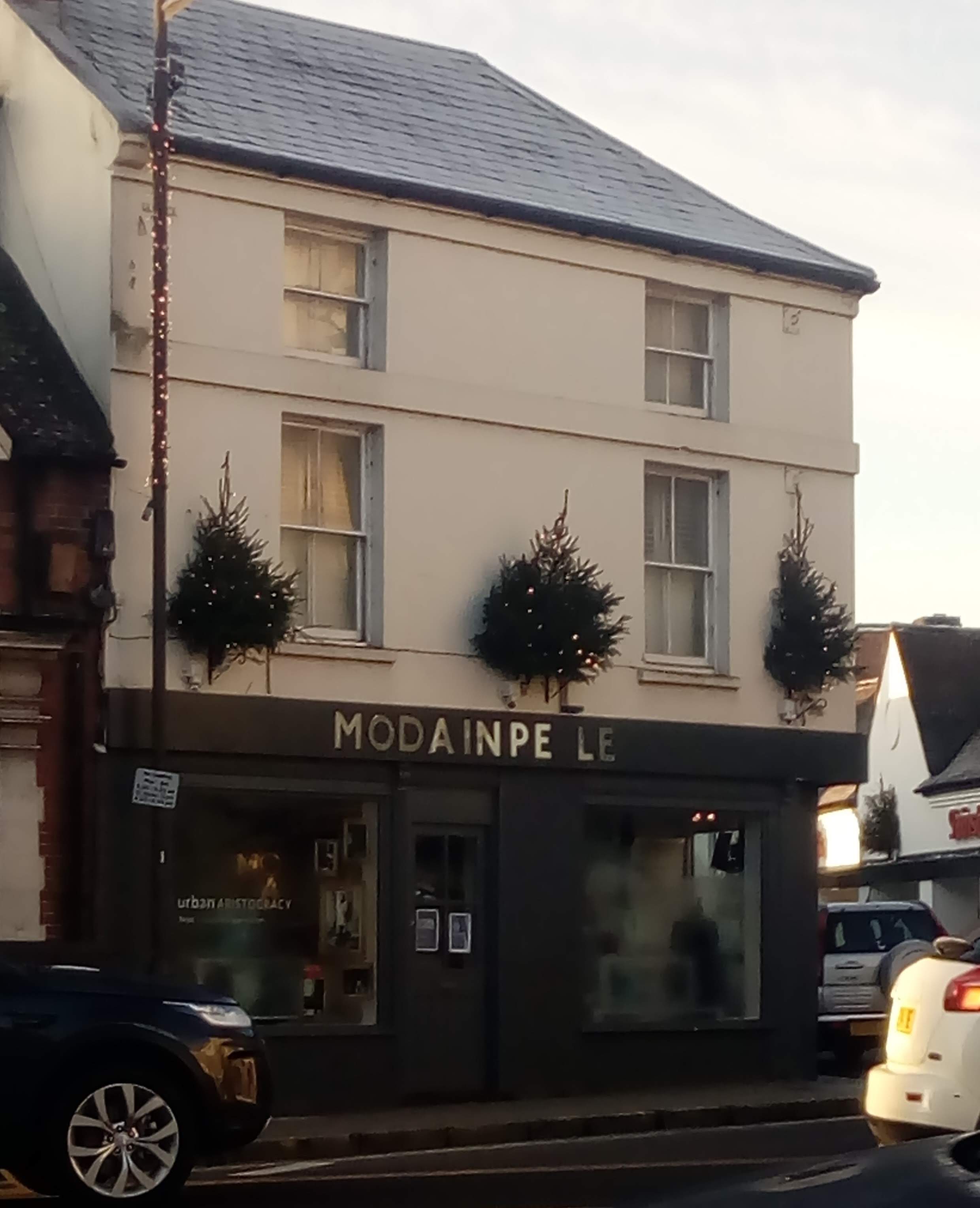
Now to a third son of Alfred and Ann Batting, Alfred Edward, generally known as A E Batting. I'll call him AE to avoid confusion. He also ran a shop but a quite different kind. AE started out in the building we know as Platts in Quoiting Square, as a pawnbroker with a side line in furniture dealing and as a clothier. This had been a pawnbrokers for some time before.  He was at first in partnership with Joseph Evans*, until 1864. In 1880 he moved to West Street / Market Square, the premises until recently occupied by M&Co. The furniture dealing (generally second hand items) became more of the business focus. To read more about Ann Barney, one of the desperate customers who used his pawnbroking business see Charlotte's post here. AE declined to renew his pawnbroking licence in 1898, much to the surprise of everyone it seems. It was the first time anyone could remember a time that Marlow had not had such a business. However, this line of trade did arrive back at this Battings a few years down the line. 


 AE died in 1915 at the age of 77, still continuing in his work. Among the interesting facts about AE given on his death was the information that he had been a member of the church choir for some 61 years! Generally though the Battings were associated with the Congregational Church in Quoiting Square. His son Rupert took over the furniture shop and ran it for decades. 


Walter, Christian and James Batting 

I'd just like to gives quick mention to a some other sons of Alfred and Ann Batting, brothers to William and Charles. Firstly, James was a successful solicitor in Marlow. He served his articles under another familiar Marlow name, William Lakin Ward. James then acted as solicitor for many local organisations. This includes the Marlow Railway Co responsible for bringing  the rail into Marlow itself (resigned 1878), Marlow Gas Company and for the Marlow based Buckinghamshire Chair Co**. He was also an insurance agent. Shortly after the establishment of Marlow's volunteer fire brigade in the 1870s, he secured a large donation to them from one of the fire insurance companies he represented. Married to the daughter of an Italian count, James is in interesting subject in his own right and I'm sorry space means he doesn't get a longer entry. We will try to do more on him in a separate post in the future.


 Another son Christan b 1840 became a draper while Walter pursued a career as a architect and surveyor, working mainly in London. Walter had been articled to Marlow surveyor Charles Carter. Walter died at the sadly young age of 47. Described then as a man of "fine physique and genial manners", there would have been many in Marlow with find memories of Walter rowing at the regatta and other events as a young man. (He is buried in Wandsworth cemetery alongside married sister Emma Hallett. The youngest daughter of Alfred and Ann, she died in Balham 2 years after Walter.) 


Above, Christian Batting on the Batting grave marker at All Saints. 

Written by Kathryn Day, researched by Kathryn and Charlotte. 


More Information:

*More info on the Evans /Batting pawnbrokers shop in Charlotte's post here

** More info on the Bucks Chair co here

Index of posts about other shops/business etc here

To find all references to a family or individual here, use the A-Z person index in the top drop down menu. 


Sources:

Bradshaw's Railway Almanac and Directory (Bradshaw's 1843) 

Hastings, Charles William - Gas and Water Companies Directory, 1884. 

Kelly's directories for Buckinghamshire and Berkshire 1847, 1883, 1896, 1911, 1915, 1920, 1939. 

Kelly's Directory of Merchants, Manufacturers and Shippers. (Kelly's 1907)

Marlow Guide 1903 & 1905

Robson's Directory 1839

Royal County Directory Buckinghamshire, (J G Harrod & Co, 1876)

Census entries ; transcripts from the originals by Jane Pullinger and Charlotte Day

1833 Parish Assessment as owned by my family, and related letters and workings. 

Bucks Advertiser and Aylesbury News 29 August,  14 November 1874, 16 August 1879. British Library. 

Bucks Herald May 15 1875 & 12 Jan 1878, these from British Library Archive, via the BNA

South Bucks Standard 16 April 1897, 3 June 1898,  22 June 1906,  4th March 1910, 13 June 1912. As above. 


© MarlowAncestors


Tuesday, December 20, 2022

Harman's Chemist

Bernal Harman was a chemist with a shop in Market Square / Spittal Street Marlow in later Victorian and early Edwardian times.

He was born in High Wycombe in 1846. His full name was Bernal Osbourne Ralph Harman. His unusual first name comes from his godfather Wycombe M.P Ralph Bernal Osbourne, who in turn had it in the family as he was paternally of Jewish ancestry. Bernal Harman's father Charles, a solicitor and Mayor of High Wycombe was a political ally of the Liberal M.P.

Our Bernal had a privileged but tragic childhood, losing his mother Ellen (née Tatem) in his third year and his father in his ninth. He appears on the 1851 census living in Easton Street High Wycombe with his widowed father Charles and siblings plus two servants. Bernal still lived in Easton Street in 1861 this time with his older brother John but by 1868 he was married and operated his own "family chemist" in Magdalen Street Glastonbury, Somerset. From there he mixed up his own tooth powder guaranteed to give you a winning smile for life.

Then, by 1870, he moved his shop to Park Street, East Cowes on the Isle of Wight. His advertisements in local papers bear the legend that he was the chemist for the royal household at Osborne at this time. But he must have struggled as he appears in court reports as a debtor and he went into liquidation there in 1871. Finally, in 1881 Bernal and his wife Ellen (née Duckett, married Somerset 1867) and their children moved to Marlow so that Bernal could take over Banbury's Chemist and Druggist in Spittal Street.

As well as being a chemist his shop acted as a parcel agents and Bernal was one of the principle movers and shakers behind the establishment of a Literary and Scientific Institute in the town.

In 1891 Bernal faced serious trouble when the landlady of the nearby Wheelwrights Arms in Spittal Street, Mrs Lucy Jeffs, died after taking an opiate based sleeping draft which he supplied to her. The doctor and surgeon who attended her before her death suspected that the draught contained more opium than Bernal claimed and had poisoned her. A post mortem revealed that taking opium had brought on her death but that she was about to die anyway. She was a consumptive of long standing and very close to death from that. She asked for the draught because she was in too much pain to sleep. The expert opinion was that as her condition had deteriorated significantly the normally safe dose Bernal insisted that he gave her was not a dose she could withstand in her condition and made her exhibit symptoms of overdose. It is likely that he did not realise how much nearer to death she had become in the hours before he handed the sleeping draught to her young son in his shop. The inquest jury recorded a verdict of homicide through misadventure. Bernal seems to have escaped further scrutiny as far as our research can so far find. The verdict meant that Bernal had while acting lawfully and without intent to do harm nevertheless caused death. 


Above 1905 ad. Sole proprietor of the  "Carrington Bouquet" refers to a locally created perfume with a contentious history - see here for more. 


Bernal died in 1906 following a long illness. His wife Ellen survived him and lived later at 15 Claremont Road. She died there in 1921 age 72. Their son Henry "Harry" Harman fully qualified as a chemist and druggist in 1896-7 and had already taken over the day to day running of Bernal's business before Bernal's death though even afterwards for a while afterwards the name above the door still said "Bernal Harman".

Harry supplied bandages and disinfectant to the local council. He continued to act as a parcel agent like his father had done, as well as being a chemist. He was a successful rower for Marlow Rowing Club in his spare time. He married May Flint from West Street. Sadly, he died aged just 45 in 1920.


Written and researched  by Charlotte Day. 

Related posts:

For other posts about specific shops/businesses and other content related to Spittal Street see the index here

Information on other chemists and pharmacists in Great Marlow plus apothecaries, surgeons and other medical related posts see the index here

Index of biographies of other individuals connected to Marlow here

For every mention of an individual or family here see the A-Z person index in the top drop down menu. There's more than 4,000 people listed there. 


Some sources:

Kelly's Directory of Buckinghamshire etc 1883 and 1907. Kelly's Directory of Hampshire 1880. Kelly's Directories Limited.

The Post Office Directory of Chemists and Druggists: Containing Lists of the Chemists and Druggists Throughout England, Manufacturing Chemists, Wholesale Druggists, Patent Medicine Vendors and Manufacturers, and Every Trade in Connection Therewith. (1870). United Kingdom: Kelly. 1885 edition also.

1851 census High Wycombe and 1881 East Cowes via Rootspoint.

The Pharmaceutical Journal Volume 51 printed by J Churchill. 1921.

The Chemist And Druggist. February 10th 1906. 

South Bucks Standard 12th Feb 1897 and 6th March 1891. Bucks Gazette 4th April 1846. British Library Archives via the BNA.

The Weekly Notes. United Kingdom, Incorporated Council of Law Reporting for England and Wales, 1877. Via Google Books.

"England and Wales Marriage Registration Index, 1837-2005," database, FamilySearch (https://familysearch.org/ark:/61903/1:1:2DK3-W4K : 13 December 2014), Bernal Osborne R Harman, 1867; from "England & Wales Marriages, 1837-2005," database, findmypast (http://www.findmypast.com : 2012); citing 1867, quarter 1, vol. 5C, p. 814, Wells, Somerset, England, General Register Office, Southport, England. 

Bucks Free Press 27 June 1921. 

Friday, October 1, 2021

The Tragedy Of Susan West Of The Crown.


In 1875 widow* Susan West took over the Crown Hotel from short term proprietor Samuel Hill. It was one of the foremost places to stay in Marlow and a big affair to take on. Unfortunately for Susan, things began to go wrong for her almost immediately. 


Less than a year after taking charge, the Crown suffered a severe fire. A certain amount of smoke was seen one evening coming from above a stove, but it was quickly put out by Susan and her servant or so they thought. The household then retired to bed. Towards morning, they awoke to find the chimney was a "burning mass of soot"  down it's entire length. Their own attempts to put the flames out failed so the fire brigade was summoned. This would only have involved rushing to outside the building and ringing the fire bell of the adjacent Town Hall. The horses that pulled the fire engine were usually kept in the Crown's meadow behind the hotel. 


They may have arrived quickly, but the fire brigade faced a formidable task. The old chimney ran a zig zagged course between the bar parlour through the centre of the hotel and out. It was this haphazard path that had allowed "boulders of soot" to form in the corners and these were now alight.  Getting to the fire involved knocking holes in the chimney and walls and pouring in a huge amount of water. Only after hours of "unceasing labour" in very difficult conditions was the fire extinguished. The damage from smoke, flame, and water can be imagined. Some furniture was destroyed and Susan was left with holes in the structure of the building. Thankfully she was fully insured. But the loss of trade occasioned by the time needed to set things right may well have been the start of Susan's financial difficulties. 


The hotel hosted many big events in the next few years and it seemed outwardly to be doing well. But Susan had spent money on modernising the premises and this had left her in debt. Then came the Election Riots of 1880. The hotel was used as the base for poll winner Owen Williams, and his victory was not a popular one with many, especially the poorer members of society. When the election result was announced outside the Crown at 6pm, boos and hisses turned gradually into a full scale riot, with the Crown it's initial focus. By the time the Riot Act was read at 9pm, every single window of the hotel had been broken. A ladder which had been unfortunately left leaning against the front of the building was used as a sort of battering ram. Initially they may have wanted to use it to gain access to the building, but it was pushed through the window with such force the interior plaster and lathe walls were badly damaged. It was then used to batter the hurriedly closed gates of the hotel, which were barricaded from the inside. Threats were said to have been made to burn down the entire hotel. Every front room was described as damaged. While Susan was able to claim some compensation for the structural damage, time spent putting it right must again have lost Susan much income. 


In approximately 1881, Susan suffered an accident when travelling by dog cart. (Horse drawn light vehicle, usually 2 wheeled.) She was thrown from the vehicle and hit her head on a kerb. This left her needing to stay in bed for a month, and even after that she experienced periodic severe headaches. 


Enter John Langley, a recent widower, large scale farmer and fruiterer and landlord of The Verney Arms in Dean Street. He began to "court" Susan and offered to buy the the Crown. This he eventually did, making arrangements with her creditors and shortly afterwards discharging her debts. He took on the licence in 1883, and soon afterwards the couple were married by licence in Fulham at the Parish Church. (Marriage 19 June 1883. Susan had family in the Fulham area). Salutes were fired from the back of the Crown throughout the wedding day and the bellfry stood in readiness to welcome the couple home with a peal of bells when they stepped off the train. However the ever modest Langley sent a message that he did not want any special fuss made and so the bells stayed silent. However a crowd of friends and neighbours gathered at the Crown to shake the hand of the newlyweds. John was something of a local hero and you can read about him and his son in a dedicated biographical post here


At the Christmas of 1882, Sarah seemed happy. She bought a large tree and erected it in the town hall next door which she also managed. She covered the branches with sparkling decorations and toys and invited the children of the tradesman of the town to come and pick out a free gift. It's one of many examples of her generous spirit. But there was an underlying sadness that would not go away. 


Susan was worried that her new husband would never recoup his investment. He said he told her repeatedly that she need not trouble about this. But she seemed depressed and spoke of guilt at the risk John had taken on. She is said to have developed a restless manner, leaving home every few days for short times away, often visiting a sister in London. After one such visit, Susan never returned home. 


She travelled to Bridport Harbour, arriving with a small bag but no luggage or money. (She was born in Somerset although it's believed she was a stranger to Bridport itself.) She asked to hire a room at a boarding house for a few hours, initially to rest after a long journey. She then asked to stay the night and after that extended her stay. She told the landlady of the boarding house that she had no money with her but could have it at a moments notice if she wired to her family. The landlady thought Susan looked respectable if tired and allowed her to stay. She had been told by Susan about her head injury and the lingering pain resulting from it and thought Susan could benefit from a holiday. Her actions seem to have erred on the side of kindness considering she had to take it on trust that Susan would settle her bill and yet allowed her to extend her stay nonetheless. One day Susan went out for a walk and never returned. Her bag was found in her room. A few days later her body was found at the foot of a cliff 300ft high. 


The verdict was suicide. There was some delay identifying Susan as she had given her name as West and her body was described as mangled due to the nature of the fall. At her inquest, questions were raised about the lack of money Susan had travelled with. It was suggested perhaps husband John had not allowed her much money but this was disproved. He said he had never allowed her to ask him for money - because he had always ensured she had plenty so she would never need to ask for it. He had given her £10 as she was going to  visit her sister and he had also received an affectionate letter from Susan while she was staying there. This was supported by others who said Susan had suffered depression because her husband had spent a lot of money on her behalf, despite his reassurances that he did not seek to recoup his investment. John said the Crown was then trading well and they had no ongoing financial difficulties. He would, he said, readily loose a £1,000 pounds if it could bring his wife back to him. Reports of Susan's age range from 33 to 39 at the time of her death. She gave her age as 30 on the 1881 census however. 


This was not unfortunately the last tragedy in the story. Less than 3 years after Susan's death, her husband John was killed in an accident at the Crown. He fell from a ladder while pruning some wall trained fruit trees in the now vanished gardens at the rear of the Hotel. Sadly he could not survive his injuries and died aged 60. The Crown was then put up for sale. 


*It was said at her inquest that Susan had been a widow for about 9 years at the time of her marriage to John Langley. She left a son according to the same report but he is not with her on the 1881 census. 


For a list of landlords of the Crown Inn/Hotel see here and for other related content and other pubs see the Pub Related option on the top drop down menu. Use the A-Z person index on the top drop down menu to find every mention of your ancestor here. 


SOURCES

Census 1871, 1881. From the the transcription from microfilm by Charlotte. 

Law Reports Volume 7, Great Britain High Courts of Justice, Queens Bench Division, Council of Law Reporting, 1881. 

The Hotels Of Europe. (Henry Herbert & Co 1876)

 Maidenhead Advertiser 21 June 1876 - copy from the British Library and accessed via the BNA April 2021. 

Bucks Herald 19, 30 June & 11 September 1883, as above.

Reading Mercury 25 December 1875, 11 September 1883, as above

Kelly's  Directory 1883, Kelly's Directories Ltd. 


Post written and researched by Kathryn Day. 

©MarlowAncestors

Thursday, September 16, 2021

Landlords The Upper Crown, The Crown and Broad Arrow, The Lower Crown Inns, Great Marlow.

 *Updated by Charlotte November 2025*

WHAT YOU NEED TO KNOW

Marlow has had two Crown inns. When modern residents refer to The Crown, they mean the one in the Market Square, which was historically known as The Upper Crown then the Crown Hotel, to distinguish it from the Lower Crown in the High Street. The Lower Crown's original name was the Crown and Broad Arrow but this is largely forgotten now. Both were very old. 

You may see references to the Upper Crown as the inn exclusively known as the Crown and Broad Arrow but this is seemingly incorrect. Contemporary sources spelling out the full name of the Lower Crown just as often refer to it as the "Lower Crown and Broad Arrow." (For example see Reading Mercury 19 June 1786.) The Crown and Broad Arrow can be found separately listed to the Upper Crown in lists of inns at the same time, (E.g The Reading Mercury 08 July 1771) and information about the contents sale of Alfred House/Cromwell House in 1756 describe this property as being nearly opposite the Crown and Broad Arrow which makes it opposite the Lower Crown. It's usually described as in the High Street rather than the Market place which is the location of the Upper Crown. Lastly proprietors later listed as in charge of the Lower Crown can be found earlier listed at the Crown and Broad Arrow. We have done our best to attach the right early innkeeper to the correct premises. 


The original Upper Crown building was replaced but it was trading from the 1590's at least. It was later known as the Crown Hotel and used some of the neighbouring town hall building, before taking it over entirely. It's former core location is however where Boots the chemist is now. For more on the history of the two see the post on the Crown Inns Here


Remember also Marlow has had pubs or beer houses called the Crown and Anchor, Rose and Crown (also at Little Marlow, very frequently shortened to The Crown) and the Crown and Cushion. 

This post will be updated as new information emerges. All listings are as noted in original sources, including alternative spellings. Where multiple sources list an individuals name, only the first and last mention are listed here unless there is any alteration in how they are recorded, for example an additional occupation is noted. Note that some listings may in fact refer to father's and sons sharing the same given name so be sure to double check this. See notes below for more help finding your ancestors in these listings. 

UPPER CROWN / THE CROWN


The former Town Hall with clock above, had assembly rooms on upper floor which were used by the Crown until they eventually took over the whole building. 


This building, above,  is where the Upper Crown was for much of it's life. It expanded into the Town Hall next door and eventually abandoned it's original site. 

Post about  the balls/assembly here

(Market Square)

1595 - Premises owned by Richard Mathews / Mathewe.

1596 - Roger Smith, who was also a shoemaker. He bought the premises , which he already occupied. In 1610 he put the business into the hands of trustees for the benefit of his sons John and Valiant.

1617 - Edward Wooden (Wooten) bought it and ran premises. In 1620 premises sold to John Little of Little Marlow.

1636 - Owned by Thomas Drewe, a draper. Leased by Edward Wooden's widow Elizabeth. 

1650 - Elizabeth Wooden (Wooten) occupier. Thomas Drewe the owner sells it to brewer Moore. Previous tenants listed then are Mathew Cane and Bonaventure Ward. (A Mathew Cane was at the Angel by 1643) Also in this year the occupiers of the Crown benefit from a 1,000 year grant of right of access through Thomas Drewe's gateway, between two properties, into their "backside" and malthouse. The access is specified as applying to horses and carts carrying hay, straw and wood and their accompanying leaders and drivers. The origin of Crown Lane perhaps? 

1712= Samuel Sandys

1717 - Mr Richard Hall. He went bankrupt 1724. "A large inn with close behind" [Area of enclosed land]

1754 - Sylvester Law

1757 - Sylvester Law (moved to the Cross Keys) See his will summary here

1766 - Mr Webb

1767 - John Webb [Likely the John Webb who was Law's brother in law]. Then John Parsons.

1768 - John Parsons. Possibly the same John who acts as a parish constable.  During his tenure pub often hosts auctions.

1771 - Trustees of the new Reading to Hatfield Turnpike toll road recommended this Crown and the Lower Crown and Broad Arrow as a place to get a good horses or post chaises en route. 

1775 - John Parsons. Leaves to take on The Black Bull coaching inn at Holborn this year. William Faithorn takes over at the end of the year. 

1778 - Mr Faithorn. Chaise, horses etc available at short notice. 

1780 - Mr Faithorn

1785 - Samuel Chapman

1792- Samuel Chapman, landlord has died. "Landlord of the Upper Crown for many years". See grave below.

1794- Mrs Mary Chapman. Widow of the above. See grave below.

1798 - Mrs Chapman. A new coach to Fleet Street, London via Maidenhead starts from her inn this year. Monday to Saturday service.


1803 - there is a good chance that the innholder John Gosling who died this year was the occupier of the Crown as his will was witnessed by men occupying premises immediately by there.

1811 - Mr Davis (Wavis in a second incorrect record!)

1820 - Richard Furnell, died aged 39 of a sudden fit of apoplexy. Wife Dinah. Had been innkeeper since at least 1815, though not necessarily at the Crown. Dinah married secondly Richard Westbrook who took over the Crown. She is mentioned in the 1822 will of Richard Furnell's brother William Furnell which you can read here. William's grave looks like his occupation is "omnibus..." so maybe he also worked out of the Crown. 

1823 - Richard Westbrook, as above. He was originally from Cookham. Richard and Dinah moved to the Red Lion Hotel, High Street, High Wycombe. Richard's sister Eliza was a baker in the High Street. See her biography on the blog here. Their brother William Westbrook was a butcher in Market Square near the Crown.

1826 - Mr Westbrook.

1830 - George Westbrook. George is an enthusiastic cricketer. In this year he plays a one wicket match against a gentleman of Beaconsfield. (These sort of matches were all the rage locally around this time and the natives of Beaconsfield were our frequent foe.) George won, scoring 14 runs to Mr Williamson's zero. He also represents Marlow in some early team matches. 

1831 - George Westbrook "Family and commercial hotel" (also described as excise office and posting house) 2. Geoffrey Westbrook

1832 - G. Westbrook

1833 - George Westbrook also leasing rooms at Town Hall for a "card room" and associated parlour. 

1834 - George Westbrook

1835 - George Westbrook leaves the Crown. James Franklin takes over, selling up his farm Low Grounds to do so. Post Boy : Joseph Davis, cook Sarah Brown, waiter Edward Cook. 

1836 - James Franklin. Wife Sarah.

1838 - Mr and Mrs Franklin. The latter is the granddaughter of "Mrs House" who died that year.

1839 -  J Franklin "Crown Inn." Ostler - James Lowman. Post boy (actually an adult- ) John Spratley. (James is subsequently coachman to the Atkinsons at the Rookery)

1840 -  James Franklin

1847 -  James Franklin. James describes himself as innkeeper, hotel keeper, coach proprietor, and livery stable keeper.. He suffers financial difficulty around this time and is declared bankrupt in 1852. 

1849 -  Samuel Wise

1850 - Richard Westbrook comes back. Also keeps the Lion Inn in High Wycombe still. 

1851 -  Thomas Furnell. He was the grandson of Richard and Dinah Furnell above. Marries Jane Veary of High Wycombe 1852. 

1853 -  Thomas Furnell

1854 -  Thomas Furnell "Crown  Hotel"

1859 - Mr Paine. In 1865 William Paine appears as a sort of expert witness in a court case about buying sub standard wheat. In this he says he was formerly a mealman. 

1860 - Mr Payne

1861 - William Paine (age 47)

1862 - William Paine who was threatened with being run down and assaulted by two men when he told them he would not have them ill-treating a horse as they were on his premises. The horse had been exhausted by dangerous driving in the streets outside and was whipped in the yard of the Crown. He withdrew charges against them after they expressed deep apologies and said they had been very drunk at the time. The magistrates still fined them for being drunk and disorderly.

1863 -  William Paine. "Crown Hotel"

1865 - William Paine. He was elected as one of the Guardians of the poor that year. Was in the role to at least 1871. 

1871 -  William Paine.

1872. William Paine died.

1873 - Mrs Paine (widow of above).[Emma Margaret. She died in 1890 aged 70]. She transfers license to Samuel Hill [died 1875 age 42, at Oundle, Northants]

1875 -  Mrs West [Susan] 

1875 - Fire in chimney at Crown causes substantial damage. 

1876 - Advertised facilities include the coffee room, billiards, an omnibus to meet every train, close and open carriages for hire, and private "apartments" available for family hire. 3 minutes walk from the river (fairly quick walkers only!!)

1883 - Susan West/Langley. 2. John Langley. Sadly Susan committed suicide in this year, travelling to Bridport Harbour to do so. (She was born in Somerset) She told the landlady of the boarding house she stayed in that she had suffered head pain since a blow to the head occasioned by a fall from a dog cart. She said she wished to have a few days holiday because of this period of ill health and bought with her just a small bag. She had recently remarried to John Langley  but according to local newspaper reports she gave her name as West (that of her first husband) at her lodgings. A full post on Susan is available here

1885 - John Langley died in the garden at the back of the Crown, after falling from a ladder while pruning a wall trained fruit tree. A biography of John and his son are available here

1886 -  Lease went up for sale and it includes the town hall, but no immediate takers. At this point the Crown has 18 bedrooms and 3 private sitting rooms on offer.  

1887 - Henry Calf. Former station master, bank manager and soldier! Henry owned the hotel himself.

1889 - "a comfortable old fashioned house with a first rate billiard room"

1891 - (Manageress Margaret Hughes)

1892 -  Henry Calf - he had converted  rooms in the upper story of the adjacent Town Hall into a Billiard Room (former assembly room). The lower part of the town hall still houses the fire engine and stalls on market day. These stalls are now mostly or entirely butchers. Henry dies in November aged over 70 of bronchitis, after long illness.  

1893 - On Henry Calf death, Miss Hughes continued to manage premises, now for new owner William E Cole. "Every luxury of recreation" offered with lawns and gardens. Mr Cole had come from the Crown Hotel in Devizes and was a former Quartermaster in the Royal Wilts Yeomanry. He began a reorganisation of the hotel from top to bottom until it's known as a "favourite resort for well to do visitors and commercial travellers". Amongst the projects is the creation of a small room adjoining the bar, created by "setting back the partition in the bar passage by several feet". A large conservatory was added to the rear in 1894, and in the same year the old entrance through the market house beneath the town hall portion was opened up again. In 1895 he also engaged 60 rooms in private homes to accommodate an avalanche of Whitsun visitors! It was described as "World famed as one of the oldest established commercial and  visitor's season hotels (both winter and summer), in this part of England." Cole also had a booth offering refreshments during the bigger matches of Marlow F C (from 1893). They played in the Crown Meadow ground behind his premises and rented from him at £15 a year. The team change in "dressing rooms" in the outbuildings there which they also rented from Cole, at £11 7s 6d per year. 

1897 - the extent of the tourist trade done at the Crown can be seen by the fact that within 1 week in the summer of this year, a full 1,000 persons on staff outings from big London employers had been catered for there. A similar number were catered for the following week.  This does not include other types of visitors and guests. 

1899 - William Eades Cole dies in his sleep at the hotel aged 47 leaving a wife and 4 young children. It is said he died of consumption following bronchitis. His widow vows to carry on. 

1902 - Mrs Cole ("Julia" Elizabeth nee Feltham). Mrs Cole is declared bankrupt early this year, the proceeding have started in 1901. She lays the blame partially on Marlow carriage builder Charles Drye who she says sold a carriage sent to him for repair, without her permission. Mr Drye denies this and say he had advised Mrs Cole the carriage would be expensive to repair and so had offered to buy it off her for £7, an offer she had accepted. He had then sold it on. However Mrs Cole also admitted during her insolvency hearings that she had been practically insolvent at the time of her husband's death, and that she had not kept proper books (because her husband had never done so)  and so had never tried to balance them.  2. Miss Feltham (sister of Mrs Cole)  3. Margaret Douglas Ditchburn

1903 -  Miss M.J Feltham - manager I believe earlier.  2. Charles McGlynn/ Glynn


1905 1. Charles McGlynn 2. T Hull

1906 - Mr Hull

1907 - Thomas Halse Hull. He and his wife took on an hotel in Sonning  in 1907. They were allowed the licence there on condition that they  gave up the Marlow concern. Business transferred to Mrs Ellen Dax/ Mrs Stanley Dax . She came from the Catherine Wheel in Henley. Mrs Dax advertised the luncheon and teas served in the garden, the hotel"s tennis lawn and the possibility of using Crown Meadow for a ride or other exercise, as star attractions of her premises. 

1908 - Mrs Dax

1909 - A W Shearsmith

1910 - Mr A. W Shearsmith transfers to H E Scott [Horace Edwin, his wife Bertha assisted in the business].

1911 - H E Scott [Horace Edwin]

1914 - tragedy occurs when 16 year old Crown servant Louisa Maud Allen dies after a kitchen accident. Her apron catches fire and she is soon engulfed in flames. The fire is put out promptly by the cook and landlady present but the poor girl has suffered severe burns. She dies at the Marlow Cottage hospital. 1915 -Now also offers a garage with inspection pit, tennis lawn and billiard room. Landlord Oliver P Taylor. 

1920 - Mrs Oliver P Taylor takes over officially as her husband has died. This was Louisa Taylor.

1924 - Mrs Oliver P Taylor. A room with meals for those staying 5 nights or more costs 10 sh 6d a night in 1924.

1925- the Crown bought by a Mr Sidney Vereker. He gives Louisa Taylor notice to quit and she sells up most of the furniture fixtures and fittings and moves out but then Vereker says he doesn't in fact mean to apply for a holdover of her license straight away. The details are very confusing. A dispute between the two led to at least two court cases. Meanwhile the Crown stood empty. Louisa eventually did leave.

1927 - Mr and Mrs A Henderson Rutledge. "Ye Olde Crowne Hotel". They have refurbished and fully electrified the premises. They also allow an Ancient Order of Froth Blowers group to start up on their premises in this year. This joke social club was a nationwide concern open to membership by men, women and children. Members at their get -togethers have to pay fines for reported infractions of various comic rules which each club branch makes up themselves. The money collected goes towards children's hospitals. Otherwise the main activity for the male members is sitting drinking and smoking in a pub.

1931 - Mrs & Mrs S Lindsay Galloway. "Ye Olde Crown Hotel"  Has been redecorated and refurnished yet again and provides every modern convenience. Star attractions include the Palm Saloon", "separate tables" for meals , their noted stock of wines and a large car park. 

1932 George Godsall.

1932 - 33 at least Captain Edward James Keeling M.C (resident owner). Previously at  George_&_Dragon


Above, two pages from an advertising brochure for the Crown Hotel under E J Keeling. 

1934 - Keelings leave and are replaced by Mr and Mrs W L Hill who were previously at The Chequers, Fingest. Pub was refurbished internally.

1939 John O Mason 

1957 Mr and Mrs R.H Snow.  Large ballroom available.

1958 R.H Snow.


LOWER CROWN / CROWN AND BROAD ARROW (High Street)


Site of Lower Crown. 

In existence from at least 1619. 

1679- Thomas Lloyd? 

1691 - "The Broad Arrow" late in the tenure of William Hopkins. A William Hopkins had been prosecuted the year before for keeping an unlicensed ale house in Marlow, location uncertain. Now premises owned or leased by Samuel Lynn. Samuel owns several properties in Marlow. He takes out licence this year for the Arrow to be used as a common meeting house, possibly meaning one of several outbuildings to rear although this type of accomodation is usually specified in the meeting house licence. 

1751 - John Phillips (and carpenter) Died this year. Wife Mary did the brewing (on the premises, usual practice back then) and selling of the liquor. She then married the below.

1751+ William Dark (e) Will summary here William hosts "cock matches" during the Marlow Races. 

1764 - Mary Dark (widow of John Phillips and William Dark both above)

1765 - Widow Dark "Crown and Broad Arrow"

1771 -  Crown & Broad Arrow - recommended along with the Upper Crown as a place to get a post chaise and a good horse on the new Reading to Hatfield Turnpike toll road. 

1776/7 - Mr Thomas

1788 - starts new post coach service to London, run by Saunders, Smith and Co. 

1781 - Nicholas Thomas

1782 - Nicholas Thomas (died this year)

1786 - Robert Dixon "Lower Crown and Broad Arrow" Also runs coaching business - see more about that here

1789 - Robert Dixon

1794 - Robert Dixon sells up. He is apparently "going into business". "Lower Crown" . His stock of wines and spirits, 2 post chaises, 4 post beds for guests and a herd of cows were part of the contents of the pub which was put up to auction when he left. We are told the premises has "numerous bed chambers and fitting rooms for the accommodation of company" as well as a "good" kitchen, bar, larder, pantry, and cellars. Outside there is a large yard, stabling for 30 horses, standing for carriages and various other outbuildings. The Lower Crown also has a "good garden" and a close of land adjoining.  

1799 - Mr Patrick. 

1808 - William Williams stops his coaching service from here and moves it to the Corporation Arms in High Wycombe. 

1831- possibly Thomas Oxlade. He was landlord of  "the Crown Great Marlow Parish"when he had to summon the tithingmen men to deal with the unruly behavior of two of his customers who had blown out his candles and then refused to leave when asked to. The  term "Great Marlow Parish" of course also encompassed at that time Lane End, Bovingdon Green and other outlying places for certain matters including criminal cases such as this. He was definitely not at the Upper Crown in Market Square. 

The Lower Crown inn closed in the 1830s (by 1833).

NOTES FOR FINDING ANCESTORS ON THIS BLOG

Use the A-Z person index on the top drop down menu to find every mention of your ancestor here.  Many Marlow landlords changed premises and there can be other family members running other establishments. Some places changed how they described themselves - or how they were viewed- and so licensed premises listings here take in not just beer houses, pubs and inns but common lodging houses and hotels too. We mainly focus on pre WW1 listings but sometimes list later names if it ties in with research we are helping with. 

For other pub/hotel related content see the Pub related option on the top drop down menu. 


SOURCES - 

Multiple property deeds, wills and similar documents cross referenced. (The two Crown's location research is by Charlotte Day)

Dickens Dictionary of the Thames, (Dickens, 1889 edition)

Reading Mercury 8 July 1771*, 17 September 1787, 17 April 1788, 23 October 1833, 17 September 1873, held in British Library Archive and accessed via the BNA 

Oxford Journal, 14th August 1756*, 17th December 1765*, 7th March 1767, 9 August 1794, 25th November 1820, 4 August 1849 as above. 

South Bucks Standard, 21 Jan 1860, 12 May, 29 December 1893, 13 January & Jul 21 1899, as above. 

Berkshire Chronicle 4 February 1826, as above. 

Bucks Herald, 21 February 1835, 6 July 1839 and 3 April 1886 as above

Maidenhead Advertiser 21 June 1876. As above. 

Nottingham Journal 15 Oct 1883. As above. 

Bridport, Beaminister, and Lyme Regis Telegram 19 October 1883, as above

1833 Parish Assessment owned by my family and transcribed by Charlotte.

Census 1851,1861,1871,1881,1891

1853 Mussons and Cravens Commercial Directory

Kellys Post Office Directory, 1869,1877,1883,1899,1903, 1907,1911,1915, 1920

Pigots Directory 1823, 1831,1844

Robson's Directory 1839

Will of John Phillips, proved 1751, transcribed by Charlotte Day from National Archives. 

1650 Grant of Right of Way, Drewe to Moore. National Archives index. 

AGM report, Marlow F C 1893. 

Marlow Guide, 1904 & 1907 

The Hotels of Europe - (Henry Herbert & Co, 1876)

Marlow Almanack and Directory 1907 &  1915. 

©Marlow Ancestors. 

Thursday, June 24, 2021

Occupants From 1702 - Corner House, Marlow


 Updated July 2023
The oldest references to this house usually call it The Corner House but it doesn't seem to have gone by that name for a while. It is on the corner of West Street, in Market Square / High Street. Not to be confused with a later property known as the Corner House on the corner of Institute Road and the High Street. ( For more on that building see the post here ). The property had three rooms per floor in its early days.
In 1702 until at least 1705 the property pictured was occupied by chapman Richard Greydon.
In 1719 Richard Langley made the place his home. He may just have used it as an alehouse.
Joseph Webb, butcher, along with his wife Ann bought the premises in 1743 from the heirs of Thomas Constable, a merchant linen draper from Reading who had owned the property for some years. The grand asking price? £40! At that time a Thomas Wright was the tenant. However Joseph himself occupied the house at the time of his death in 1756. He left the premises to his wife Ann but two years later upon the death she asked her son in law William Sneath the Marlow surgeon to organise the sale of them on her behalf. The property was supposed to belong to Ann only for her lifetime and then descend to her and Joseph's son John and his heirs but she had the consent of her son to sell it (or she would have been illegally selling entailed property)!
The premises were auctioned off at the nearby Crown inn to the highest bidder.
Ann's sole heir was her daughter Elizabeth Sneath which suggests that her son John was dead by then. The will of Elizabeth Sneath herself can be read here. There was an unmarried daughter Mary in Joseph's will too. She, Elizabeth and John were that will's joint executors.

By 1833 Henry Menday / Mendy (born circa 1795) had a bakery in the Corner House. The premises then comprised a garden and yard as well as the main building. The annual value of the property was assessed at £12 then. Henry also occupied a garden and yard opposite with an annual value of £2. His shop was only two doors down from Sawyer's bakery- more about that business here.

Henry continued in the Corner House for some years before he retired in middle age and went to live further along West Street with his wife Mary. He died in 1869.

Owen Wright the baker was in Menday's old premises by 1853 until at least 1884 when there was a failed attempt to break into the shop. Marlow was enduring a little crime wave at the time.

In 1879 when Owen heard that fellow shopkeeper Ann Badger had had a pair of boots stolen from her business he went off in hot pursuit of the suspect, retrieved the boots and handed the man over to the police. Playing cricket probably helped keep him fit!

Owen was no stranger to appearing in court. He twice had to sue men who owed him money. John Jones hadn't paid for £1 worth of bread in 1855, while "MacMillan" owed a whole 4p for flour in 1865. Most Marlow bakers in the 1800s also acted as flour dealers.

In 1879 during a routine inspection Owen was found to have be selling bread at less than the advertised weight, though only marginally so. Near neighbour and fellow baker Charlotte Sawyer was similarly guilty along with a host of other retailers whose scales were found to be in less than perfect working order. You typically were fined for this.

Owen died at home on the premises in 1884 aged just 54. He and his family were worshippers at the Salem Chapel, Quoiting Square which is now called Christ Church. 

The Corner House premises were used for most of the late Victorian period and earlier 20th century as a refreshment rooms or cafe. George Fryer decided on the slightly posher "refreshments caterer" for his occupation when filling out the 1891 census. He listed himself as having a coffee house in the Kelly's 1903 and 1911 trade directories. George was the subject of a number of thefts from his premises, usually of food. One of the most ambitious was the theft of a four and a half pound portion of a German sausage taken from the window in 1887. That was some sausage! The guilty party, a tramp from Aldershot, was seen to put it under his coat and was caught with it still there a little later. His snatch cost him 14 days jail time. 

George and his wife Sarah suffered the death of their eldest child Florence aged 13 in 1893 and insolvency the next year. I'm not sure who occupied the premises immediately afterwards but it was still an eatery.

This blog focuses predominantly on pre 1920s Marlow so we'll leave it there!

To find other High Street / West Street content please see the "Specific, Shops, Streets Etc" index here. All mentions of an individual can be found under the A-Z Person Index options on the menu. Thousands of Marlow people are listed.

Sources:
Will of Joseph Webb 1756, PCC. Copy from National Archives, Kew. Also Ann Webb 1771 and Thomas Constable 1729 as above. All transcribed by me.

Commercial Gazette 15th August 1894. British Library Archives.

1833 parochial assessment original handwritten notebooks, held by my family and transcribed by me.

1841-1891 censuses reels, transcribed by me. 

Property deeds Buckinghamshire Archives.

Kelly's Directory of Buckinghamshire 1883, 1903 and 1911 by Kelly's Directories Limited. Via the University of Leicester.

GRO death index online.

Ipswich Journal 7th January 1758. Bucks Herald 18th October 1879 and 14th April 1855. Copies held at the British Library Archive and accessed by me via the BNA March 2021.
Buckingham Express 2nd August 1884. As above.


©Marlow Ancestors. You are welcome to use this research or the image for the purposes of family or local history research if you credit this blog and provide a link here.


Friday, November 27, 2020

Great Marlow in the First World War - 1915


JANUARY 

 - The Marlow War Relief Committee decide to form a Marlow unit for the Bucks Battalion of the Volunteer Defence force. This will give military training to men too old to join up, or who work in exempted occupations for example. They will be put to work in various tasks such as guarding depots and assisting the special police. 


 - The Institute (later the building used as Marlow Library) decide to allow any Marlow men on active service free use of their facilities while they are on leave. This means access to a library, billiards table and other games. 

FEBRUARY

- At Walter Davies shop in the High Street you can see a war trophy on display. A German officers helmet was bought to England by an invalided officer and can now be seen in the shop. 

MARCH

- The new commanding officer of the Volunteer Defence Force is Arthur L Lawrence and 80 members are enrolled already. 


Above, a patriotic image from the "Marlow Directory and Almanack" 1915. 

MAY 

- News circulates around town that the Grenadier guards will arrive at Bovingdon Green toward the end of the month. However their arrival is delayed because anti German riots in London necessitate their presence.


JUNE 

- 1,200 members of the 3rd Battalion of Grenadier Guards finally arrive at Marlow. They have come from the Wellington Barracks, on the 3rd/4th, with the usual fanfare and excited crowds stopping in the streets to cheer them in. A photographer captures the arrival of the main body of men on the 4th and it's made available as a postcard. The first train carrying troops arrives at 10.40, the second 11.45 Am. General Sir George Higginson is amongst those who turn out to witness the event, and he receives their salute. They march to Bovingdon Green where they will stay 7 weeks - or so it's thought at the time. Anyone who missed the troops arrival will have plenty of opportunities to see them march, as they proceed almost every morning to the long established firing range opposite Quarry woods for shooting practice. The 4th Battalion are initially expected to follow the 3rd to Marlow within a week or 2. They dig trenches but are they the training ones? See 1914. 

- A depot for the National Egg Collection is opened at 71 High Street to collect eggs to provide food for soldiers in hospital both at home and in France. Anyone keeping chickens can donate surplus eggs there. 

- The 3rd Battalion of Grenadier Guards march to Gyldernscroft in Henley Rd to honour of their former commander, General Sir George Higginson's, 89th birthday. The children of Bovingdon Green school have the honour of accompanying the Guards and the latters Drum and Fife band. 


JULY -

- Grenadier Guards in camp at Marlow host a boxing championship, the first of many sporting events to be held there. Later, the guards host "river sports" on the Thames. A large crowd, deprived of the chance to attend the usual Marlow Regattas, attend. Marlow Rowing Club puts their premises at the soldiers disposal and Mr Meakes loans some skiffs for their use. Popular with crowds are the swimming races, officers jousting on canoes and a hotly contested aquatic tug of war. A band from the Guards keeps everyone entertained throughout the afternoon from their position on the rowing club lawn. 

- 700 men from Marlow are now reported to be on active service. 

 - 3rd Battalion of Grenadier Guards leave Bovingdon Green, on the 20th after declaring the camp the best in England. Several wives and sweethearts walk by the side of the departing men as they make their way to the station. Other women are seen to give out cigarettes to the soldiers. Crowds throng the station, and the platform is closed. But enterprising ladies infiltrate the goods yard and manage to keep the men in sight a little longer. The men are replaced the following day by the 4th Battalion of the Grenadier Guards, who arrive by train and march through the town to Bovingdon Green. A special train also brings from London 200 members of the RAMC complete with ambulances. Officers take houses within the town. 

- On the 24th, another 400 members of the Grenadier Guards arrive at Marlow, while 100 leave for duty on the front. 

- Farmers at the Marlow Cattle Market hold sale in aid of Red Cross funds - with many animals selling well above usual rates and several put immediately back up for sale to be bid upon again. 

- A number of famous though unnamed London "artistes" travel down to Bovingdon Green to take part in a concert for the troops camped there. Hosted in the substantial YMCA tent. 

- the South Bucks Free Press prints a letter from two members of Marlow Town Band, now serving with the Bucks Battalion (T.F) in Flanders. Pte E J Smith and Pte F Latham want to thank other band members for a surprise parcel of goodies sent out to them. They say "it's fairly safe in the trenches as long as you keep your head down" but add where the trenches are close together you have to dodge grenades and "stand a good chance of getting mined". Overall though they say they have "nothing to complain of". 


AUGUST

-Many Grenadier Guards move out of Marlow.  A company of the 5th Grenadier Guards and the (3rd) 5th London Field Ambulance (RAMC) remain at Bovingdon Green in camp.

- HRH the Prince of Wales makes brief surprise visit to the camp in his capacity as officer in the Grenadier Guards. 

- Anyone passing Marlow Lock is buttonholed by the energetic Miss Gladys Meakes who is selling miniature flags to boating people in aid of the Red Cross. 

- Hooks Farm hosts a military sports day and gymkhana for the 5th Battalion of Grenadier Guards at Marlow, and the RAMC ditto. In common with most of these events at Marlow, civilians attend in droves, paying a small entry fee of 1 shilling which is collected to raise funds for the Red Cross. Men in armed forces uniform can attend free. Some races are more serious than others, with a three legged race causing much amusement. More than 200 injured soldiers in regional hospitals are invited to attend, including wounded servicemen recovering at Cliveden. Some arrive by river, others by road. Although pubs in Bovingdon Green are technically not supposed to serve them, many are seen to be worse for wear during the day. The landlord of the Jolly Cricketers - Francis Styles - will be fined £5 for serving these soldiers. 

- Ladies and men volunteer to carry out national registration, which means delivering 3,500 forms to households in Marlow area. 

- An open air meeting is held in the Market Square to encourage every man able to fight to register his interest in doing so. Speakers use a flag draped lorry - loaned from the Brewery - as a platform. Among them is General Sir George Higginson who says war will only end when England and her allies come out victorious. The event ends with cheers for serving men and the Allies as well as the singing of the National Anthem. 

- Members of Wycombe VAD  march to Bovingdon Green to see the training trenches which have been made on the "most modern scientific principles." The trenches therefore pre date the arrival of the Royal Engineers during war time but the Grenadiers were said to be digging trenches in June - see above. 


SEPTEMBER 

- Bovingdon Green sees yet more military sports, this time courtesy of the RAMC. Amongst competitive running races, and long and high jump events, can be found mounted wrestling competitions, egg and spoon dashes and a costume race won by a man dressed as a undertaker. 

- They also hold a river sports day, with swimming, punting, and a greasy pole climbing competition. The officers and their friends are invited to watch from the lawn of Marlow Rowing Club while others line the traditional regatta viewing spot - Marlow Bridge. After the last race, all competitors and officers are given a celebratory tea by the Rowing club following a prize giving. 


 - The RAMC  hold a fund raising concert in aid of their YMCA tent at the Bovingdon camp, one of many they will organise.

- The 2nd Welsh Guards are reported to also be at Bovingdon along with Grenadier Guards and RAMC. 

- The Bucks Examiner prints extracts from a moving letter from ex Marlow football player Sergeant H Hawkes to his wife, from his hospital bed at a military hospital at Netley. Hawkes had a miraculous escape, having been shot through the neck while fighting in the Dardanelles. "I must say I thought of you all when I lay there in the moonlight with hundreds of dead and wounded around me". The man from the Red Cross who had come to his aid, was sadly shot through the head and killed as he tended Sergeant Hawke. 


OCTOBER 

- Mr and Mrs Owens of 62 West Street receive special letter of sympathy from King and Queen after the death of the third of their sons in action. 

- The Welsh Guards leave Bovingdon  on the 2nd. 

- On the 23rd, the sounds of the Grenadier Guards Drum and Fife band marching through the town centre gives warning to any Marlow resident who hasn't heard the news - the Grenadier Guards are moving out. They leave from Marlow station as the band plays patriotic songs. The RAMC and 26th Fusiliers Bankers Battalion remain.


NOVEMBER

- 50 Marlow men are reported as killed or missing presumed killed so far. 

- The 26th Royal Fusiliers Bankers Battalion and (3rd) 5th RAMC are reported to still be in camp at Marlow. The former has formed a brass band and gives first performance at one of the many military football matches held at Marlow, on this occasion on Borlase playing fields. 

 - A fearsome gale at the end of the month sees numerous tents belonging to the camped soldiers upturned. They seek shelter in the YMCA tent before many get temporarily billeted within the town the following day. The RAMC billet themselves in The Old House and one adjoining while other troops occupy locations including the Institute (now Marlow Library), the Armoury (Institute Rd) and in the High Street  - "the old Lloyd bank" and the unused shop of Mr Martin plus the former boys school in The Causeway (now the church hall)

- The 26th Royal Fusiliers Bankers Battalion leave Marlow for Essex. They take with them a number of Marlow men who joined them during their Marlow stay. 


DECEMBER

- Three field companies of the Home Counties Royal Engineers Territorial force arrive in Marlow. They are quartered in empty houses and halls. About 450 men in total are housed.

- The RAMC leave Marlow after a long stay, giving a farewell concert that ends in an emotional singing of Auld Lang Syne. They had remained quartered at The Old House and an adjacent property after the gale last month partially destroyed their camp. 

- Busy scenes were reported at the Marlow recruiting office where 150 Marlow men are "attested for grouping under Lord Derby's scheme" 

- At the AGM of the Brewery, it is revealed that 44 of their employees are currently serving, and that 4 others had been found medically unfit for service. They are at this time executing a "considerable order" for shells having moved some of their production over to munitions. Company Engineer V B Butt supervised this work. 


The drinking fountain memorial to Charles Frohman who drowned in the sinking of the Lusitania. Sometimes called the Marlow Mermaid, but she has feet! 


For a post on Marlow in 1914 see here, 1916 here 1917 here 
1918 here

Brewery First World War Memorial tablet Here

To read other posts relating to Marlow's military history or everyday life here in the past, see the post listing here


Researched and written by Kathryn Day

©MarlowAncestors. You are very welcome to use this research for family or local history purposes if you credit this blog and provide a link back here. 

So far this blog contains mention of
3000
People from or associated with Marlow.

Sunday, November 1, 2020

Great Marlow in the First World War - 1914


AUGUST

3rd - The streets of Marlow are busy as crowds gather to watch the arrival of the advance party of what will be no less than 3,700 men of Berks, Bucks, Oxford and Gloucestershire battalions of the South Western Infantry Brigade (territorials). They will be attending their annual training camp at Bovingdon Green. The arrival of the territorials had been delayed and uncertain, to the consternation of local traders who looked forward to a significant boost to trade whenever soldiers encamped in the area. The Marlow men march straight to camp, others will arrive by train. A band plays music to welcome the arrivals at the station. The site has previously been used for military purposes. For example, in Autumn 1913, the Grenadier Guards had held their annual training camp at Bovingdon Green and Marlow Common. 


 4TH - War on Germany declared. The men encamped at Bovingdon received immediate orders to up sticks and return to their barrack to await further instructions. They leave quickly early the next morning, before most residents are awake.


- Work to commandeer local horses for military service begins, to the annoyance of some. 

- 39 extra special constables are sworn in at a special sitting of the Marlow Petty Sessions. 

- the Marlow War Relief Commitee has first meeting, in the Institute (now the Library) John Langley is elected its head. It has a Recruiting sub committee too. Its purpose is to coordinate with the district and national war relief fund to raise money to deal with cases for relief and other emergencies caused by war. 

- A Belgian flag is flown from the flagpole in the Enclosure (the Causeway)


SEPTEMBER - 

- Armed forces recruitment ad appears in local newspapers and in posters pasted up around the town. 100,000 men are needed, age 19-35, or up to age 45 if an ex soldier or to age 50 if former NCO. Any man wishing to sign up could head to the post office to find details of nearest active recruiting officer or they could head to any military barracks and volunteer in person (The recruiting officer was Col. Sergt. H. Frith of Maisonette, Newtown, Marlow). Anyone under 5ft 6" in height or who didn't meet the minimum chest measurement would have their services declined for now. Frith sends a large contingent of men to Oxford to join the new army almost immediately. Most pass their medical exam. 


- Open air recruitment meeting is held in the Market Square. A very large attendance is reported. Patriotic music is played before and after rousing speeches by among others, Sir George Higginson. He urges women to exhort their menfolk to enlist. (Marlow had had a branch of the National Service League from at least 1910. They campaigned for compulsory military service during peacetime for males, in the Territorials. Woman could also join this league to promote it).


- The sight of a new Army Farman Biplane flying over the town causes "considerable excitement". Even more so when the plane descends and lands in a meadow near the station, in order to complete some minor repairs. During its stay of about an hour, an eager crowd gathers. Dr Dickson hosts the two pilots - Lieutenant Gould and Sergeant Barr from Hendon - to tea before they continue on their way to Brooklands. Before they leave, they make several passes over the town. A few days later, many residents rush outside to see another bi-plane pass over town. 


- Marlow football club suspends playing of matches, some of the team already having enlisted. The other minor Marlow football clubs such as Marlow Wednesday and Marlow United follow suit.


- The parish church announces that until further notice the first verse of the national anthem will be sung immediately before the blessing. 


- The Marlow Urban district council display a "roll of honour" in their offices at 59, High Street. This lists Marlow men on active service, including those who were already serving when war broke out. On September 26, the roll lists 250 names, of whom 100 had enlisted since the war began. The list includes 7 members of the Bowles family.


- The War Relief Committee have a depot in Victoria Road where needlework tasks can be assigned to the woman of Marlow who have already lost their employment as a result of the war - and who are not in reciept of any other aid. The materials produced are to provide hospitals and similar institutions with the items they need. Much of the work will be to make clothing which will be distributed by the Red Cross. They also aim to offer first aid and nursing training.

Applications to Mrs Dickson, The Gables. [Wife of Dr John Dunbar Dickson]


- A Marlow private in the Royal Berks writes home and describes his experience at the Battle of Mons as "too awful to describe". He is injured in the leg. 


- A German Army reservist is reported detained at Marlow. They are subsequently sent to a Military Aliens camp at Newquay. 


OCTOBER

- The bullet extracted from the shoulder of Private H Tubb at the Battle of Aisne is on display in the window of the shop of Walter Davis in the High Street. He is recovering in hospital at Wandsworth.


NOVEMBER


- A Marlow committee organised to support and house Belgian refugees has now recieved 25 Belgian nationals aged from 3 weeks old to a grandmother. They are placed in a house in Glade Road, given over solely to their use as well as in the homes of volunteers. 


- Three members of Marlow fire brigade have passed their Red Cross Ambulance training and fitness assessments and are now serving on the front (Toovey, Faulkner and Clisby).


DECEMBER


- It's confirmed that the first 25 wounded soldiers, all Belgians, have arrived at Bisham Abbey which has been turned into a Red Cross hospital.


- Special prayers said at Christmas services in parish churches. 

Written and researched by Kathryn Day.


For other posts on Marlow in the First World War, see here: 1915 1916 1917 1918

First world war memorial tablet at the Brewery Here

To find an ancestor look at the Person Index option on the drop down menu for all mentions of them on the blog.

To read other posts relating to Marlow's military history or everyday life here in the past, see the post listing here


SOURCES / FOR FURTHER RESEARCH :

Bucks Herald August 15, September 5, 22 & 26 1914, copies held at the British Library Archive accessed online via the BNA November 2020.

Reading Mercury February 14, September 5th and 12th 1914, as above.  

Bucks Herald Oct 10th & November 7 1914 as above.

War Weekly, November 1914

South Bucks Standard - April 15 1910, as above.


© Marlow Ancestors. You are welcome to quote from this research providing you link back here to retain credit to this blog and the the original sources used for research.


PHOTO ID ANYONE?

 Can anyone help a fellow family history researcher Linda identify where this staff photo may have been taken in Marlow? Underneath are some...