Search This Blog

Showing posts with label Sneath. Show all posts

Thursday, May 14, 2026

Will and Research Elizabeth Purlis 1780

 Elizabeth Purlis of Great Marlow. Says she is of sound mind. Gives a mourning ring to the following: Mary Green of Maidstone, Kent, Mary Hollingworth of Maidstone ditto, Mary Wilkinson of St Mary's Aldermanbury London, John Wilkinson (merchant) of St Mary's Aldermanbury, and Thomas Ollive of Smithfield Barrs London (surgeon). 


Elizabeth Ollive of Smithfield Barrs, widow, to receive 10 guineas and after all just debts, fore mentioned legacies and funeral expenses paid, Elizabeth is to receive all wearing apparel. All money, household furniture and effects to John Wilkinson as above and Thomas Ollive as above whom she appoints her executors, in trust for her father William Purlis. She wishes them to give him an annuity or something equivalent for his advantage. 

Witness Sarah Sneath, Maria Arabella Shuter. 


Codicil 1780. 


Gives to Elizabeth Ollive as above her dimity jacket and coat, her ten new shifts, nightcaps, pocket and neck handkerchiefs, stockings, robbins?, her best flowered and muslin aprons, and a piece of shell work in a glass case. 


To Ann Freeman of the Grange Walk, Southwark, spinster - her best striped silk gown, and brown ditto, her muslin jacket, white satin and her coloured petticoats, her cloak and buckles. 


To Elizabeth Freeman, widow of Great Marlow, her white gown and coat, green silk gown and coat, her flowered calico gown, and her dark cotton jacket and coat. 


The remainder of her wearing apparel to be divided between the two Freeman ladies mentioned, they dividing as they see fit. 


NOTES:

Benjamin Hollingworth of St Sepulchre London (surgeon) and Joseph Freeman of the Grange Walk in the parish of St Mary Magdalene Bermondsey, (tailor) were called upon to swear on oath that they were well acquainted with the testator for many years and that they have both seen her write and sign her name several times. This was necessary as the codicil was signed by the testator but was not witnessed. They swore that they had carefully examined the codicil and they were satisfied that it was in her handwriting. It was stated that the testator was a spinster. 

Will & Codicil proved by executors as above, 1780. 

Witness Sarah Sneath was the daughter of Marlow surgeon William Sneath. Her own will is summarised here.

Summarised from the PPC will at the National Archives by Charlotte Day. 

Index of other will transcriptions here.

© Marlow Ancestors. You are very welcome to use my will summary and research with credit to this blog.

Monday, November 8, 2021

Will Summary Richard Hammond Great Marlow

Richard Hammond, gentleman. Will written 1820. Proved 1824.

Everything he has [no specifics] to sister Mary Hammond. She sole executor.

Witnessed by William Hickman Senior, Katherine Sneath, Eliza Sarah Katherine English [third witness one person with a long name!]

Transcribed and summarised by me from a will at the National Archives, Kew.

Notes: Richard died the same year as his mother Mary. She had appointed Richard and his sister Mary joint executors of her estate but Mary junior was the only one of them still alive to act in that capacity. I have transcribed Mary senior's will and will upload it in future.

Katherine Sneath, known as Kitty, also witnessed the will of Mary Senior.

William Hickman was a surgeon.

You can find more transcriptions on the menu under Will Transcriptions. See the Person Index for every mention of anyone on this blog. There is currently over 1200 people listed [November 2021] with more being uploaded daily.

© Marlow Ancestors. You may reproduce my transcription summary for family or local history purposes with credit to this blog and link here.

Friday, November 5, 2021

The Sorrow of Mary English


Mary English was nee Sneath, the third daughter of prominent Marlow surgeon and apothecary William Sneath and his wife Elizabeth. Her father was in partnership with George Trash for some time, the two working out of William's home. After William's death, George continued the practice, eventually moving it to his own home. Mary was therefore a member of a respected and comfortably off family. But even so, her life was touched by much sorrow. 


William Sneath would have had a room at home set up as a surgery in the most literal sense, and reports suggest that a room also functioned as the apothecary shop. Surgeon and apothecary was the usual pairing of roles in the Georgian era - for more how this worked in practice see our post Call the Apothecary here.  Her mother ran a boarding school for young ladies from their home too, a common "respectable" occupation for genteel ladies to take up for extra income. Some of these schools took just a handful of pupils - most in Marlow were of this type. 

Young Mary was bought up to attend the parish church, but later became a non conformist. Religion featured heavily in her life, and was it seems both the cause and solace of many of her sorrows. As a young girl, she is said to have been affected by the death of a sister who on her death bed exhorted Mary to be mindful of the scriptures. This sister cautioned 12 year old Mary against novel reading in particular. This may seem an innocent occupation to warn against, but it was not uncommon for it to be considered "unsafe" for young women who it was feared could get "ideas" or become over excited. Others approached novel reading as just an indulgence and waste of time that could be better spent on more improving pursuits such as Bible reading. Still others thought it would make girls look less attractive (hunched shoulders!) or would hurt their eyesight. There were a number of booksellers in Marlow High Street that the Sneath girls could be tempted by. These operated as circulating libraries too, and were open for borrowing by members who paid a subscription. One advertised that all the books he offered had been personally approved as suitable for young women by the vicar! This attitude lingered a long time, and was one of the reasons that when Marlow got its first literary Institute with library, so few of those who borrowed books were female. It does not seem little Mary needed much warning however. A later "memoir" written about Mary described her as a child with "uncorrupted morals" and a mild character. 


Later curiosity led Mary to attend the services of some evangelical and independent ministers, principally Rowland Hill who was visiting Wooburn in 1774. Rowland is an interesting man in his own right, a famous preacher in his day. He was an advocate for the smallpox vaccine amongst other things  His arrival was likely to have attracted lots of those wanting to see a well known speaker in person but in Mary's case, his words were said to have struck a chord. He remained in contact with her ever after. It is likely that Mary attended Marlow's own Salem Chapel at this time. In any case she came in contact with non conformists and Quakers, and through the former she met her future husband pastor Thomas English. 


Thomas was born in 1751 in Oxford, to a family of worshippers at the established church. He also counted his transference to the non conformist community to the experience of hearing a preacher who struck a spiritual cord with him. In his case he was just 14, and sent to live in London to learn a trade. It was later said the young Thomas had experienced physical, emotional and verbal abuse from the family he lodged with at this time. They found his new found piety a source of amusement and an excuse to ridicule him. But he succeeded in becoming ordained in 1775, the same year he married his first wife Susannah Evans. After serving in a number of locations, Thomas & Susannah moved from Gosport in Hampshire to Wooburn. But within weeks tragedy struck, and Susannah died. 


Thomas would go on to marry our Mary Sneath in 1779. Of the couple's 5 children, only two Eliza/Elizabeth and Thomas, survived their mother. Two of the lost children died within days of each other, one while the funeral of the first was ongoing. This terrible loss was difficult for Mary to recover from. "Her countenance very strongly depicted the most affecting expressions of grief." The children had suffered painful lingering deaths, and Mary's faith was tested. She began to question if she had missed something in their care that may have made the difference between life and death. There was nothing any could do, but the poor mother could not rest. It was said that she couldn't stay quiet for long before breaking out in fresh remembrance of the children's suffering. The force of her "accumulated distress" was causing a nervous collapse as they termed it. It seems that Mary's voicing of her anger at God and fear that she was being punished for some unknown sin, was believed by some to be the voice of the devil speaking through her. And Mary began to believe the same. She is said to believe the devil had bargained for her soul, and that God was too disappointed in her to claim it back. It sounds as though she suffered a total mental collapse. Afraid to receive sacrament in case it prompted a "satanic assault", Mary must have been terrified. Poor Thomas did what he could for her, and she also befriended a group of Quakers in Maidenhead who were said to give her some comfort. At last Mary regained enough strength to travel to Brighton to take the sea air and waters. It was a fashionable place for invalids to go although the future city was nothing like the size it is now. The sea cure certainly worked its charm on Mary, and after some time she was able to return home. Of course, such grief as she had experienced as well as her spiritual trauma, could not really disappear overnight, and she continued to suffer some episodes of acute mental distress. But at least she enjoyed one period of "sweet serenity of mind". 


Mary died on the 2nd October 1794. She caught a cold (as they thought it) during a visit to Bristol with her husband. This affected her severely and she scarcely made it home. She never recovered, suffering a broken blood vessel and then a painful final illness. Thomas was said to leave her side as little as possible and he was there, along with her sister, when she finally went to her rest.

***

Her mother Elizabeth's will was published on this blog here. Elizabeth was nee Webb - more about her family here.

Mary's sister Sarah's will is on the blog here

To find all mention of your ancestors here, use the A-Z person index in the top drop down menu. 

More Marlow church, chapel religious history content can be found on the menu under Church Related.

Written and researched by Kathryn Day. 

©Marlow Ancestors.


Sources include: 

The Evangelical Magazine, May 1795. 

Christian Herald, June 19 1815 - digitised by Google. 

Memoir of Rev Thomas English, digitised by Google. 

The Annual Register (Longman, Green 1801)


Friday, October 29, 2021

Will of George Trash, Surgeon 1796

Will summary for George Trash, surgeon of Great Marlow, proved 1796. (NB If you are seeking George Trash of Marlow, painter/plumber/glazier/ironmonger, whose will was proved 1777, a summary of that will follow when time allows!) 

Will written 1795. 

George says that he is sick weak in body but sound in mind and memory. 

All messuages, land, tenements wherever they be go to wife Ann until such time as she remarries or dies. She also to receive all household goods, chattels, furniture, ready money, book debts, notes [credit notes], and mortgages. After her death or re marriage, whichever shall first "happily" occur, all of the above shall be divided equally between all surviving of their children, or their children's heirs if they dead with property to be held as tenants in common. 


Executors: (All of Great Marlow)

George Davenport of Court Garden, John Hone, esq and Robert Goldsmith, attorney.


Witnessed by:

Sarah Sneath and James Chappell who signed their names and Ann G......s who made her mark. 

Transcribed by me  from a P.C.C will kept at the National Archives, Kew. 

George was a surgeon and apothecary, the usual combination at the time. He was in partnership with surgeon William Sneath, and after William's death continued alone. In 1781 George took out advertisements in the local papers to say that six years after William's death he was now moving his "shop" and business to his own home within Marlow. The same notice tells us that George had attended the usual course of lectures in physick, anatomy, chemistry, and midwifery at St Thomas and St Guys hospitals. All patients "carefully and diligently" attended to.  

Note: Widow Ann Trash died 7 Oct 1830 age 73, at her then residence in Welwyn. 

To find all mentions of your ancestors here however small, use the A-Z person index in the top drop down menu. More wills can be found under the Will Transcriptions menu option.

Related posts:

Call the apothecary- Early medical care in Marlow here

Will Sarah Sneath here


©Marlow Ancestors. You are welcome to use the content of this post for family and local history purposes if you credit this blog and link here.


Sunday, August 8, 2021

Will Elizabeth Sneath 1803

 Elizabeth Sneath, widow. Will written 1798. Proved 1803.

Says she is in good health and has a sound and disposing mind.

Executors daughters Sarah Sneath and Katherine Sneath. They to pay all her debts, funeral and probate expenses. After that is all paid all testator possesses [not itemised] to be divided into 3 equal parts. A part each to her three daughters Elizabeth Sneath, Katherine Sneath and Sarah Sneath.

The parts left to Katherine and Sarah after they are both deceased go to testator's grandchildren Thomas English and Eliza Sarah Harman children of her deceased daughter Mary English.

Witnessed by Sarah Hawes, Elizabeth Hawes and Robert Goldsmith.

Notes: 

Elizabeth was the widow of William Sneath, surgeon of Great Marlow and the daughter of Joseph and Ann Webb. Read more about the Webbs and see their home here

Elizabeth was the sole beneficiary of her mother's own will.

Robert Goldsmith was an attorney and witness to many many Marlow wills.

Daughter Katherine Sneath appears in the 1833 Parochial Assessment.

Daughter Sarah's will is available on the blog here

A post about Mary English mentioned above is here


New content currently uploaded daily.. there's a lot of research still to come! 

©Marlow Ancestors. You are welcome to use our research for family or local history purposes if you credit this blog and link here.

Saturday, August 7, 2021

Will Sarah Sneath 1814

 Sarah Sneath of Great Marlow, spinster. Will written 1803, proved 1814. 

Sister Katherine Sneath executor. After her debts have been paid:

Sister Elizabeth Sneath, £30 out of dividends from her stock out of her bank "long annuities".

Nephew Thomas English £20.

Niece Eliza English £20.

To the three children of George Trash (also a surgeon): Caroline Trash, Louis Trash, and Ann Trash £5 each.

Rest of estate to sister Katherine Sneath.

Witnessed by Richard Hammond, Timothy English and William Hickman (a surgeon).

You can obtain copies of this PCC will from the National Archives, Kew.

Notes: 

Sarah was the daughter of William and Elizabeth Sneath née Webb. Her father was a surgeon.

Her mother Elizabeth's will was published on this blog here. Elizabeth nee Webb - more about her family here

The English children mentioned above were the children of Sarah's dead sister Mary English nee Sneath, wife of Rev Thomas English. The will witness Timothy English was the son of Rev English by his first wife Susannah nee Evans of Hampshire. They were non conformists. A post about Mary is available here (sad).

A short post about Timothy English will come to the blog later.


*New content is currently added to the blog daily* 

©Marlow Ancestors. You may use my transcription summary for family or local history purposes provide you credit this blog and provide a link here.


Thursday, June 24, 2021

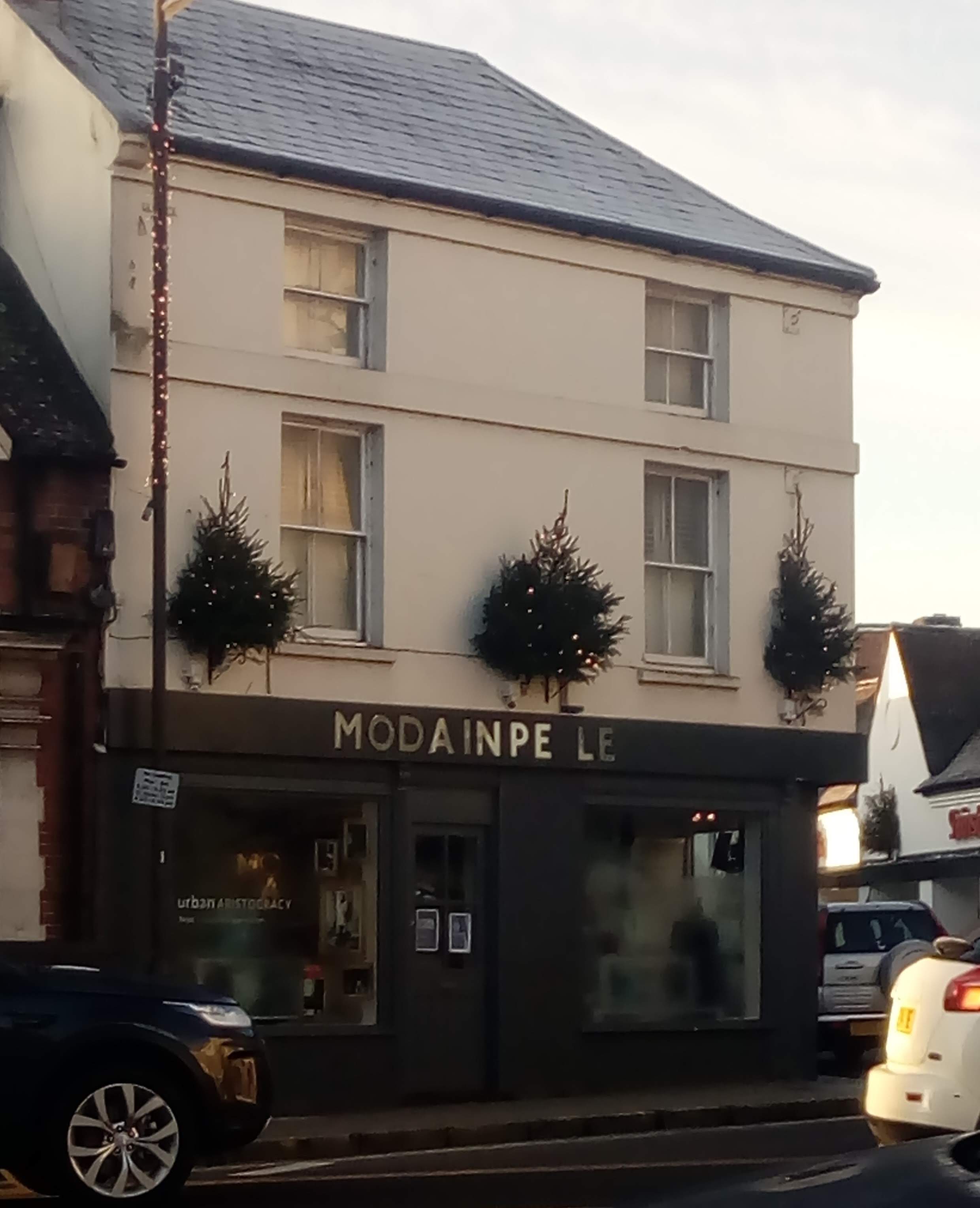
Occupants From 1702 - Corner House, Marlow


 Updated July 2023
The oldest references to this house usually call it The Corner House but it doesn't seem to have gone by that name for a while. It is on the corner of West Street, in Market Square / High Street. Not to be confused with a later property known as the Corner House on the corner of Institute Road and the High Street. ( For more on that building see the post here ). The property had three rooms per floor in its early days.
In 1702 until at least 1705 the property pictured was occupied by chapman Richard Greydon.
In 1719 Richard Langley made the place his home. He may just have used it as an alehouse.
Joseph Webb, butcher, along with his wife Ann bought the premises in 1743 from the heirs of Thomas Constable, a merchant linen draper from Reading who had owned the property for some years. The grand asking price? £40! At that time a Thomas Wright was the tenant. However Joseph himself occupied the house at the time of his death in 1756. He left the premises to his wife Ann but two years later upon the death she asked her son in law William Sneath the Marlow surgeon to organise the sale of them on her behalf. The property was supposed to belong to Ann only for her lifetime and then descend to her and Joseph's son John and his heirs but she had the consent of her son to sell it (or she would have been illegally selling entailed property)!
The premises were auctioned off at the nearby Crown inn to the highest bidder.
Ann's sole heir was her daughter Elizabeth Sneath which suggests that her son John was dead by then. The will of Elizabeth Sneath herself can be read here. There was an unmarried daughter Mary in Joseph's will too. She, Elizabeth and John were that will's joint executors.

By 1833 Henry Menday / Mendy (born circa 1795) had a bakery in the Corner House. The premises then comprised a garden and yard as well as the main building. The annual value of the property was assessed at £12 then. Henry also occupied a garden and yard opposite with an annual value of £2. His shop was only two doors down from Sawyer's bakery- more about that business here.

Henry continued in the Corner House for some years before he retired in middle age and went to live further along West Street with his wife Mary. He died in 1869.

Owen Wright the baker was in Menday's old premises by 1853 until at least 1884 when there was a failed attempt to break into the shop. Marlow was enduring a little crime wave at the time.

In 1879 when Owen heard that fellow shopkeeper Ann Badger had had a pair of boots stolen from her business he went off in hot pursuit of the suspect, retrieved the boots and handed the man over to the police. Playing cricket probably helped keep him fit!

Owen was no stranger to appearing in court. He twice had to sue men who owed him money. John Jones hadn't paid for £1 worth of bread in 1855, while "MacMillan" owed a whole 4p for flour in 1865. Most Marlow bakers in the 1800s also acted as flour dealers.

In 1879 during a routine inspection Owen was found to have be selling bread at less than the advertised weight, though only marginally so. Near neighbour and fellow baker Charlotte Sawyer was similarly guilty along with a host of other retailers whose scales were found to be in less than perfect working order. You typically were fined for this.

Owen died at home on the premises in 1884 aged just 54. He and his family were worshippers at the Salem Chapel, Quoiting Square which is now called Christ Church. 

The Corner House premises were used for most of the late Victorian period and earlier 20th century as a refreshment rooms or cafe. George Fryer decided on the slightly posher "refreshments caterer" for his occupation when filling out the 1891 census. He listed himself as having a coffee house in the Kelly's 1903 and 1911 trade directories. George was the subject of a number of thefts from his premises, usually of food. One of the most ambitious was the theft of a four and a half pound portion of a German sausage taken from the window in 1887. That was some sausage! The guilty party, a tramp from Aldershot, was seen to put it under his coat and was caught with it still there a little later. His snatch cost him 14 days jail time. 

George and his wife Sarah suffered the death of their eldest child Florence aged 13 in 1893 and insolvency the next year. I'm not sure who occupied the premises immediately afterwards but it was still an eatery.

This blog focuses predominantly on pre 1920s Marlow so we'll leave it there!

To find other High Street / West Street content please see the "Specific, Shops, Streets Etc" index here. All mentions of an individual can be found under the A-Z Person Index options on the menu. Thousands of Marlow people are listed.

Sources:
Will of Joseph Webb 1756, PCC. Copy from National Archives, Kew. Also Ann Webb 1771 and Thomas Constable 1729 as above. All transcribed by me.

Commercial Gazette 15th August 1894. British Library Archives.

1833 parochial assessment original handwritten notebooks, held by my family and transcribed by me.

1841-1891 censuses reels, transcribed by me. 

Property deeds Buckinghamshire Archives.

Kelly's Directory of Buckinghamshire 1883, 1903 and 1911 by Kelly's Directories Limited. Via the University of Leicester.

GRO death index online.

Ipswich Journal 7th January 1758. Bucks Herald 18th October 1879 and 14th April 1855. Copies held at the British Library Archive and accessed by me via the BNA March 2021.
Buckingham Express 2nd August 1884. As above.


©Marlow Ancestors. You are welcome to use this research or the image for the purposes of family or local history research if you credit this blog and provide a link here.


Thursday, March 25, 2021

Will Summary Ann Webb of Great Marlow

 Ann Webb. Widow*. Proved 1771.

Says sick in body but of sound and disposing mind.

To daughter Elizabeth, wife of William Sneath surgeon of Great Marlow, all ready money, notes for money, bills, bonds, stocks, household furniture, wearing apparel and all other personal property after funeral expenses and debts paid.

William Sneath as above executor.

Will witnessed by Henry Allnutt, attorney and Elizabeth B...y testator's servant. The latter made her mark only.

*Ann was the widow of butcher Joseph Webb who died in 1756. He left her their home on the corner of West Street and the High Street next to the Coach and Horses but her son in law William Sneath organised the sale of it for her two years later.

©Marlow Ancestors.  You are welcome to use my transcription summary and research with credit to this blog and a link here.


PHOTO ID ANYONE?

 Can anyone help a fellow family history researcher Linda identify where this staff photo may have been taken in Marlow? Underneath are some...